

How will the climate crisis affect the Southern Suburbs (as well)
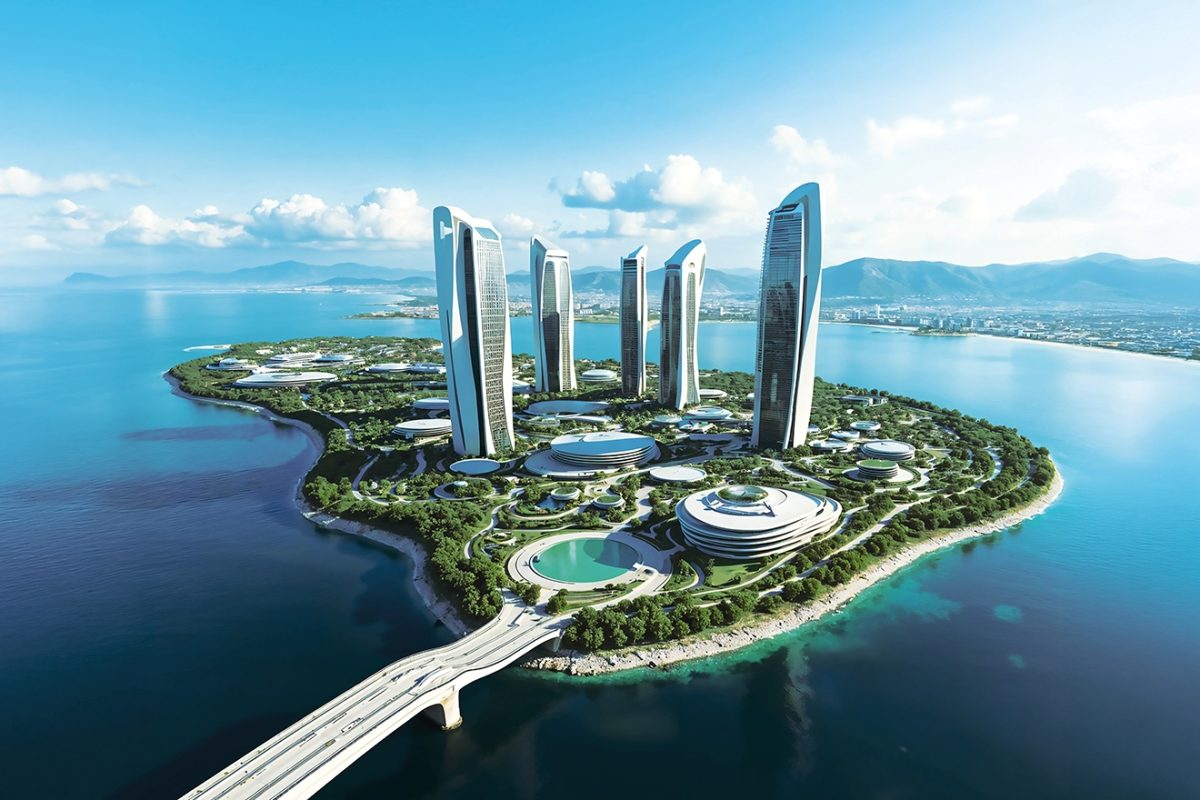
Ilias Nikolaidis, Content Director of diaNEOsis*, explains how the impact of climate change concerns both Athens and its suburbs - and why we need to take them seriously now.
- 01/08/2025 15:22
WILL WE NEED A BOAT to reach Lemos in Vouliagmeni in 2100? According to the most moderate scientific forecasts, the rise in temperature by the end of the century may cause sea levels to rise by 20 centimeters to about one meter. Therefore, in the scenario where the level rises by more than half a meter, Attica could indeed gain a new island.
For a country like Greece, with 16,000 kilometers of coastline, such a rise in sea levels due to climate change is by no means small or negligible. The impacts on daily life are multiple. Approximately 1/3 of Greeks live by the sea, while rural areas and some large cities will be significantly affected by such a development. It is likely that many ports and marinas will need serious reinforcement, while overall, according to diaNEOsis research on the impacts of climate change in Greece, coordinated by NKUA professor Costas Kartalis, up to 3.5% of the country’s land area could be lost. Such a development could result in an economic loss of around 2% of GDP.
Extreme weather events are becoming more frequent and intense
However, rising sea levels are only one aspect of the impacts of climate change on our country. The same diaNEOsis study estimates that by 2050 we are expected to record 15 to 20 additional days of heatwaves each year. By the end of the century, the phenomenon of the “tropical night” will appear for more than 50 days a year. And, despite its name, it is not something pleasant: when the temperature at night remains above 20°C, buildings do not have time to cool down, as a result of which they do not provide the coolness needed the next day.
Summer in the city, therefore, is changing and this is already noticeable. In Athens, heatwaves are now more frequent and longer lasting. From an average of just 1.5 days of heatwave per year in the 20-year period 1971-1990, we reached 10.5 days per year in the period 2001-2020. During the same periods, the duration of the longest heatwave increased from 4.2 to 6.1 days. At the same time, frosty nights across the country are decreasing, while the average annual precipitation is also decreasing by about 12%. Extreme weather events, such as sudden storms and strong winds, are predicted to be more frequent and more intense.
What can be done about climate change?
Of course, climate change is a major global problem, which has multi-level and diverse impacts not only in Athens and Greece, but on the entire planet. It affects agricultural production and therefore the food we consume, the economy, tourism, as well as many aspects of life and our health.
What can we do about it? Unfortunately, the point at which we could reverse the consequences of these major changes has now passed. Everywhere in the world, people are called upon to come to terms with some of these consequences and to adapt to a large extent. However, it is a lie that we cannot do anything. An obvious direction is to move away from fossil fuels for energy production. However, the so-called energy transition will not happen immediately: it requires investments, a lot of time and, moreover, fragile international balances to be maintained
This is why it is very important that citizens themselves are aware of the situation, so that, on the one hand, they can put pressure on their leaders, and, on the other hand, they can take into account the evolution of the climate and the related restrictions on the small and large decisions in their daily lives.
What do Greek citizens believe?
In the recent poll “What Greeks believe” conducted by diaNEOsis, most people in Greece are concerned with climate change. 43% say that it is already affecting their lives, while 44.6% believe that it will affect them in the future. 86.3% call for stricter rules to address the problem. Of course, some are not so easily convinced: 1 in 2 believes that climate change is an “invention” of rich countries at the expense of the poor, while 1 in 4 believes that there is no solution.
On the other hand, when we ask citizens what they do for the environment, the majority say that they use energy-saving light bulbs (93.3%), recycle (92.2%), reduce the use of plastic (84.3%) and save water (65.5%). However, when it comes to more “difficult” changes, such as using cars less and eatingless meat, the rates drop significantly.
Ultimately, the climate is a “far-near” problem. It has causes and effects that extend from large governments, national economies, businesses and institutions to the behavior and habits of each person in their neighborhood. Accordingly, its management cannot but follow the same pattern. But more than a problem, the climate is a new reality that we increasingly cannot ignore, wherever we live.
*diaNEOsis is an independent, non-profit think- tank. Its goal is to contribute to social dialogue and propose solutions, through a series of studies and research on the country’s most important economic, political and social problems.
Published in “White Paper: The Big Business of the South”, NouPou Media’s special edition spotlighting the current landscape and future prospects of the Athens Riviera.