
Kritamos: The family-run Cretan spot in Kallithea serving honest, homemade food
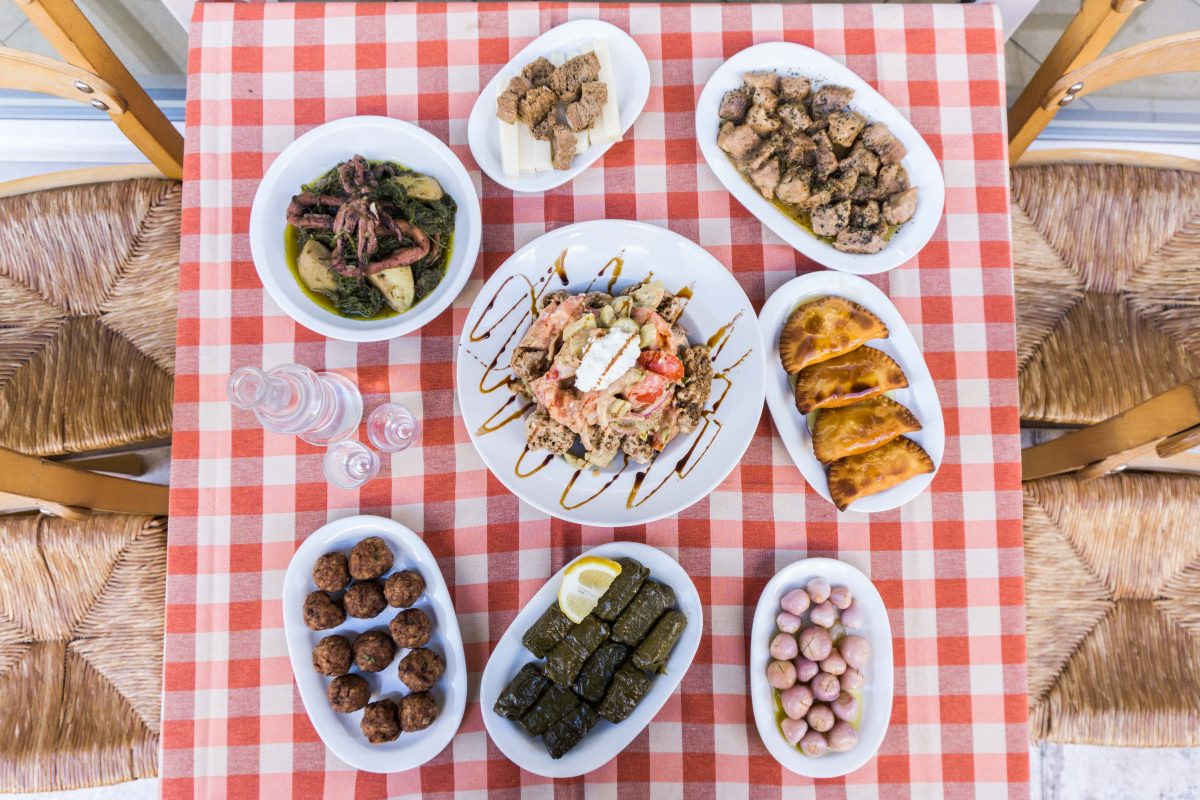
On Solonos Street 113 in Kallithea, Kritamos keeps authentic Cretan cuisine alive with gamopilafo, tsigaristo, snails, and raki from the village. A 13-year family story, where the food is honest, homemade, and often made with products that come directly from Crete.

It’s just after 3 in the afternoon on a Thursday. The sun is shining, spring has made its appearance, although there’s still a slight chill in the air. On Solonos Street, in Kallithea, there aren’t many people around. At number 113 is Kritamos, an authentic Cretan raki spot that fills the entire street with aroma and flavor.
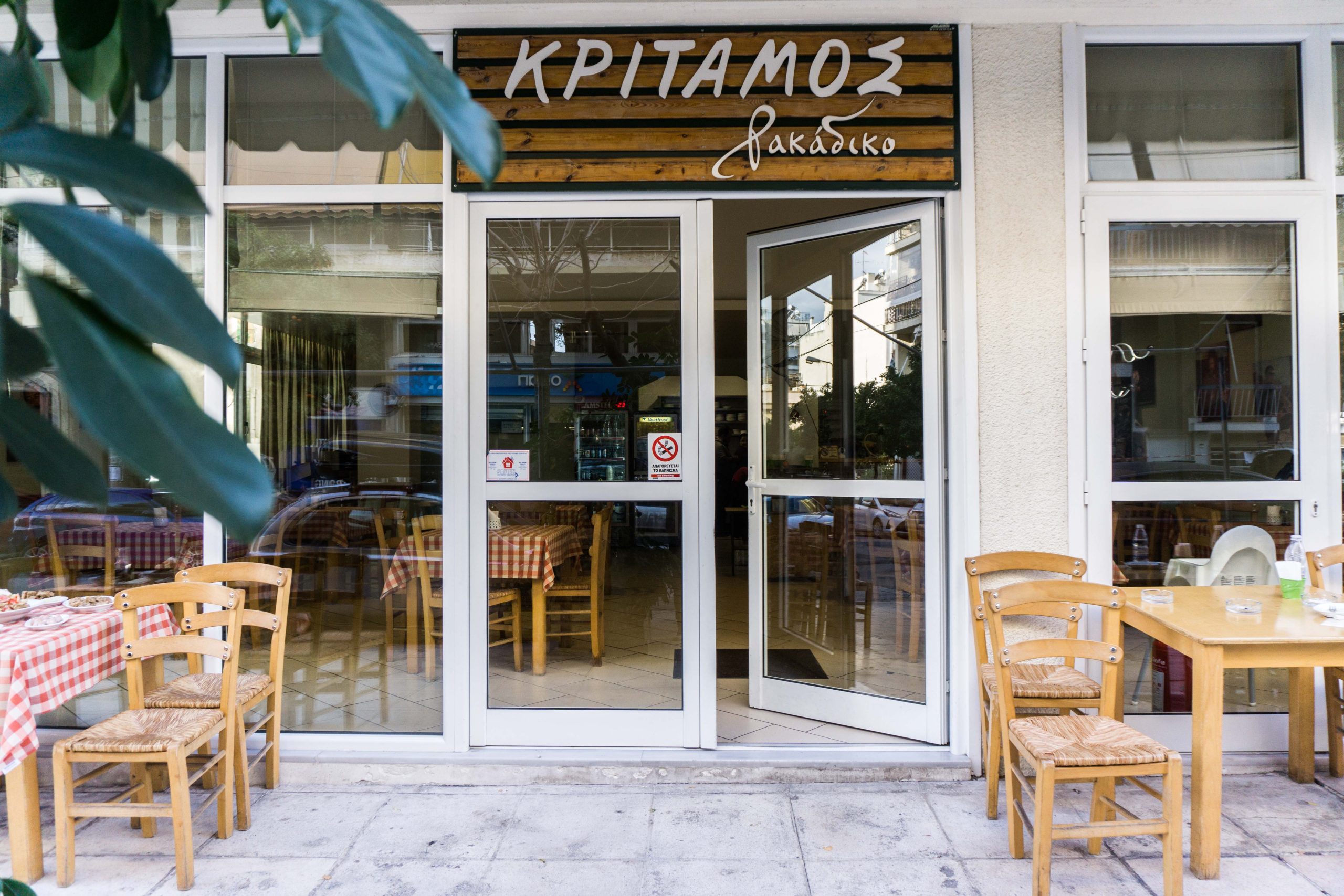
Outside, at a table, Stelios Aretakis sits with his wife, Magdalini Kostelidou. They’re having coffee, smoking a cigarette. In the kitchen, pork tsigaristo is slowly cooking. It’s one of the few moments of the day when they manage to rest, as only at this time is it somewhat more relaxed. Although, as Stelios jokes, “it’s a strange kind of place; we might have no work on a Saturday night and be packed on a Wednesday.” “Sundays are tough days and you need a reservation,” Magdalini adds.
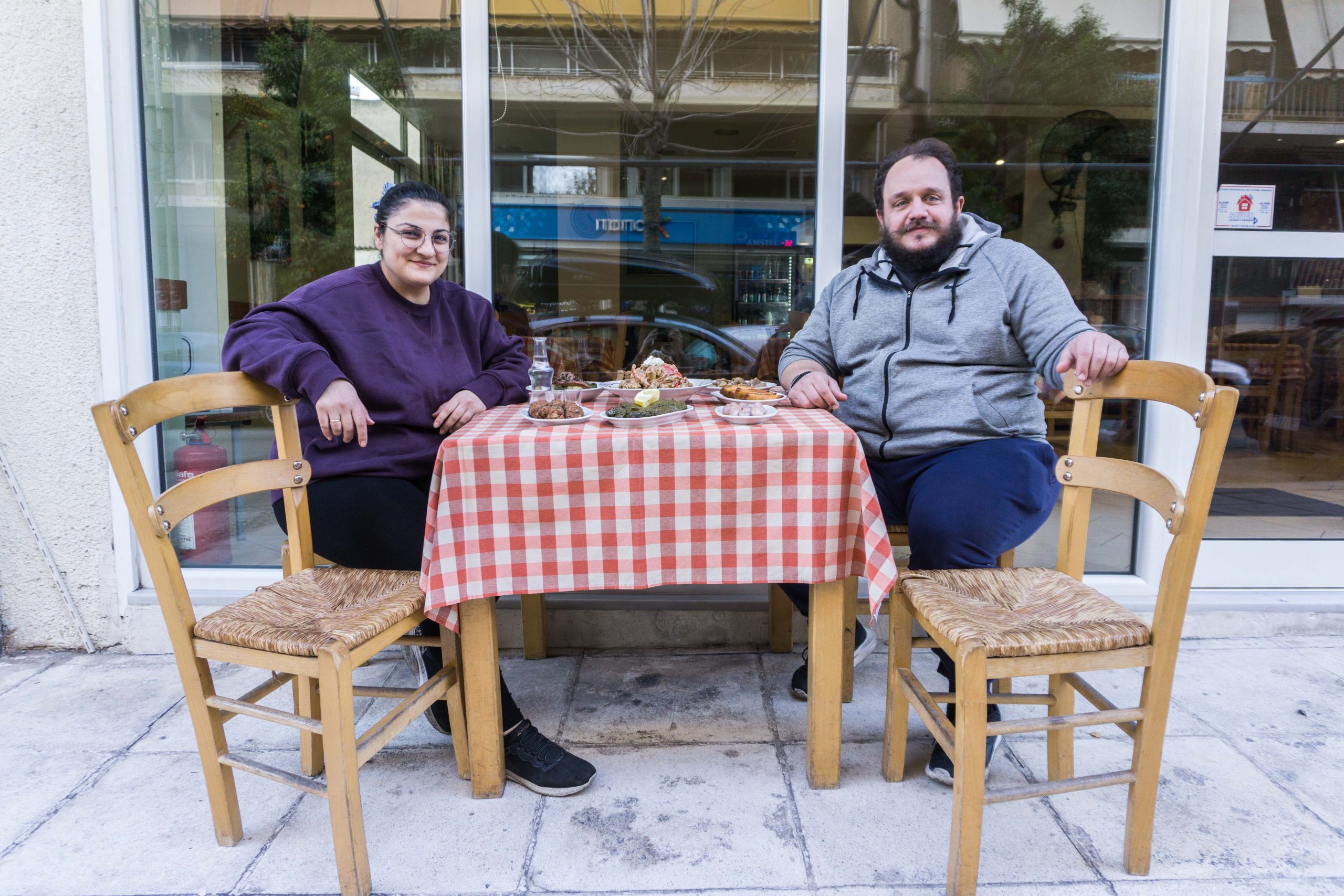
The space is roomy, with several wooden tables covered in red checkered tablecloths that evoke a “traditional village kafeneio.” On the walls hang photos of some of the most important lyra players of Crete. “These are masters of Cretan music. Among the first, the best. Only one of them is still alive, Psarantonis, the brother of Xylouris,” they tell me.
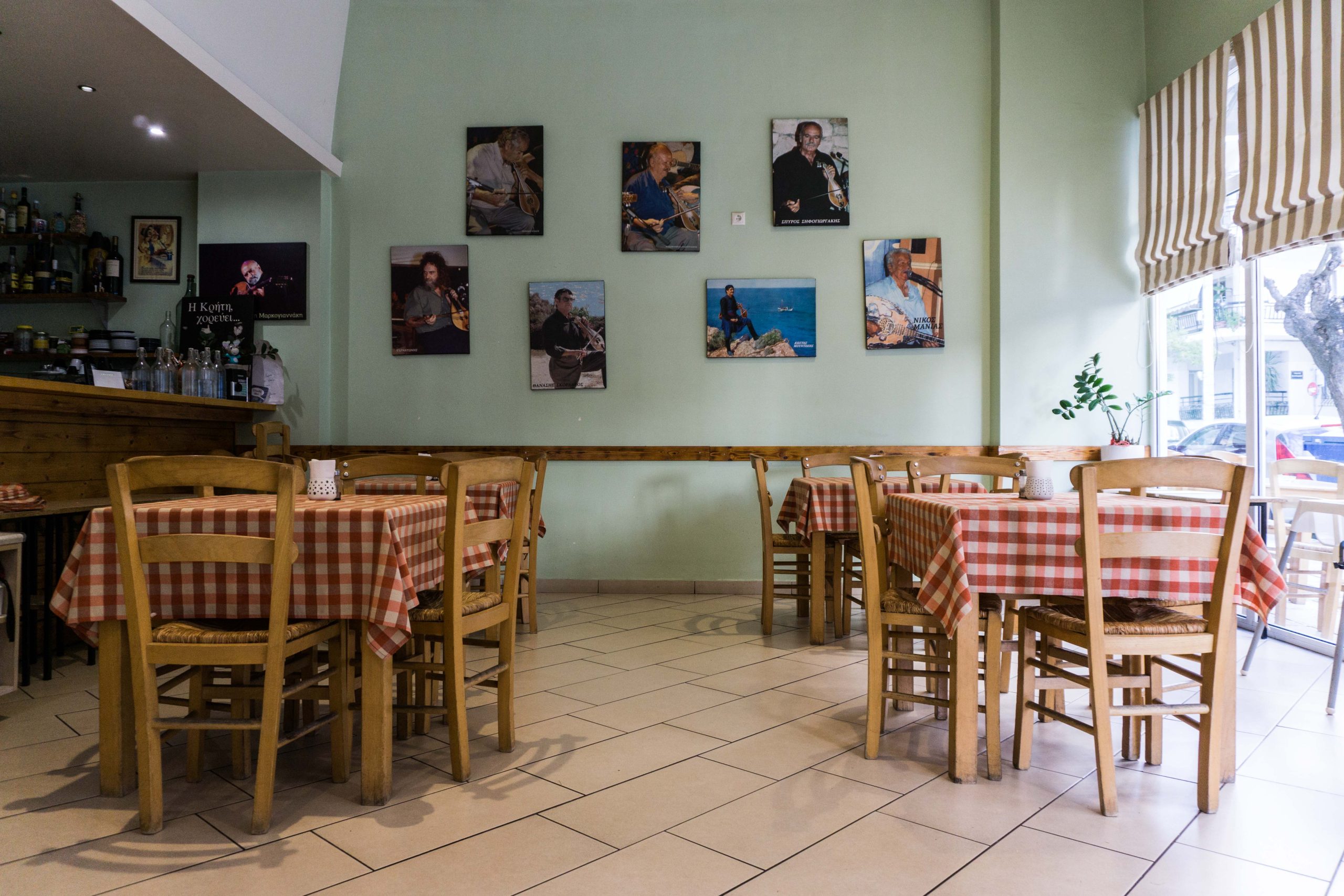
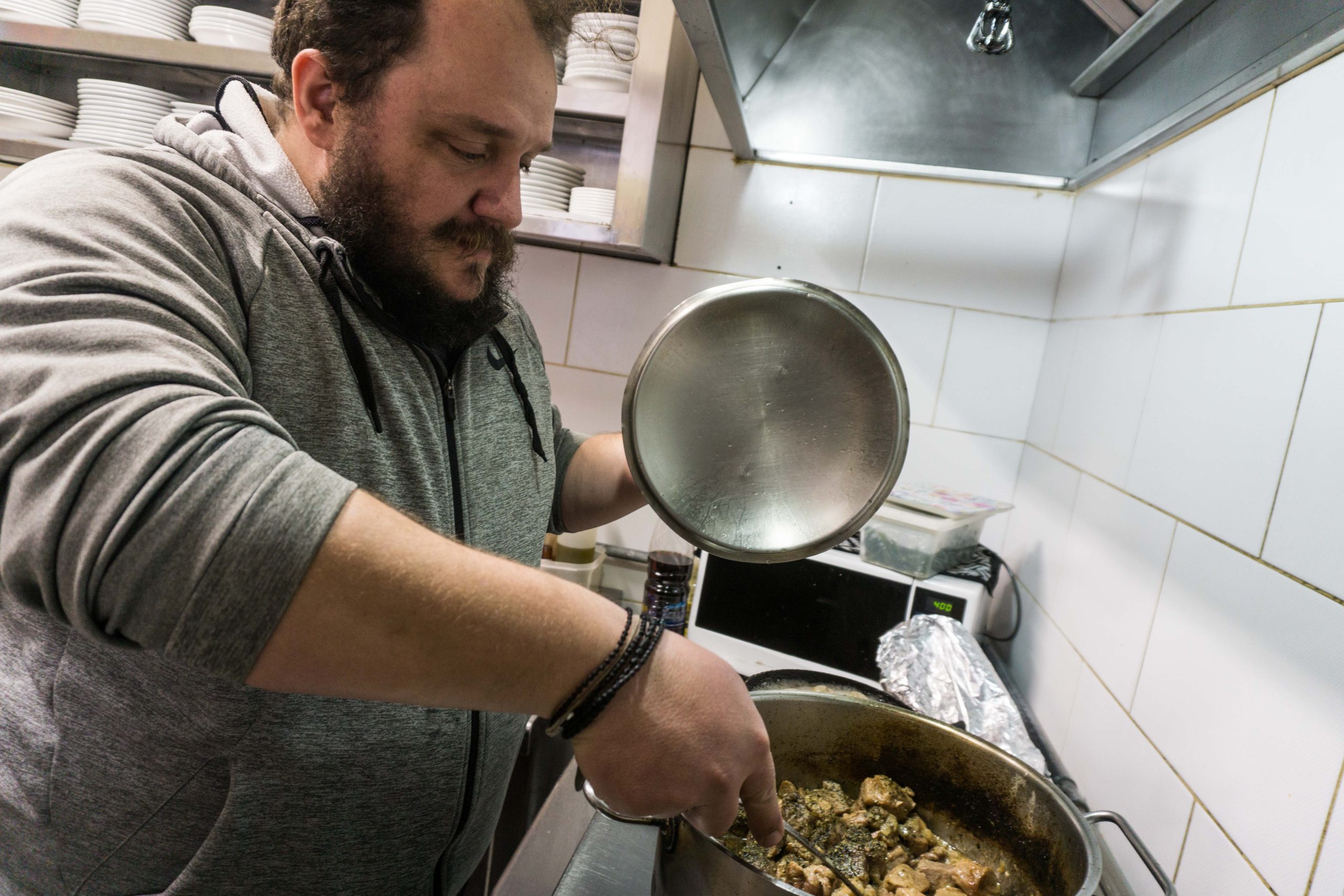
The place was started by Stelios together with his mother, Evangelia, and his older brother—nine years his senior—Giannis, who is one of the best cooks in Rethymno, where they come from. “This year we complete 13 years,” Stelios tells NouPou with pride. Giannis “couldn’t really handle Athens anymore,” so he returned to Crete a few years ago, and in a way, the third spot in the kitchen was taken over by Magdalini, Stelios’ wife.
“We were friends first, then we became a couple, and then we got married. Because love goes through the stomach…,” Stelios says jokingly, since Magdalini first came to the place as a customer. “I’m Pontic,” she tells me. “I used to come here as a customer. We met through mutual friends.” And that’s how Crete met Pontus.
As we talk, everyone who passes by greets them. That’s how small neighborhoods are; everyone knows each other. A young couple on a motorbike parks right outside, two elderly men go for their walk, a woman stops and looks for Stelios’ mother. “My mother-in-law isn’t here, she’s gone to rest,” Magdalini tells her, as the woman moves to open the front door and step inside. “What food do you have today?” she asks. Fried squid with wild greens and potatoes, they tell her, and she asks for a portion to take away.
“There are people who are regular customers and come almost every day,” Stelios explains to me. “Many go on Sundays with their children to Niarchos, which is nearby, and then come here to eat. We don’t do delivery, we do takeaway. But we’re thinking about joining a platform.”
When it first opened, the place functioned more like a kafeneio, where they naturally served coffee and raki with small plates. As they realized that the kitchen was their strong point, they gradually leaned more in that direction, especially in recent years after the lockdown, with the aim of eventually focusing exclusively on food. “Since we have a good kitchen, we’d like that to stand out more,” they tell me.
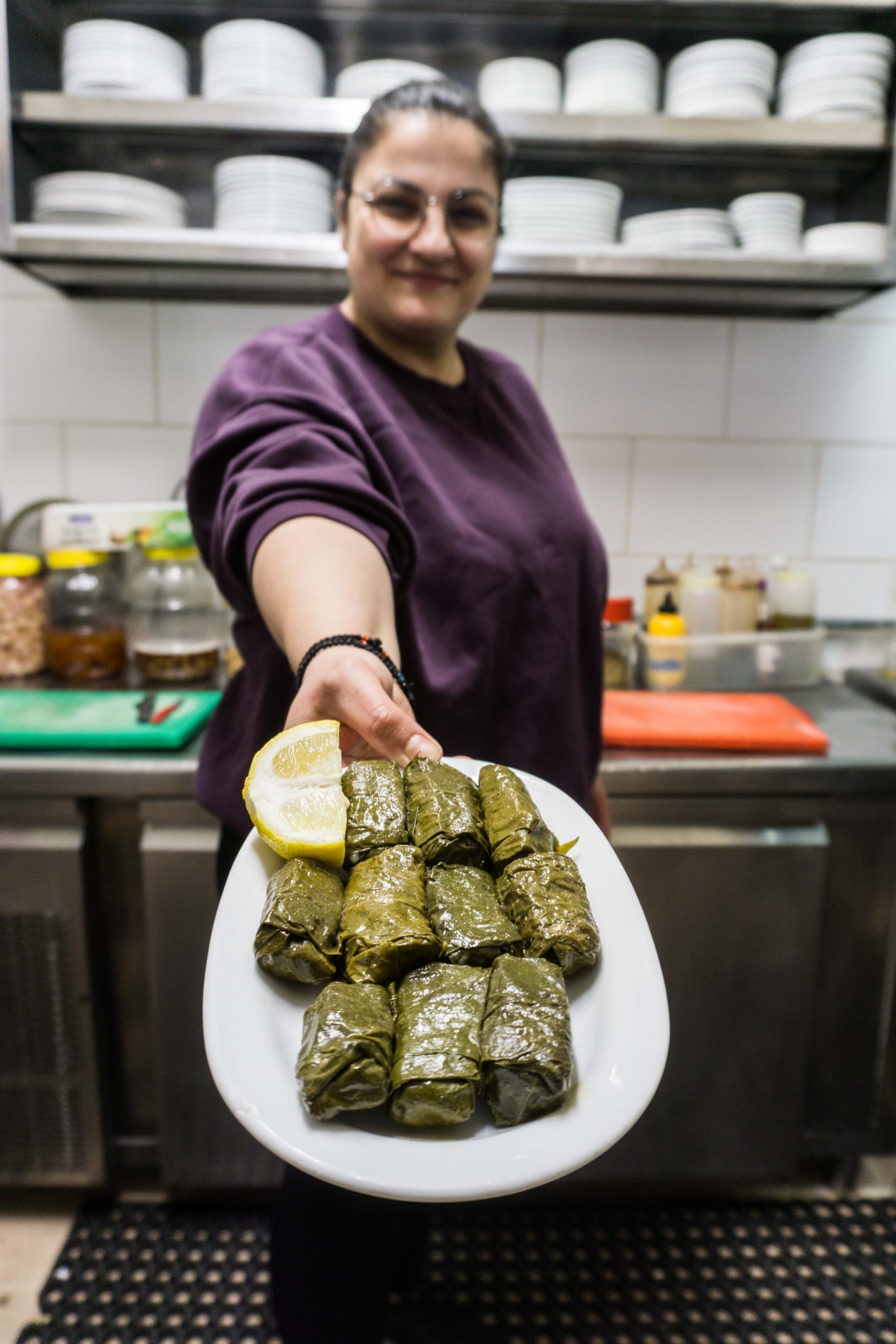
Everyone works in the kitchen. Everyone cooks, everyone serves. It is, after all, a family business. And each person has their own specialty. “My mother mainly makes the home-style dishes. We have Cretan cuisine and then home-style dishes. She makes stuffed vegetables, pastitsio, lentils, gigantes beans, peas.”
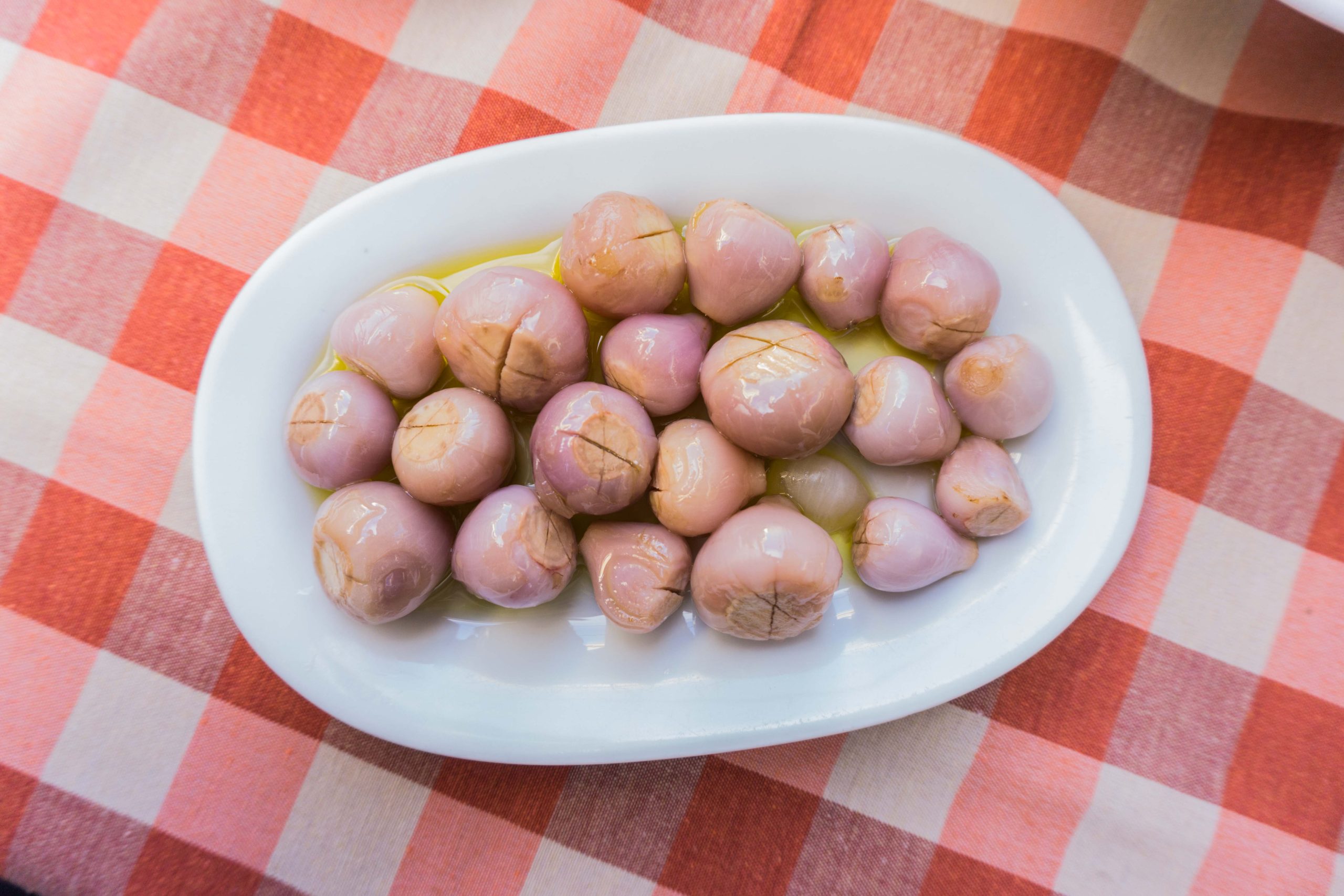
The menu is adjusted based on seasonality and the weather. “We adapt depending on what ingredients we find at the farmers’ market and the weather. Sometimes people might be in the mood for a soup, a bean soup when it’s cold,” Magdalini explains.
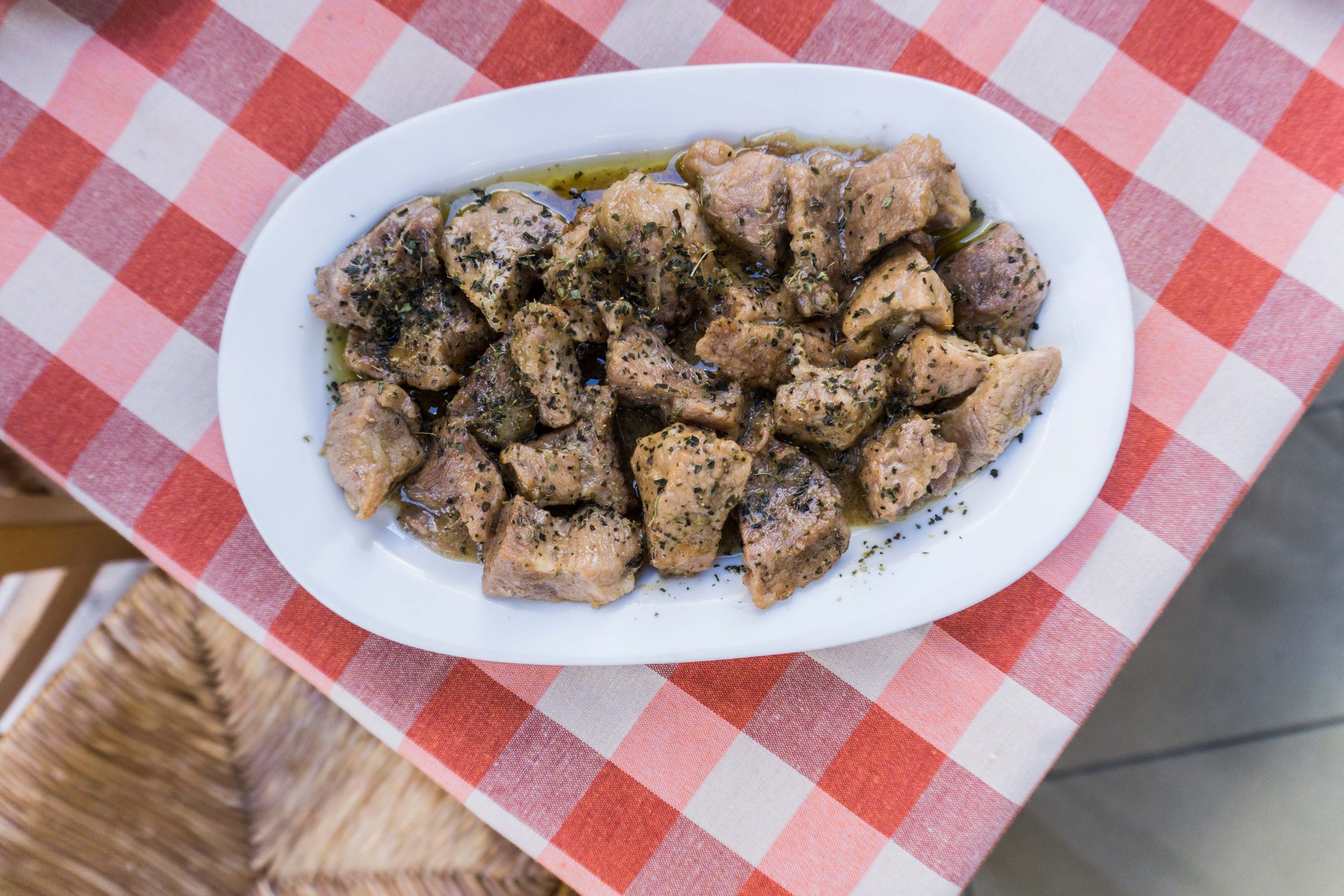
The rest of the menu is prepared by Stelios and his wife. From pork and goat tsigaristo to gamopilafo, fricassee mushrooms, snails cooked burbouristi, stifado, pork with wild greens from the village. “Some dishes we make almost every day, like the pork. I might also cook something on request. You might call me and say that five of you are coming in the evening and you want pilafi. Since it takes time, I tell them to call me a day in advance so I can be prepared,” Stelios says.
As they explain the menu, I try a handmade myzithra pie with honey from their aunt, who came from Crete a few days ago to visit them. Whoever comes, always brings something along. “I get the meat from here—I don’t want to lie. If something comes from Crete, I’ll say it. But they send me many products from the island, like apaki, sausages, cheeses. We work with specific producers from Rethymno and Chania.”
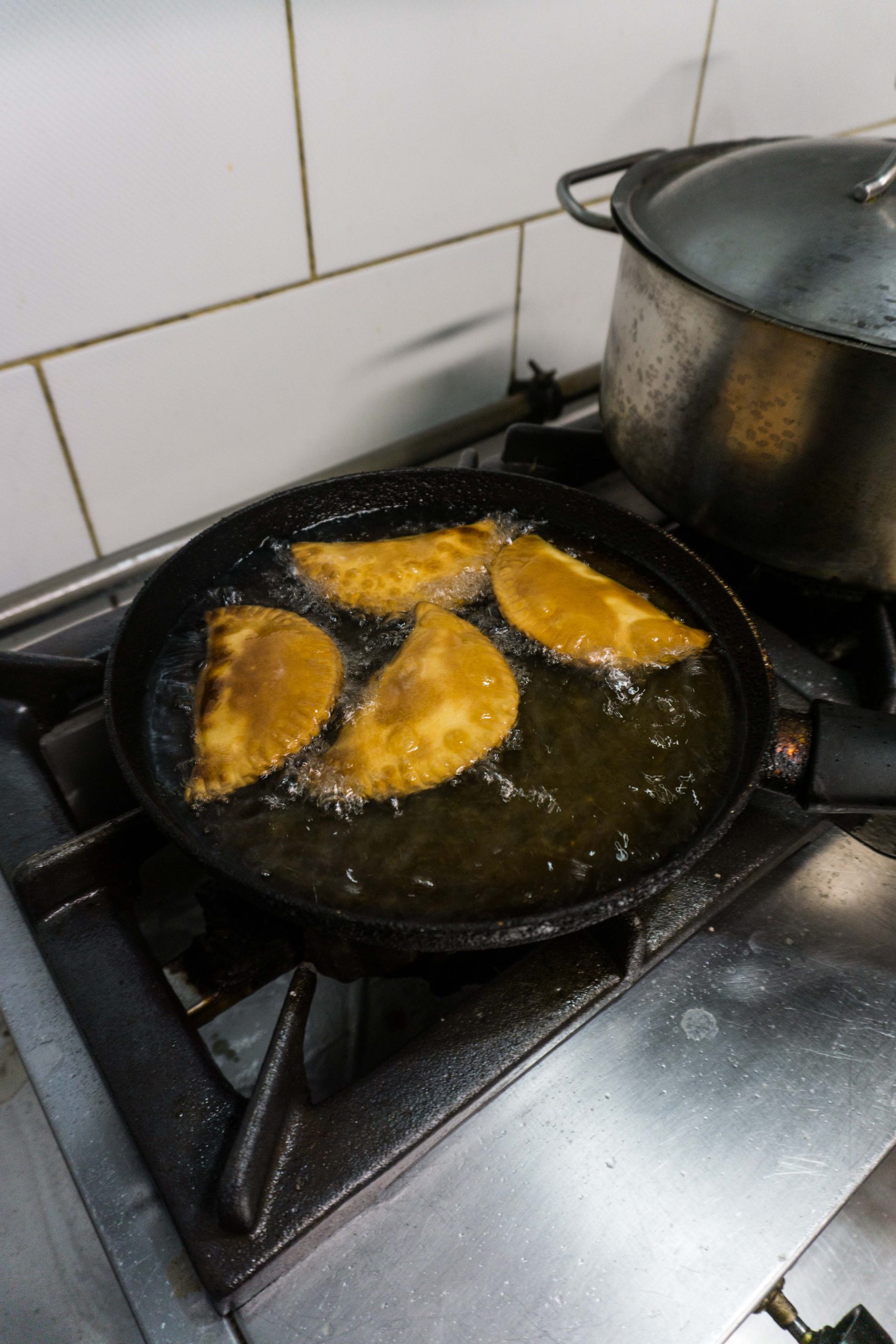
The olive oil is their own production. The raki too, as well as the red wine. Rosé and white wine come in bulk from Heraklion. The pies—myzithra pies, graviera pies, fennel pies—are sourced from a family-run Cretan business in Athens and baked daily, depending on demand. In the summer, “boatloads” of tomatoes, zucchini, eggplants, even zucchini flowers arrive from the village. “They send me so many that I often share them. How many dishes can I make with eggplant?” he says, laughing.
The name “Kritamos” was an idea from one of their uncles. It’s a seaside plant that grows on rocks, resilient and salty. “We’re from a coastal village and there’s kritamos down on the beach. We liked the word. It reminds us of Crete.” In the early years, they even made their own homemade pickled kritamos, but it’s not very popular in Athens, people didn’t know it, so they had to remove it from the menu.
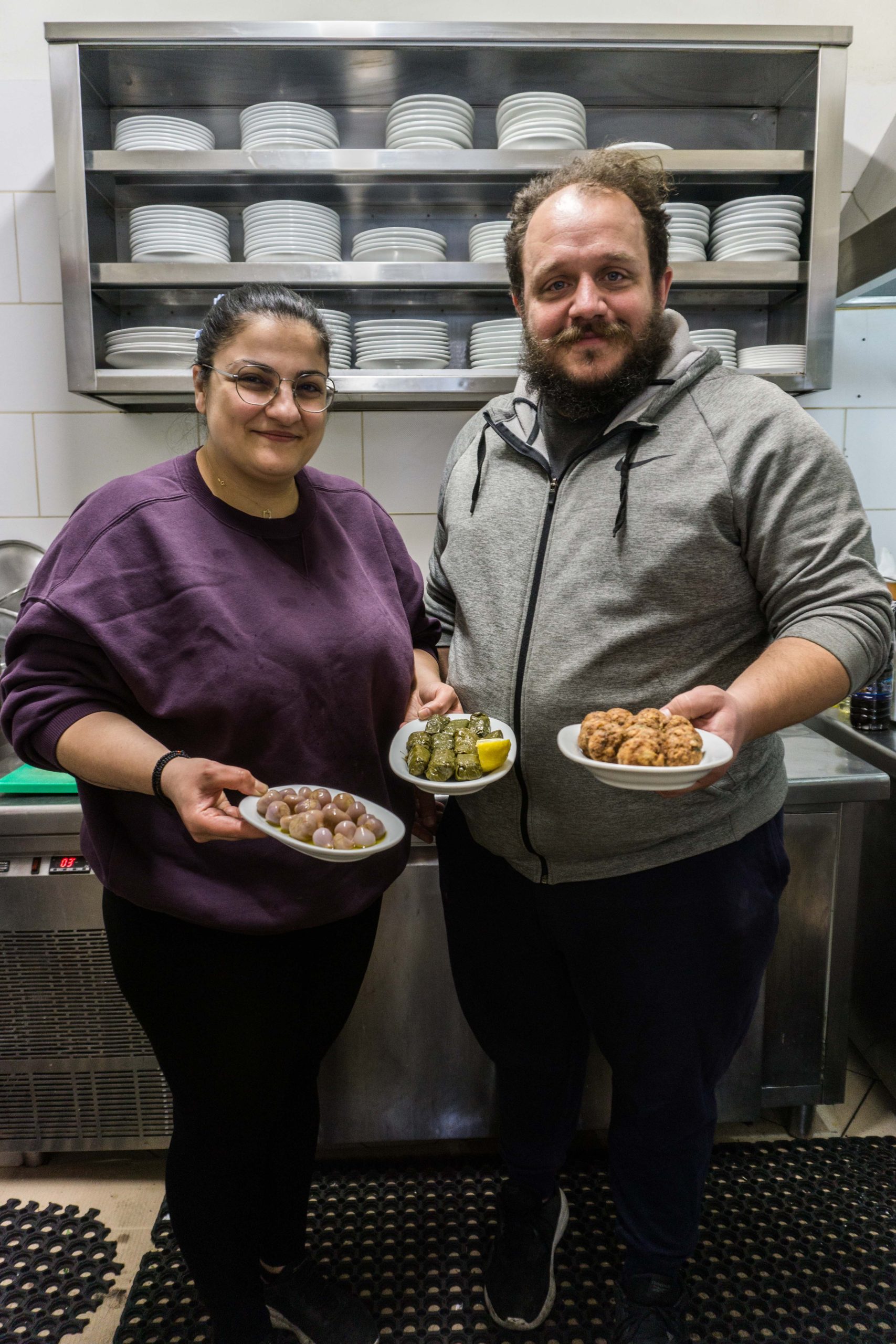
Until 2018, they also hosted live music nights. Today, if someone wants to bring an instrument and play with their group, they’re more than welcome. Magdalini often sings as well, and she has an excellent, deep folk voice. “Old folk songs, Pontic songs, and a bit of art-folk” are her strong suit.
The place is open daily, except Monday, from 8 in the morning, when Mrs. Evangelia opens, until late. On Sundays, they close in the afternoon, around 7. On Tsiknopempti they set up a grill on the sidewalk and barbecue, while on Clean Monday and March 25th they adjust the menu accordingly.
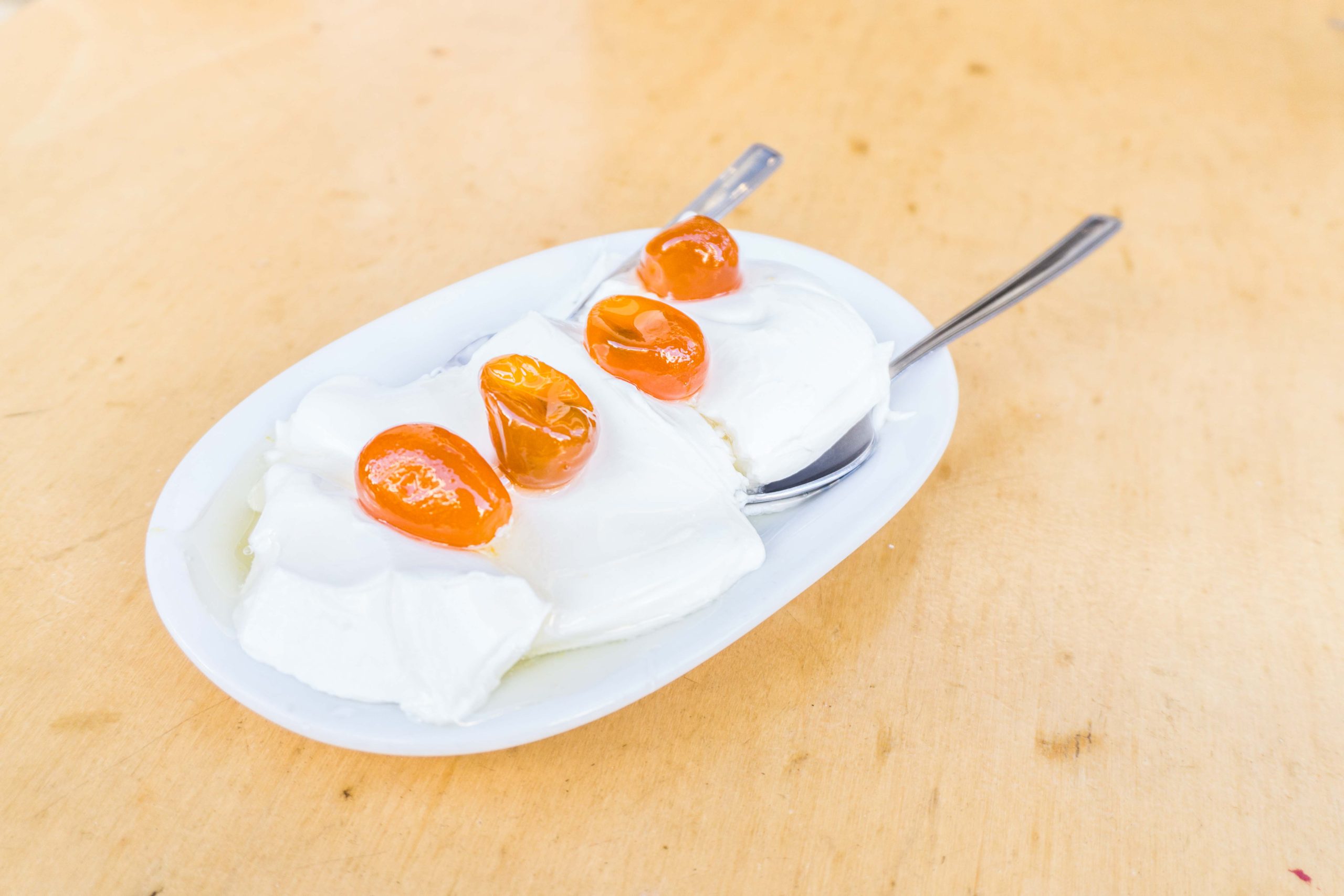
All ages come to Kritamos: from older guests who will sit for a raki and a meze, to younger ones who prefer more distinctive flavors, like a Greek salad they make with carob honey, balsamic vinegar, xinomyzithra, and barley rusks. Everyone will find something to eat, they tell me.
Because, in the end, what they are after isn’t anything complicated. It’s for people to come, eat well, drink their raki, feel comfortable. With honest cooking, generous portions, and a family that cooks as they would for their own table. “We’re in the middle of nowhere. So whoever comes has to come recommended. And you need to have something good for them to come. Word of mouth is the best advertising for us,” they emphasize.