
Giorgos Koumentakis: “We want young people to walk into the Greek National Opera without feeling they need to know about opera”
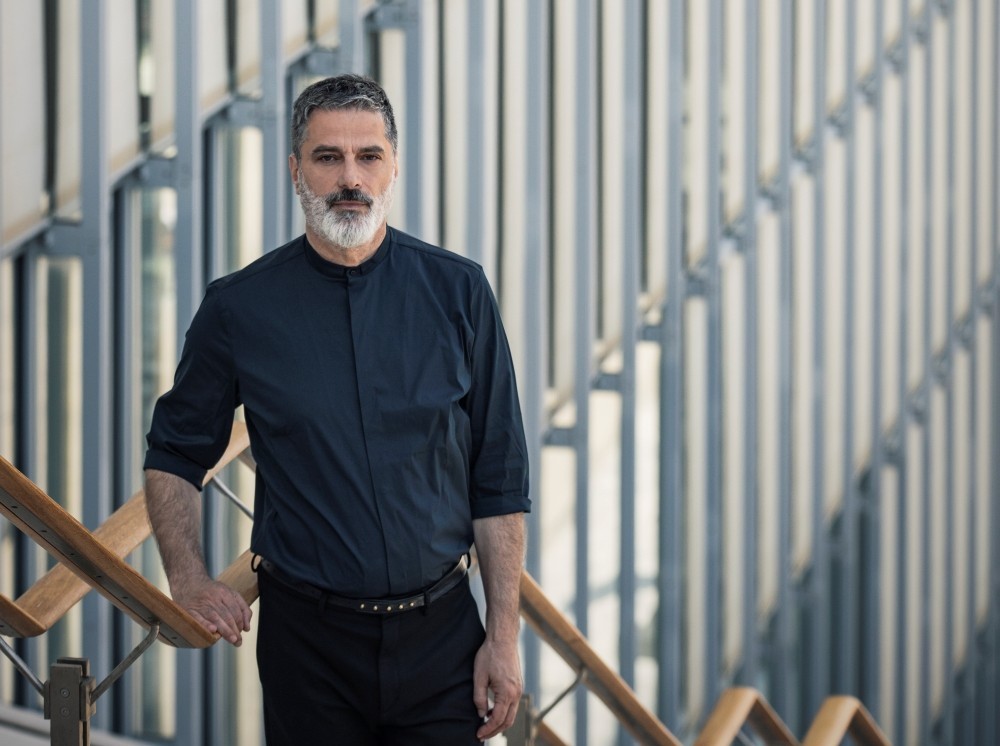
Giorgos Koumentakis, composer and artistic director of the Greek National Opera, speaks to NouPou about the impact of Requiem for the end of love, risk as a necessary condition for a living organism like the Opera, the heavy shadow of Medea at Epidaurus, and his new work based on poems by Cavafy, which is being prepared for presentation at the SNFCC Summer Nostos.
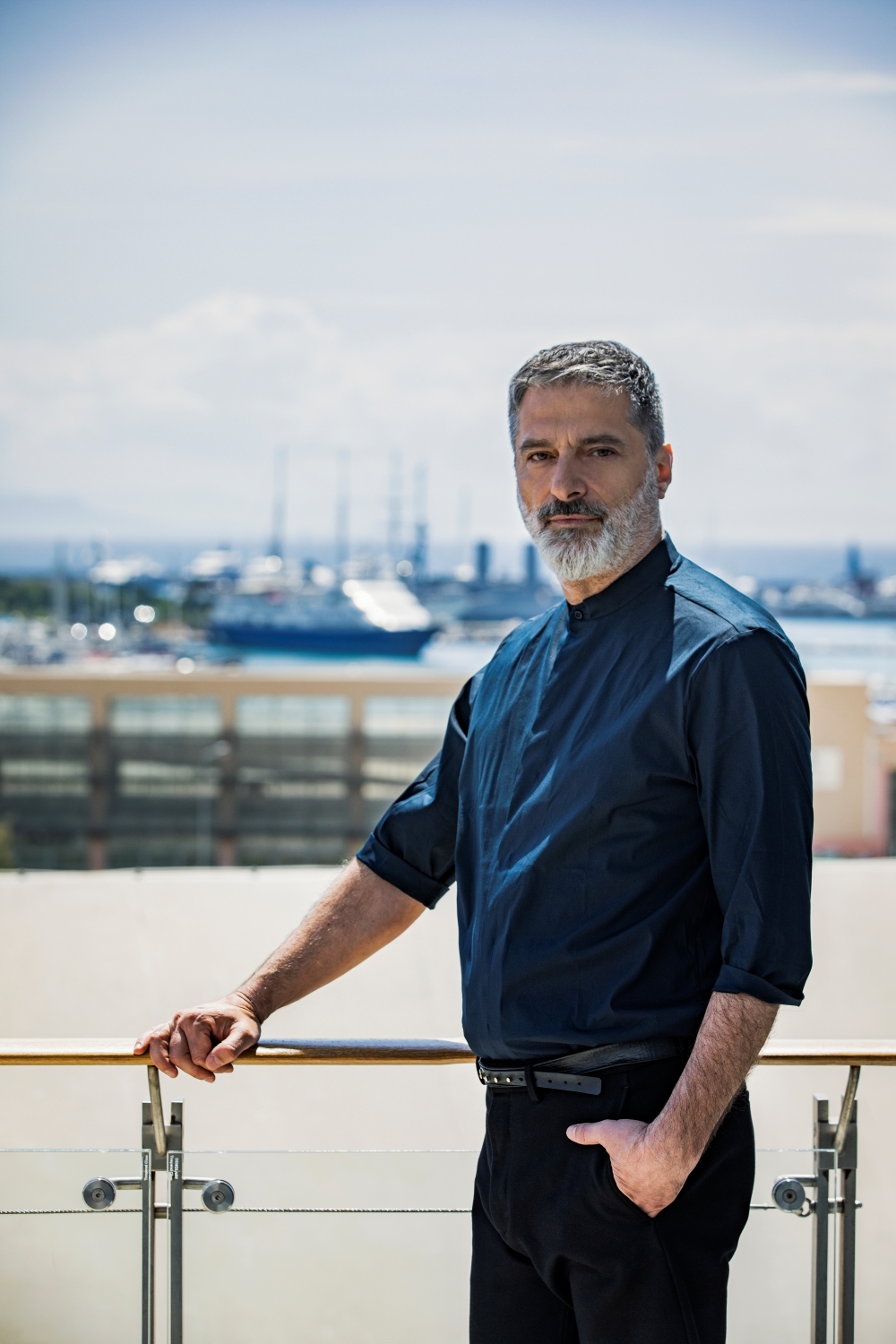
We “caught” him during the respite he claims for himself in his birthplace. Crete now functions for Giorgos Koumentakis like a purifying passage from an intense and artistically dense period into an introspection he needs. Especially now, as he prepares his new work, based on four poems by Cavafy, as he says in our interview, which will have its Greek premiere at the SNFCC Summer Nostos. In any case, there are many reasons to speak with him: Requiem for the end of love, in collaboration with Dimitris Papaioannou and Teodor Currentzis, created a major event at the Greek National Opera a month ago, his term as artistic director has just been renewed for another three years, while the opening of the Epidaurus Festival is connected with a major milestone for the national stage: On June 20, he reconstructs Luigi Cherubini’s opera Medea, recreating the legendary 1961 production, directed by Alexis Minotis, with sets and costumes by Yannis Tsarouchis, choreography by Maria Hors, and Maria Callas in the title role (this year it is taken on by Anna Pirozzi).
The Requiem we recently watched at the Greek National Opera undoubtedly left a significant impact. What “trace” has it left on you personally?
The Requiem does not leave me with a sense of catharsis or vindication, despite the impressive response both from the younger audience and from the audience of 1995. Every “new” encounter with the work brings me face to face with questions of loss, vulnerability, but also with a memory of youth and innocence that has been lost. For me, what returns each time, and what I could describe as the “trace” after this new presentation of the work, is the need for connection, not as weakness, but as a deeply human necessary condition. The words of Dimitris Kapetanakis (editor’s note: the poet’s verses were heard in the performance) do not speak only of death, they speak of that moment when you realize that you cannot continue alone and that, for there to be continuity, there must be common ground with others. In that sense, Requiem leaves within me a sense of continuity, that despite the decay, the brutality and the darkness we experience collectively, there is still room for tenderness, but also for the necessary silence and thought, and this is something deeply comforting.
Music does not transmit messages, as a stereotype would have it, nor does it lend itself to didacticism. But if I asked you to translate the feeling of the music of the Requiem into an allegory or analogy for those who were not able to attend, what would you say?
If I had to put it through an analogy, I would say it is like walking through a dark space without knowing where its boundaries lie. You move forward, you stumble, you fall, you get up again, at times you stop and at others you speed up to find the exit. The music deliberately does not transmit messages, but it does transmit signals related to emotion. It keeps you there, forces you to remain, to listen to your breath, to listen to the other person’s breath, the sound produced by the human body, and to endure stoically while observing bodies in mourning, or rather a collective body in mourning. If the Requiem conveys anything in the end, it is this experience: that pain is neither explained nor resolved, but it can be shared, and that within this sharing there is a common breath in the darkness, like consolation. That is what I feel to be the feeling and the function of music within this work.
The performance coincided with the renewal of your term as artistic director of the Greek National Opera. What is your assessment of the connection it achieved with its audience, but also with younger audiences?
Since an assessment carries within it a sense of closure, I would say that what we are experiencing today within the Opera, in relation to its audience, is an open process, a relationship that is constantly being shaped and evolving. This is not the moment to speak in numbers, but it is interesting to observe the way our audience relates to the Opera, and what we see is a sense of the space, on the part of the audience, as something familiar. The Opera, for a long time, carried the weight of an institution that, while inspiring awe, also created a distance between the space and the audience. My aim was not to popularize the art, but to remove the fear of a young person or of someone who had not had the experience of similar spectacles. In other words, to enter the hall without feeling that they must know, must have prepared, or must belong somewhere.
At the same time, the outward-looking character of the organization, with productions in the regions, the educational and social activities taking place outside the physical framework of the Opera, as well as the organization’s broader presence in spaces beyond our stages, created and cultivated a different relationship of connection and trust. The Opera does not only wait for the audience to come to it; it goes itself toward the audience, and that not only radically changes the balance, but creates a deep, active and living relationship.
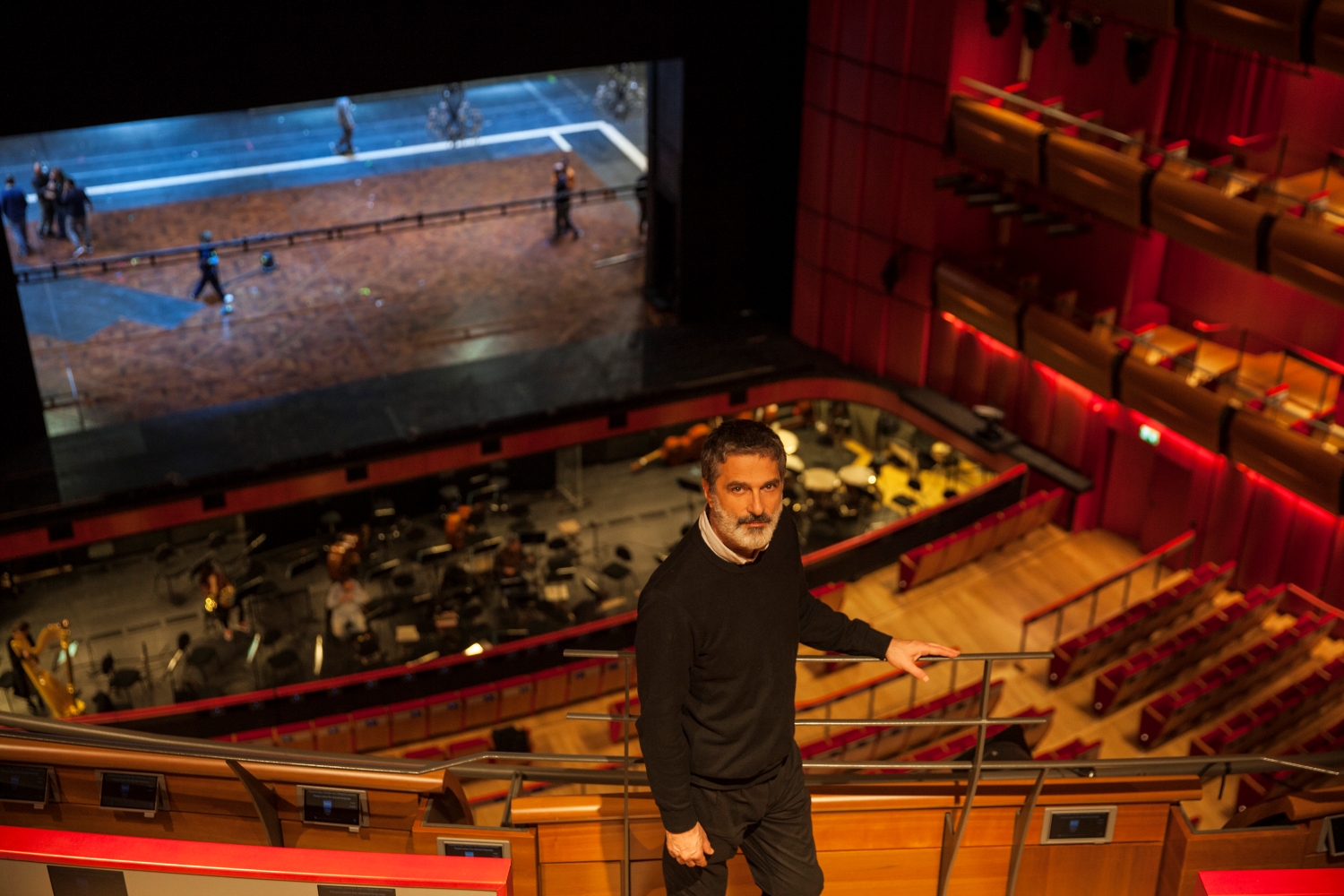
Were there any “thorns” along this path that, if nothing else, you must have in mind for the term that has just begun?
A living organism, moving quickly, trying to change, taking risks and “shifting” away from older certainties, cannot help but encounter and be called upon to deal with “thorns” along the way. The first, and perhaps most difficult thorn, was the very speed of change, from a condition of safety to a condition of open risk, which requires patience, persistence, constant alertness and resistance to fear. A second thorn was the constant balancing act between artistic vision and the actual endurance of the organization, especially at the administrative level. In this area, we were called upon to listen more, to trust, and to accept the time-related limitations within which the system operates. Finally, there were also the thorns that society more broadly consistently encounters in every era, such as fluctuations in the social and economic landscape, and of course the great thorn of the pandemic. All these things inevitably break into the organization and affect the way you work, the way you choose, the way you decide. So if there is one thing I carry forward for the coming years, it is the necessity of contact and continuous dialogue with the real, within and beyond the Opera. In any case, my sense is that the dynamism of the GNO is now undeniable. With the steady support and funding of the Ministry of Culture, we are trying constantly to increase our revenue from private sponsorships and donations.
After the premiere, you “took refuge” in your native Crete. What need draws you there?
I think Crete functions for me as a kind of inner refuge. It is not simply my place of origin; it is a place of memory and return to my core. After an extremely demanding period, I felt the need to withdraw, for a while, from the noise. I would not say that Crete is my “refuge” in the sense of escape, but more in the sense of returning to a balance, a way for the gaze, the body and the mind to clear, with the aim of returning to the fast pace of reality in Athens.
In your musical compositions, memories and experiences from Crete inevitably find their place, as do references to the great classical tradition, human relationships—as in Isokratima ενός μεσήλικα. What are the elements that truly “tie and untie” your music?
The memories from Crete, the images recorded within me, the recordings in relation to classical music, and everything that meets within my works are lived conditions, ways in which I learned to perceive life, foundations that I carry and return to. All these coexist within me, and within my works, without any kind of hierarchy; at times they speak louder and at others they fall silent, but it is difficult for them to be absent. In addition, ecstasy, the search for interiority, introspection, the plunge into sound as a desire to plunge into the infinite, where whispers and breaths are lost and become attuned beneath the music flooding the hall—all these elements, in constant dialogue, conflict and counterpoint, “tie and untie” and find their place within my music.
Do you believe that when a sensitive listener hears one of your compositions and lets its feeling pass through them, they are closer to you than to those otherwise “next to” them?
Music, as an art form, has the ability to create a peculiar kind of closeness, within which distances, faces, characters and every social convention related to human interaction and verbal communication are abolished. It is not so much that we come closer to one another, as that we tune into something shared, into an inner space that dwells silently within us. It is not an exchange in the conventional sense, but an attunement, provided of course that we are open and available to such an opening. So I do not think that the listener comes closer to me than to the person beside them; on the contrary, all of us together are confronted with a temporary closeness, which is neither permanent nor exclusive, a closeness that lasts for as long as the sound lasts and the silence that follows it.
The Epidaurus programme has been announced, and the premiere belongs to the reconstruction of Cherubini’s Medea. What does this mean for the Opera and for you in terms of challenges and expectations?
For the GNO, the Epidaurus premiere with Cherubini’s Medea is not simply an important artistic event; it is a profound test of memory and responsibility. A challenge to stand before a work and a historical moment that have sealed Greek culture, with respect for the past, but also for the present face of the Opera, without becoming trapped in nostalgia and oblivion. The revival of the 1961 production, with Minotis’ directorial vision, Tsarouchis’ visual world and the emblematic presence of Callas, combined with Cherubini’s work—a musically and dramaturgically demanding work that stands beneath the heavy shadow of Euripides’ tragedy—fills us with awe and imposes an approach of precision, daring and deep knowledge of limits and balances.
Personally, the expectation has nothing to do with comparison—that is by definition unequal—but with the possibility of once again creating a living, shared space of participation at Epidaurus. A space where the work, the artists and the audience will meet under the weight of history in dialogue with the momentum of the present. The greatest challenge is to allow Medea to speak again, not as a monument, but as a living body, as a wound and a question that continues to concern us. If that is achieved, then the Opera is not simply honoring its past, but affirming the reason for its existence in the present. And that, for me, is the most essential stake.
One of the next encounters with the public is also the Sacred Music Festival close to Easter. Do you somehow find there the Koumentakis of youth and personal quests?
Yes, in a way I would say I meet him again there. Not as a recollection or as a return to something lost, but as a continuation. The Sacred Music Festival touches areas that have concerned me from very early on, such as the relationship of sound to ritual and the need for introspection and silence amid the noise of daily life. The dimension of sacred music that concerns me most has to do with the dialogue and relationship of the Divine Passion with human passions. There I find the self of youth, not as a period in time, but as a condition of searching, of a person who listened, who tuned in, who was deeply moved by sacred music and tried to understand how sound can function as a bridge toward something transcendent, without needing to be named or explained. The Sacred Music Festival, with its musical and cultural pluralism and with the meeting of different traditions, allows me to keep this attitude alive.
Do you believe that the commissions you gave to younger creators, composers and directors produced a meaningful artistic imprint?
If I did not believe they had, I would not defend them with such persistence. I was never interested in commissions to younger creators functioning as an alibi of youth or as an obligation of renewal. The commissions to younger creators were made out of a deep conviction that a living organism must take risks with people who are still shaping their language, with the aim of creating a real field of trial, risk, responsibility and continuity. There were cases in which the artistic imprint was much stronger than we had expected, because it carried a clear personal stamp, a necessity of artistic expression. Some struggled, some needed more time, some clashed, some came with a clear perspective toward the genre of opera and music theatre, while others came with a need to deconstruct the image, and within all this there were moments when I felt that something was being born that did not exist before, neither for them nor for the organization.
I would not claim that everything left the same mark or that everything will stand the test of time; after all, you cannot know that at the moment it is happening. But I am certain that through these commissions, a generation of people was created who felt that they were trusted and truly supported. And that, even if it cannot be measured immediately, is an imprint that we will see later, perhaps in other forms, in other spaces, at other moments.
What frightens you when you hear about the spread of social media, and what do you hope for when you hear about Artificial Intelligence?
My only concern regarding social media has to do with the way human beings use them. Sometimes I feel that their rhythm and the speed of their reproduction leave no time or space for silence, doubt and a reflective stance toward events and changes in the social landscape. In many cases, the way they function can become violent, because they can turn into a field for venting and easy judgment, replacing an entire process of understanding the other. By contrast, Artificial Intelligence generates in me a restrained hope, not with regard to replacing creation, but because it may perhaps free us from part of the noise. If used with moderation and awareness, it can function as an organizational tool. I hope it may help us rethink the way we produce, organize and share knowledge and art. What I already see happening is that AI is creating even greater speeds, without giving anyone the chance to focus on what matters. By contrast, I myself am a supporter of slow art. I like it when time, filled with content, comes to a standstill. I am interested in art that leaves room for time to be absorbed meaningfully and organically, without haste. In the case of AI, time is not generous, because it runs at dizzying speed, and perhaps the danger is visible: that it may collapse from its own momentum.
Should we expect a new work from you, and what stage is it at?
At this time I am in rehearsals for my new work Tόσαις φοραίς τόσο κοντά να είμαι (So many times to be so close), a new production by the Ballet of the Greek National Opera. It is a musical work based on four poems by Constantine Cavafy, set in the idiom of the amanes, which function as inner musical monologues, somewhere between desire, decay and deterioration. The four poems are in dialogue with four new chamber music works, with references to the broader tradition of the East and to Byzantine music, which in turn are in dialogue with contemporary dance through four different choreographic writings. All of these, in coexistence with the visual and acoustic installation, shape a unified stage space, where the music does not simply accompany the action, but generates it, while the dancers are not only bodies in motion, but actively participate in the production of sound as well, through percussion and rhythmic drones. As in Cavafy, nothing is released; everything remains in a state of tension and awareness. In that sense, the present work does not narrate a story, but exposes an inner condition, the moment when pain, memory and desire cease to seek redemption and are transformed into form. The world premiere will take place at the Belgrade Dance Festival, the Greek premiere at the Summer Nostos Festival, and it will then be presented for a run of performances at our Alternative Stage.
You give the impression of someone who can endure and “coexist” with his solitude in a room. Is that true?
As far as musical creation is concerned, yes, that is true, though with solitude as a condition of meeting the inner self, as a state I need in order to exist as a creator. Solitude, when it is not imposed but conscious, does not frighten me; on the contrary, it functions as a field of protection and regrouping. It allows me to endure my contradictions, to coexist with my doubts, without needing to explain or justify them, and perhaps that is the most difficult but also the most liberating part: to be able to remain alone without feeling that something is missing. There, I think, begins a clearer relationship with yourself and, by extension, with whatever you choose to share with others. By contrast, as far as my personal life and daily routine are concerned, coexistence is crucial. After all, the relationship I am in has already lasted 30 years. It is something that inspires me and I consider it an inseparable part of my life.
You close your eyes to remember a moment of emotion from great music, or any kind of music. Which comes first as a memory?
I think the image and feeling that come first to mind are of attending a live recital for piano and two singers at Neratze Mosque in Rethymno, a space with exceptional acoustics, where I was hearing the sound return from the walls altered, larger, in a way that was almost raw. At that moment I did not understand exactly what was happening, nor could I name it, but it was a profound emotion, not in the purely sentimental sense, but a deeper feeling that flooded me, a sense that you are standing before something that exceeds you and at the same time includes you. Perhaps that is the first image that comes to me every time. Not specifically the work or the performances, but the moment I understood that music is not something you simply hear, but something you enter and which encloses you.
During the Greek National Opera’s journey so far under your tenure, many of the so-called “positive” figures of culture have passed through it, such as Bob Wilson, Fanny Ardant, K. Warlikowski, and Greek directors such as Yannis Houvardas, Nikos Karathanos, Katerina Evangelatou and others. Do you believe that their contribution has entered the emotional archive of the Opera? In other words, that they have contributed in their own way to its identity?
Absolutely. The presence of people such as Bob Wilson, Fanny Ardant, Krzysztof Warlikowski, Dmitri Tcherniakov, Olivier Py and of course significant Greek artists functioned as a condition of displacement for the organization. They left behind a different rhythm of work, another way of standing before opera, history, collaborators, time. These are things that do not show immediately, but they are inscribed deeply, and those moments also determine how the Opera breathes, how it feels, how it reacts to new challenges. In short, their contribution to the identity of the Opera lies precisely in the fact that during these periods of collaboration, the Opera was forced to change position, to take risks, to endure awkwardness and uncertainty, and to come face to face with its shortcomings and weaknesses. And when an organization passes through such experiences, it does not return to its previous form; something shifts in the way it listens, sees and trusts. For all these reasons, the people, the artists who passed through the GNO, contributed substantially to the shaping of a shared experience of art and identity.