
Thanos Feskos: The Michelin-starred chef on the future of gastronomy on the Athens Riviera
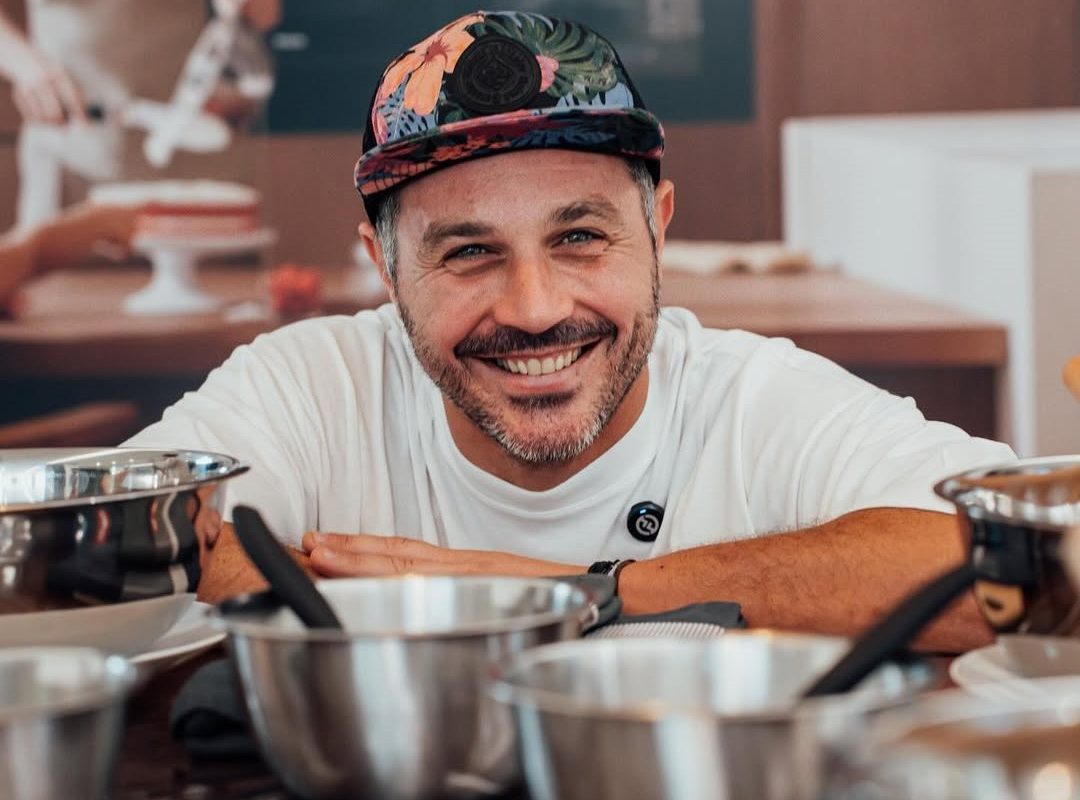
As he prepares for his first restaurant project in Glyfada, Thanos Feskos speaks to NouPou about the Athens Riviera as a gastronomic destination, about overpriced dishes and unsustainable costs, about delicious food with or without stars, and about everything that makes the Greek dining scene both exhaustingly difficult and endlessly fascinating.

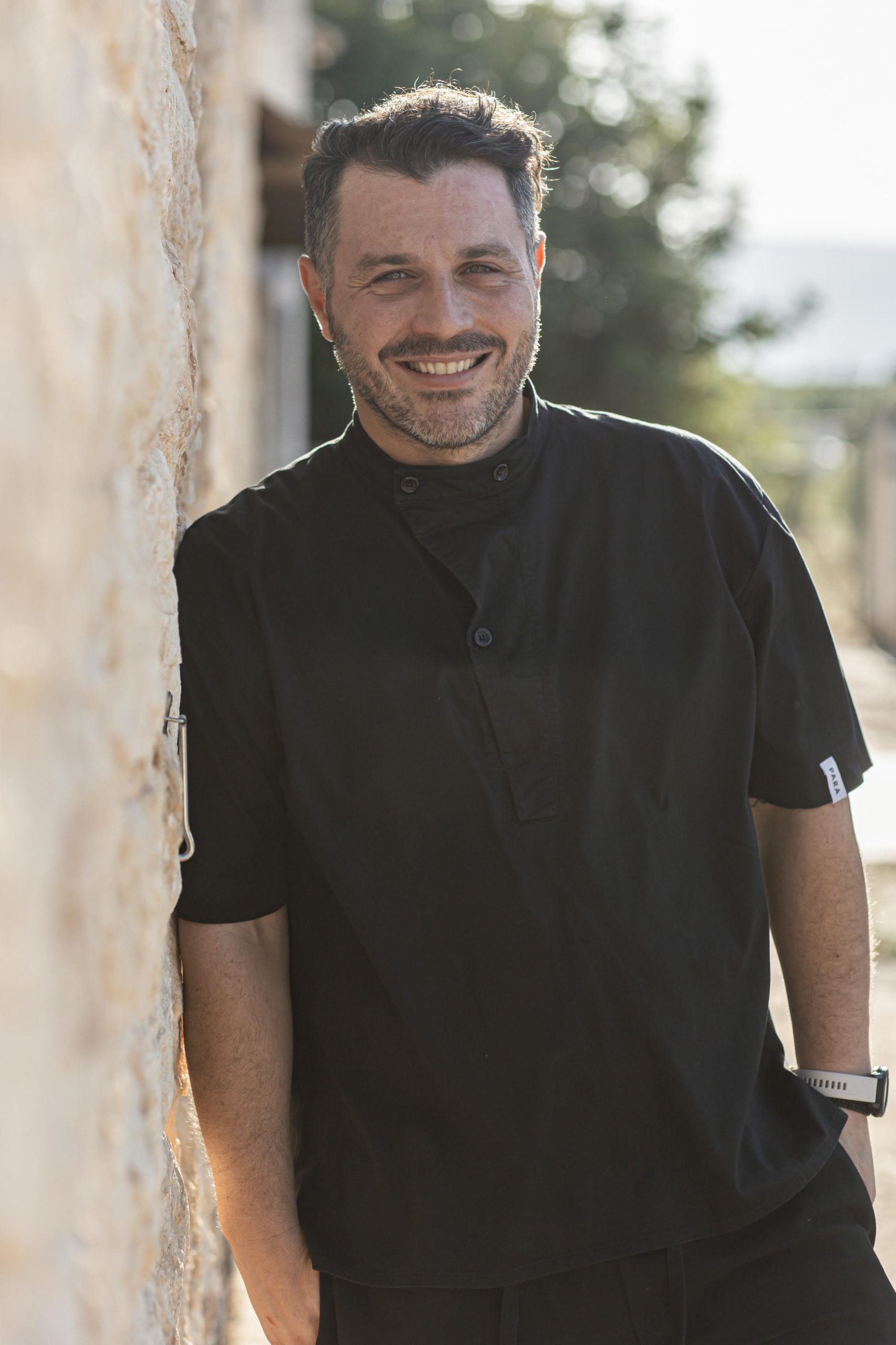
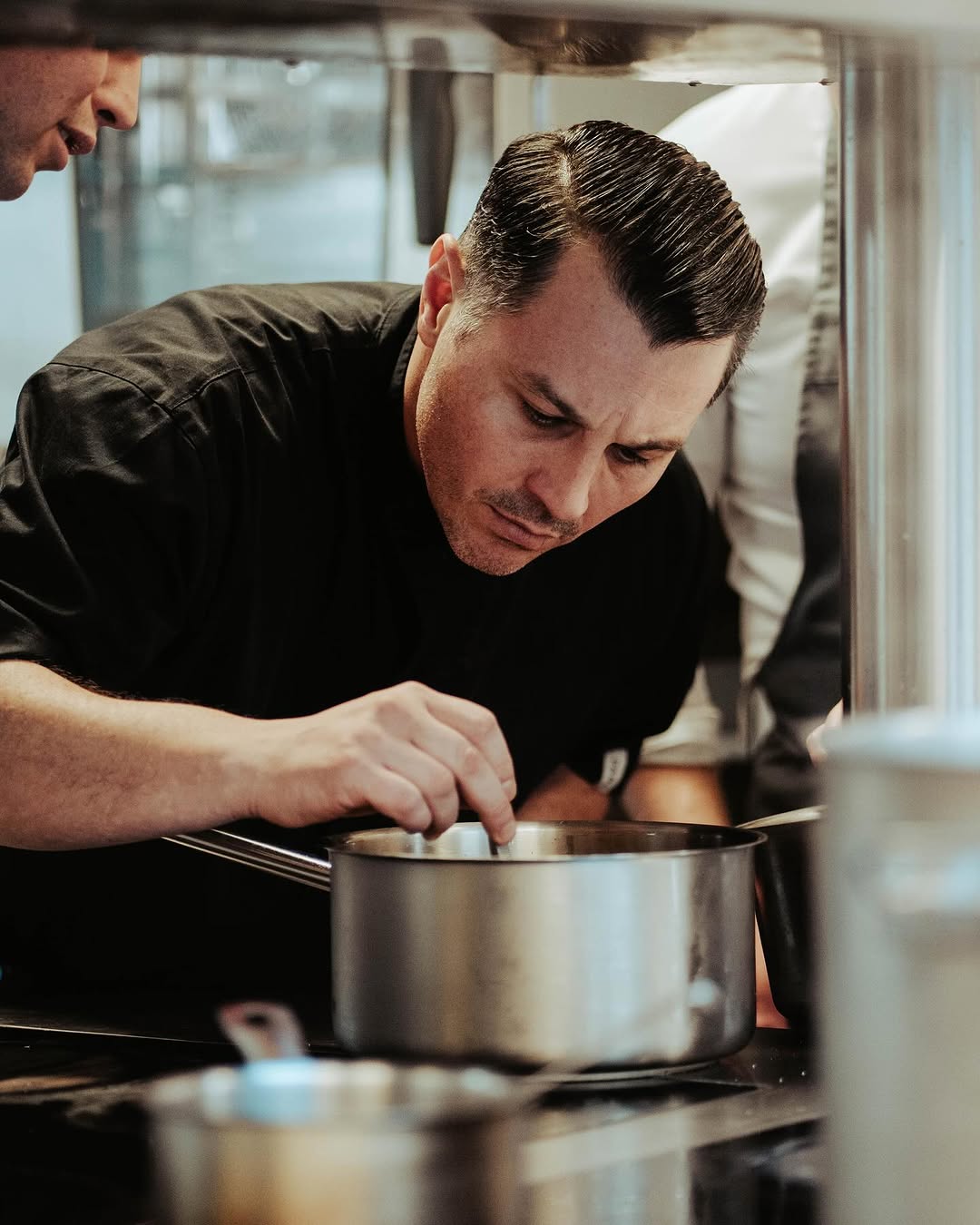
He sees gastronomy with the clarity of someone who has lived it from the inside. He knows very well how it works abroad, he has seen how it operates in Greece, both from the perspective of a cook and as an entrepreneur, and he speaks about it with emotion but also realism. His path through kitchens – from the three-star Geranium in Copenhagen to Delta at the SNFCC, the only Greek restaurant with two Michelin stars and a Green Star for sustainable gastronomy – demands big dreams and a strong stomach. Thanos Feskos, one of the most acclaimed Greek chefs of his generation, talks to us about food and dining in Greece (and in the south) today.
How does a chef who has worked abroad for almost two decades, in some of the world’s most demanding kitchens, see contemporary Greek gastronomy?
I like that we start with this question. But I believe there is no comparison with abroad, for many reasons. Gastronomy in Greece is currently at a very high level. From street food to comfort food, to gastropubs, to fine dining – everywhere. We have amazing cooks, a lot of talent, incredible products. Unfortunately, though, the restaurant industry is going through a crisis in terms of management on the part of the state.
You mean taxation?
Certainly. But not only that. We talk, for example, about sustainability in dining in 2025, yet there are no laws to support sustainability in gastronomy. To achieve sustainability, you need to use specific cooking techniques, so that you don’t throw things away, so you have low waste. Most zero-waste cooking techniques, however, are illegal in Greece: fermentations, pickling – that is, making pickles – or making minced meat in-house from leftovers that would otherwise be thrown away. All these are illegal. There is no recycling. No composting. So, from an operations perspective, there is no support for sustainable gastronomy. Also, I believe dining is not approached realistically: food constantly increases in price. We try to put workers into a legal framework, but the state keeps increasing payroll costs, which is the most significant cost for restaurants. If you add taxes, it simply doesn’t work.
So restaurants still “don’t make it,” despite the price increases we’ve seen in dining? Right now prices are so high that, for most people, a good meal out is unaffordable, or at least very rare.
The truth is that this applies in general, and not only to good restaurants. Even if you want to eat souvlaki twice a week, the cost is high. By the end of the year, souvlaki will reach 5.5–6.0 euros. But when you take on a business partner – because in Greece taxation is so high that the state becomes a partner in every business – and whenever that partner wishes, it raises or lowers its percentage with any excuse, then we have a problem. We must look at labour cost, we must look at taxation, we must look at working hours, and we must consider other matters as well, such as laws for people with disabilities, so they too have the right to dining. We need to look holistically not just at restaurants, but hospitality as a whole.
You were head chef for nine years at the three-star Geranium in Copenhagen. I won’t ask what it’s like to cook in one of the world’s most iconic restaurants. Instead, I’d like you to tell me how it feels to eat there.
For me, it is the ultimate experience. Whether it’s in Greece, Denmark, Hong Kong, or New York, it’s worth travelling there to eat at such a restaurant. And I say “experience” because it’s something you will remember for a long time. Geranium is one of the most beautiful restaurants in the world and has an incredible vibe: it’s one of the happiest restaurants I have ever seen, something that radiates from the team outward. As for the food, if I had the opportunity, I would want to eat it every day. Of course, that’s something I obviously cannot do, since it costs 670 euros per person, just for the food – with wine, it reaches about a thousand. But I believe it’s among the most flavorful, conceptually interesting food ever created. So for me, it’s a culinary investment that’s 100% worth it.
Could the Athens Riviera evolve into an international gastronomic destination like Copenhagen?
The Athens Riviera will develop very quickly in the coming years. What I think those involved in its dining scene should pay attention to, however, is respect for the people who honour them with their presence.
Do you have something specific in mind and that’s why you say this?
I have many things in mind, but it’s better not to mention them. Or, actually, I’ll give you one example: I’m at a restaurant on the Athens Riviera. I’m there with friends for lunch, we’ve had wine, we’ve made a four-digit bill. And I want to go for a swim, because the restaurant is right on the beach – a very beautiful place. They didn’t allow me to swim. They told me I had to go downstairs, pay for a sunbed, and then, if I wanted, I could go for a swim. That made me not want to pass even outside the place again. Not because of the money, but because of the attitude.
If you had the space, the time, and an unlimited budget to create a symbolic restaurant of the Athens Riviera, what would be its concept?
It would be on the little island across from Vouliagmeni. To eat there, you would have to reach the island somehow. The menu would be created entirely from products offered by the Greek terroir.
Could it be a plant-based restaurant?
Not plant-based, vegetarian yes.
As a chef, are you not interested in vegan cuisine?
In Denmark, I was awarded for a vegan restaurant. It was called Angelika and it was a pop-up inside Geranium which, if it had continued, I believe would have earned a Michelin star. But I wouldn’t put it in terms of whether I am or am not interested in vegan cuisine. What interests me is to accommodate any dietary preference a guest might have.
How do current prices on the Athens Riviera look to you?
I think they’re high. And they discourage a lot of people from coming to eat on the Athens Riviera. At the same time, there’s a clarification happening: restaurants in this way keep exactly the clientele they ultimately want. Personally, I know people who come to the places I have in Athens and, when I tell them we’re opening in Glyfada, they reply, “Glyfada? I haven’t gone in six years.” And I’ll tell you something else about prices, from personal experience: last summer – I won’t say which place, but it was on the Athens Riviera – I paid 21 euros for a plate of eggs Benedict. That price cannot be justified. The cost of that dish, because I’ve costed it myself, is 3.10 euros. They charge it seven times above cost, when the standard business practice is three to four times.
You already mentioned it, even though it would have been my next question. So tell me about what you’re preparing in Glyfada, the Anapsiktirio.
It’s a concept I’m really looking forward to. I believe we will create something unique there. We will cook in a wood oven, but that doesn’t mean we’re talking about wood-oven “stews” as we usually think of them in Greece. It will be food cooked this way, but not “home-style stews.” We’ll also serve dishes that make us happy. One of the dishes I’d like to have is pasta with minced meat. We’ll have our own charcuterie, our own cheeses… We’ll definitely work seasonally, meaning some dishes will change even week by week. We’ll have a nice breakfast with a few items, and then a lunch/dinner menu all in one. We’re going to see a lot of things at Anapsiktirio – very creative things too, based on the logic of the Anapsiktirio, but completely abstracted. Everything will be contrasting, but will ultimately come together in harmony on the table.
You’ve said you’re no longer interested in chasing stars, but in cooking and sharing. Is Anapsiktirio the result of this desire?
That’s not exactly true. I want to do the very best I can for the people who honour me with their presence. If a star comes, it will be welcome with deep gratitude. But I’m not going to stress and pressure myself for something that has eaten… how can I put it, it has consumed many things in my life. I don’t have the strength anymore to do that.
Is fine dining the only path to such an award, or could a star come to a project like Anapsiktirio?
There are awarded restaurants all over the world that have nothing to do with fine dining. Like a restaurant run by a woman in Thailand, which I admire a lot, and it’s street food: she only serves crab omelette and dumplings. And she was awarded one star. Also, a sushi restaurant in Tokyo, inside a subway station, has three Michelin stars.
Why haven’t we seen this in Greece yet?
In Greece, it will take time before we see this. And it’s not due to lack of talent. We have extremely good chefs. It’s no coincidence that right now – including myself until recently, as I was the first Greek head chef in a three-star Michelin restaurant – some of the world’s top restaurants are run by Greeks. So the answer is clearly not lack of talent. And it’s obviously not lack of products. But such an award also requires support. And here I will once again mention state management. In 2024, we didn’t even know if a Michelin Guide for Athens would come out, because we were negotiating Athens’ business transaction with the guide. I also don’t think it makes sense to say “Greek Michelin Guide” and have it refer only to the region of Attica. There are restaurants throughout Greece that deserve these awards. In Corfu, Santorini, Thessaloniki, Serres, Paros, Sifnos… so many places with such beautiful concepts. And it’s a shame, because there are people who travel based on these guides. Whether it’s La Liste, 50 Best, or the Michelin Guide, there are people who open these guides to decide where they will travel. And in Greece we only have Athens. I think that’s unfair.