
PDRN, postbiotics, exosomes: what we need to know about skincare in 2026

From TikTok and K-beauty to highly specialized ingredients, skincare in 2026 is changing the way we think.

After a decade of information overload, layering, intense actives and viral routines, skincare is entering a phase where knowledge comes before excitement.
What is really changing is not so much the products themselves, but the way we use them. Major beauty markets, from Europe to Asia and the US, are talking about a more realistic relationship with skin. Fewer expectations, more observation. No more pressure to look perfect, but to feel comfortable in your own skin. And this is where the trends of 2026 come in—as small shifts that are already happening and gradually reshaping our routines.
Active ingredients, reinterpreted
Ingredients remain important, but they seem to be read differently. Niacinamide, for example, continues to be a staple, mainly in products that aim to improve skin comfort, evenness and barrier support. The difference is that we no longer see it in excessive percentages or at every step of the routine. It is used more moderately, integrated into creams and essential everyday skincare products.
Peptides are following a similar path. From a broad anti-ageing promise, they are moving into more specific roles. They are incorporated into products with a supportive function, often combined with hydrating agents, rather than standing out as a single highlight ingredient.
Exosomes are also attracting particular interest and are widely discussed both in scientific circles and on social media. In 2026, however, the conversation is becoming more cautious. For context, exosomes act as information carriers within the skin. They support cellular communication mechanisms, contributing to skin repair, improved texture and overall quality by activating natural regeneration processes. Experts point out that this is a technology with great potential, but also with many variables: how exosomes are stabilized, how they are delivered within a formula, and how they are used. That is why, for now, we mainly see them in professional protocols or very specific formulations, rather than as an everyday must-have.

At the same time, ingredients such as PDRN and postbiotics are gaining ground—not because they are new, but because they respond to a more mature need: restoring and maintaining skin balance over time. PDRN, a bioactive ingredient derived from salmon DNA and used for years in aesthetic medicine, stands out for its role in cellular regeneration. It enhances collagen and elastin synthesis, contributes to deep hydration and supports the skin’s natural repair processes, which is why it is increasingly found both in professional treatments and in more advanced daily-care formulations.
Postbiotics, meanwhile, bring a more modern understanding of skin health to the forefront. These are beneficial by-products of probiotics that support the microbiome, soothe redness and inflammation, strengthen the skin barrier and improve overall skin comfort.
TikTok effect: why trends move faster than skin can handle
On TikTok, the picture is becoming more complex. On the one hand, we still see multi-step routines that are visually flawless, almost cinematic. On the other, more and more dermatologists and skin experts are using the platform to explain why we don’t need to do everything we see on our feeds. Trends such as skin cycling remain popular because they offer something practical: a more structured approach to using active ingredients. Instead of daily overload with acids and retinoids, skin cycling suggests alternating days with active products and days dedicated to hydration and recovery. This gives the skin time to respond to actives without becoming depleted, reducing the risk of irritation and barrier disruption. It is not another strict routine, but a gentler, more mindful way of caring for skin that adapts to its needs.
By contrast, “quick hacks” and DIY solutions are increasingly met with scepticism, as audiences become more informed and less willing to experiment indiscriminately.
Gen Alpha: skincare starts earlier
In this environment, it does not go unnoticed that younger and younger ages are entering the world of skincare. Children aged 9 to 12 now regularly appear at beauty counters, with social media playing a decisive role in shaping desires and habits. On the one hand, this leads to the development of gentler, hypoallergenic products and more careful language around skincare. On the other, it raises a valid concern: when does skincare function as play, self-care and imitation of adults, and when does it start to cultivate the idea that skin constantly needs improvement?
The risk lies less in the products themselves and more in the message being conveyed. When skincare is presented as a prerequisite for acceptance, or when appearance takes centre stage so early on, beauty stops being an experience and becomes an obligation. In 2026, this conversation is opening up more clearly, with parents, brands and experts being called on to find a delicate balance between gentle care and premature pressure for “perfect skin” from such a young age…

The rise of eye creams at younger ages
Until a few years ago, eye creams were considered almost unnecessary at a young age. When I was 20, a good face cream generally did the job… The idea that this area needed separate care came much later, usually when lines or pronounced signs of fatigue began to appear.
Today, that has changed. Eye creams are attracting a younger audience not out of fear of wrinkles, but in response to more immediate concerns: puffiness, dark circles, dehydration and signs of tension. Constant exposure to screens, high-resolution cameras and strong lighting has turned the eye area into a focus of attention much earlier than in the past.
There is also a purely biological reason. The skin around the eyes is thinner, more delicate and less resilient compared to the rest of the face. It reacts more easily to dehydration, fatigue and environmental stress, which is why it requires a different approach to care. Modern eye creams do not promise dramatic transformations, but focus on proper hydration, decongestion and maintaining a more rested appearance in everyday life.
Ultimately, the rise of eye creams is not just another obsession with prevention. It is a sign that skincare is becoming more specialized, better informed and more adapted to real-life conditions.
K-beauty & pop culture: from trend to everyday practice
K-beauty continues to rise alongside pop culture. This is not simply about new products or ingredients, but about a philosophy that emphasizes maintenance rather than correction.
In 2025, we saw polynucleotides in facial treatments, the boom of at-home LED masks and the return of the glass skin aesthetic. 2026 follows on from this, with even greater emphasis on long-term care and low-intensity consistency. New textures, multifunctional formulations and gentle protocols make skincare more accessible and less stressful.
Interestingly, this approach is now clearly resonating with Greek audiences as well. In pharmacies, beauty stores and e-shops, Korean brands and K-beauty-inspired ranges are no longer aimed only at hardcore beauty enthusiasts, but at people looking for everyday care with gentle action and a clear purpose. They speak to those seeking mild products, daily comfort and routines that do not require excessive knowledge or time. K-beauty, in other words, is no longer a “special category” but is increasingly integrated into mainstream skincare, precisely because it aligns with the need for balance and simplicity.
Exfoliation without excess
For years, exfoliation was almost synonymous with good skin. Acids, peels, exfoliating toners and masks dominated routines that promised instant glow and smooth texture. The results were often impressive at first, but for many skins the price came later: a weakened barrier, chronic sensitivity, inflammation and increased reactivity.
In 2026, exfoliation does not disappear, but returns on its own terms. The focus shifts to maintaining a natural and stable rate of cell turnover without disrupting the skin’s protective system. Gentler acids, enzymatic formulas and slow-release technologies allow for more frequent but more skin-friendly use, while formulations are designed to work alongside barrier-supporting ingredients. Exfoliation stops being an act of intensity and becomes a process of cooperation with the skin.
At this point, personal experience often sheds light on what trends do not say. During a recent visit to a dermatologist, a microscopic examination revealed something that was not visible to the naked eye: a subclinical, quiet form of rosacea. Not intense, not obvious, but enough to explain why—without realizing it—I had never adopted acids or aggressive exfoliation practices. Something always kept me at a distance, more instinct than knowledge. When this was confirmed by a specialist, the observation was simple: fortunately, I hadn’t gone there until now.
So it becomes clear that the real question is not whether acids “work,” but for which skin and at what moment. And perhaps this is the most essential message of the new era in skincare: less trust in one-size-fits-all formulas, more attention to what our own skin is telling us—and, of course, to the experts who see it up close.
Lips, neck and décolletage: areas moving into focus
Lip balm as we knew it is no longer enough, and the same applies to care that until recently was limited exclusively to the face. Lips, neck and décolletage are now gaining an independent place in skincare routines, as it becomes increasingly clear that these areas have different needs and heightened sensitivity.
The lips, with a thinner barrier and greater exposure to environmental stress, now require targeted care that goes beyond the temporary comfort of a balm. Lip masks, serum-like treatments, overnight formulas and gentle enzyme-based exfoliants are designed to strengthen the barrier and keep the area in good condition over the long term.
Similarly, the neck and décolletage are no longer treated as extensions of the face. Thinner skin structure, constant movement, sun exposure and now the strain of daily screen use make these areas more prone to dehydration, loss of elasticity and uneven texture. In 2026, we are seeing specialized formulas that focus on support, hydration and comfort.
Hands step into the spotlight
For years, hands were sidelined in skincare, limited to a cream used sporadically, usually when they felt rough or dehydrated. In 2026, this changes. Hands are moving decisively into the skincare frame—not only because they reveal age, but because our daily lives have brought them into focus more than ever.
On TikTok, skincare junkies and beauty creators now showcase complete hand-care routines: cleansing, exfoliation, serums with peptides or niacinamide, rich creams and sun protection. This is not simply excess or an aesthetic fetish. It is a natural evolution in a world where hands constantly appear in cameras, stories, close-ups and videos—often more than the face.
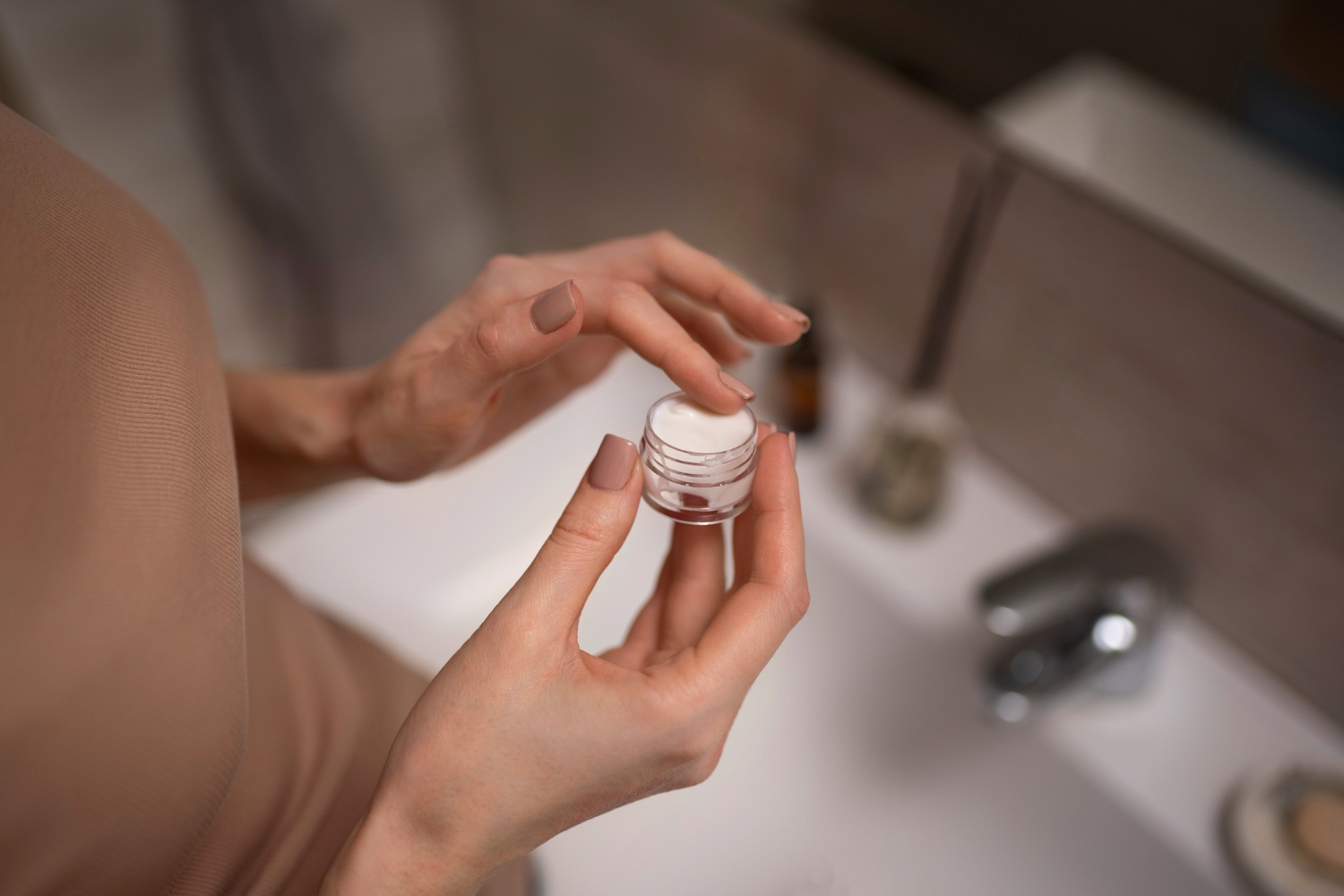
At the same time, increased use of antiseptics in recent years, frequent washing and sun exposure have left their mark. Fine lines, dryness, uneven tone and loss of comfort become more visible and call for more specialized care. As a result, we are seeing hand products designed with a skincare mindset: formulas with ceramides, panthenol and even more advanced ingredients that until recently were reserved for the face.
The rise of hand care is part of a broader shift: skincare is no longer just about the face, but about every area that carries the daily imprint of time and life.
Microbiome: when skin seeks calm
In recent years, the microbiome has moved from a theoretical concept to a key criterion in product choice. And not by chance. Skin is not a clean surface, but a living ecosystem of microorganisms that directly affect inflammation, defence and overall behaviour. When this balance is disrupted—by excessive cleansing, constant use of actives or aggressive routines—skin becomes more reactive, more sensitive and less resilient.
In 2026, the approach changes. Care no longer aims to eliminate everything, but to support what is already working well. Products with prebiotics, postbiotics and gentle bases come to the forefront, not for instant results, but for a more stable daily reality for the skin. The logic is simple: when the microbiome is balanced, skin reacts less, recovers more easily and requires fewer interventions.
Peptides: their mature phase
Peptides have been part of skincare for years, but in 2026 they are better understood. With improved stability and absorption, they act as “signals” that support collagen production, repair and inflammation control. And because they can deliver noticeable improvements without causing irritation, they become a first-line choice for skins that want results without discomfort.
Supplements: a more holistic approach to beauty
The idea that skin and hair reflect our overall condition is not new. What changes in 2026 is the way supplements are approached: with greater seriousness and a clear goal. Formulas with biotin, zinc, omega-3s, collagen, amino acids and adaptogens are integrated into regimens that view beauty as part of a broader balance.
Not as a promise of quick results, but as daily support. A calmer, long-term approach that does not chase the “before and after,” but builds resilience over time: in the skin, the hair and, ultimately, in overall wellbeing.
As a beauty editor, what I take away from what I see shaping up for 2026 is not another ingredient or a new technique. It is a shift in focus. From the impressive to the functional. From the face alone to all the areas that carry time and everyday life: hands, neck, décolletage, lips. Personally, this is the year I intend to pay much more attention to them.
After so many years in the field, I have learned that skincare does not work when you treat it like a checklist. It works when you integrate it into your life. When you observe your skin, listen to it and give it what it needs—no less, no more. And this is perhaps the greatest gain of the new era: more knowledge, less pressure.
If there is one thing worth holding on to from skincare in 2026, it is this sense of freedom. To choose what suits us. To care for the areas we used to ignore. And to remember that the best routine is the one you can—and want to—maintain over time.