
Fun and educational activities to do with your kids in the Southern Suburbs of Athens
Family activities and outings in the Southern Suburbs of Athens with an educational character, free of charge, for quality time with your kids.

Many Saturdays I feel like I’ve run out of ideas for how to spend the day with the kids. It’s the perfect opportunity to spend more time together, but it’s not just about filling the hours -it’s about filling our hearts, too. Sure, it’s perfectly fine to go to an indoor playground, but that’s an activity that doesn’t really require my participation. The time passes pleasantly enough, but with almost no interaction between us. The truth is, I don’t always feel like playing on the swings either -especially as they grow older, make friends, and only come over to the bench where I’m sitting to ask for a snack. So how can I spend meaningful time with them while we all have fun?
If the weather’s bad, baking a cake together is always a safe choice. But since we live in the Southern Suburbs of Athens, the weather is usually good, and we love spending time outdoors. So I thought: there are things we can do that cost little to nothing, are interactive and educational, and allow me to participate without necessarily having to “play.”
A stroll through the organic market in Voula
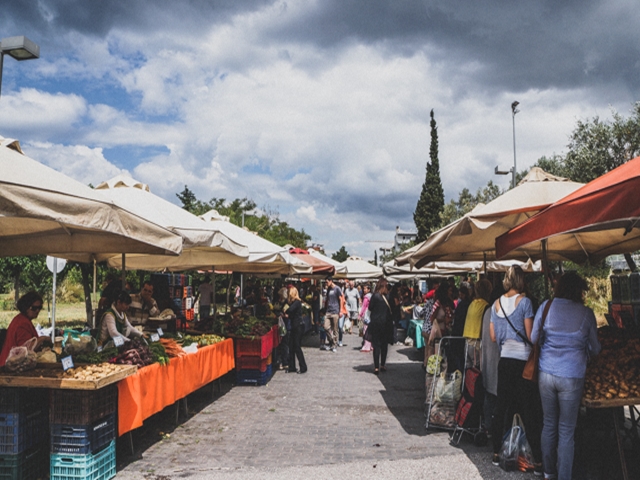
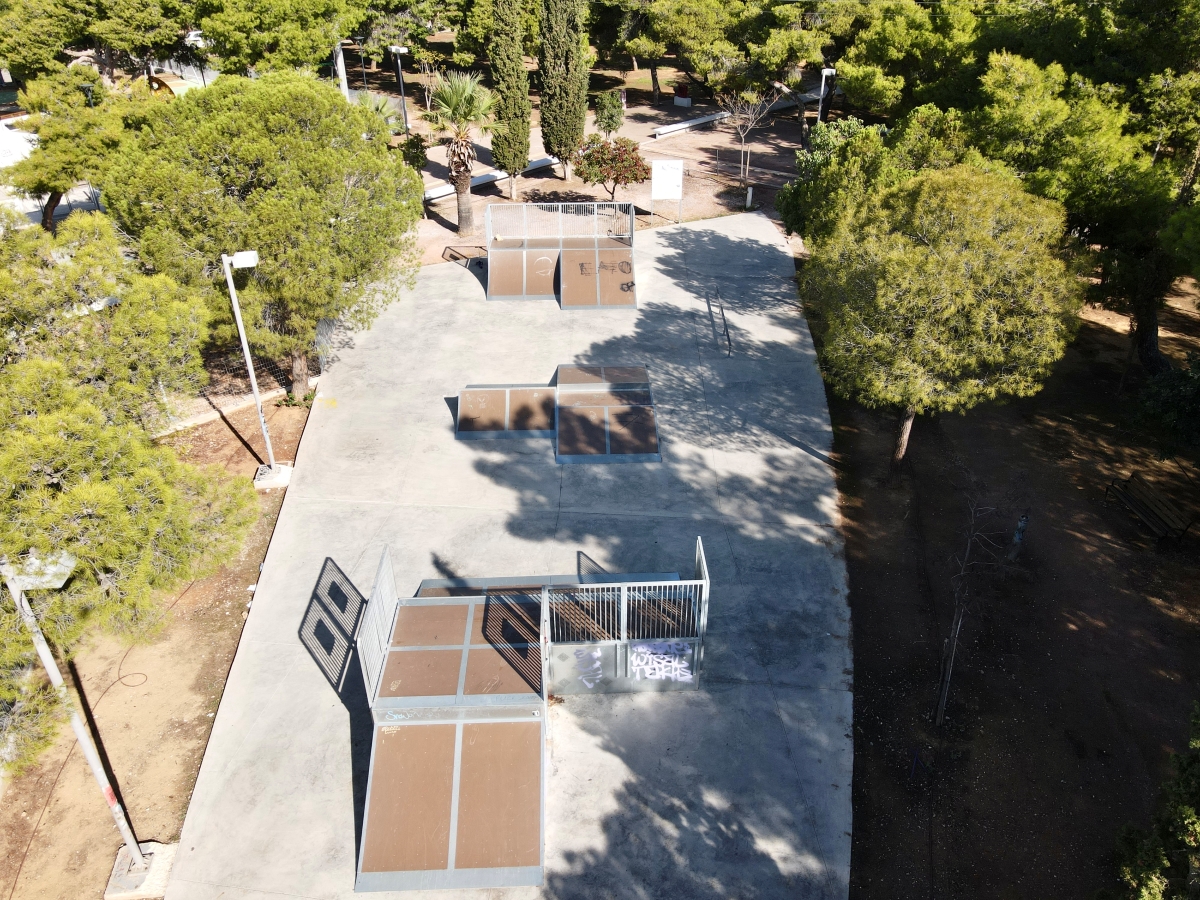
In Voula, just one street up from the coastal avenue, on Nireos Street, the Organic Farmers’ Market takes place every Saturday. Right above it, there’s a newly renovated park (below Iroon Polytechneiou square) with a playground and a skatepark. Across the road, on the seaside lane of the coastal avenue, there’s a pedestrian path that runs parallel to the shoreline -perfect for walking, cycling, or scooters- and a bit further down, you’ll find the playground near Notos. So you can easily combine a visit to the playground with a stop at the market. But why, you ask?
Because it gives you a chance to talk with your kids, to learn about seasonal fruits and vegetables -and an extra plus is that organic produce often looks slightly different (in shape, color, or size) from what we see in supermarkets. By seeing, touching, and smelling the fruits and vegetables, you might get inspired to make a lovely vegetable quiche, try a fruit you’ve been hesitant to include in your diet, or even buy something “strange” to experiment with later at home. Experiential learning isn’t something you delegate entirely to school—you can weave it into your daily life through simple activities like this one.
Here’s a bit of homework for home, something I did with the kids and they loved it. We laid out one piece of each type of produce we bought, covered our eyes with a scarf, and tried to guess the fruits and vegetables by touch and smell. Then, like little still-life painters, we arranged them nicely in a basket and drew them! And in the end, of course, we ate them too.
A ride on the tram or the bus

If you’re one of those people who never part with their car -or if taking public transport isn’t part of your daily routine- a ride on the tram or bus can be a thrilling experience for young children.
With the tram or the bus, you get to look out the window -hat’s why we didn’t include the metro here (not because we don’t have one in the Southern Suburbs; of course we do!).
First, plan your route. If you’re coming from Voula or Glyfada, you can go as far as Flisvos Park to continue your day there. If you have more time, or if you’re starting from Alimos, Nea Smyrni, or Palaio Faliro, you can even go all the way to Syntagma Square. Isn’t that practically a full-on excursion to the city center? You’ll see Zappeion -with its lovely swings and gardens- the Parliament, the Tomb of the Unknown Soldier, the changing of the guard, and more. But the destination isn’t what matters most here -it’s the experience of the journey.
Show your child how to buy and validate a ticket. Explain who gets priority seating when the bus is full, or point out accessibility features for people with disabilities. Name the neighborhoods you pass through, and share as much information as you can that they’ll understand about what they’re seeing from the window. The things that seem ordinary to us might be pure discovery for them. Add a little extra enthusiasm to your descriptions to fuel their imagination or give them ideas for future outings. For example: “There’s an amazing pastry shop here! We could try it next time!”
Once, Princess Diana took William and Harry on a bus ride in London because she wanted to show them what “real life” was like for ordinary people. So even if you’re raising little princes and princesses, a tram ride is definitely in order.
A visit to the Archelon Sea Turtle Rescue Centre in Glyfada
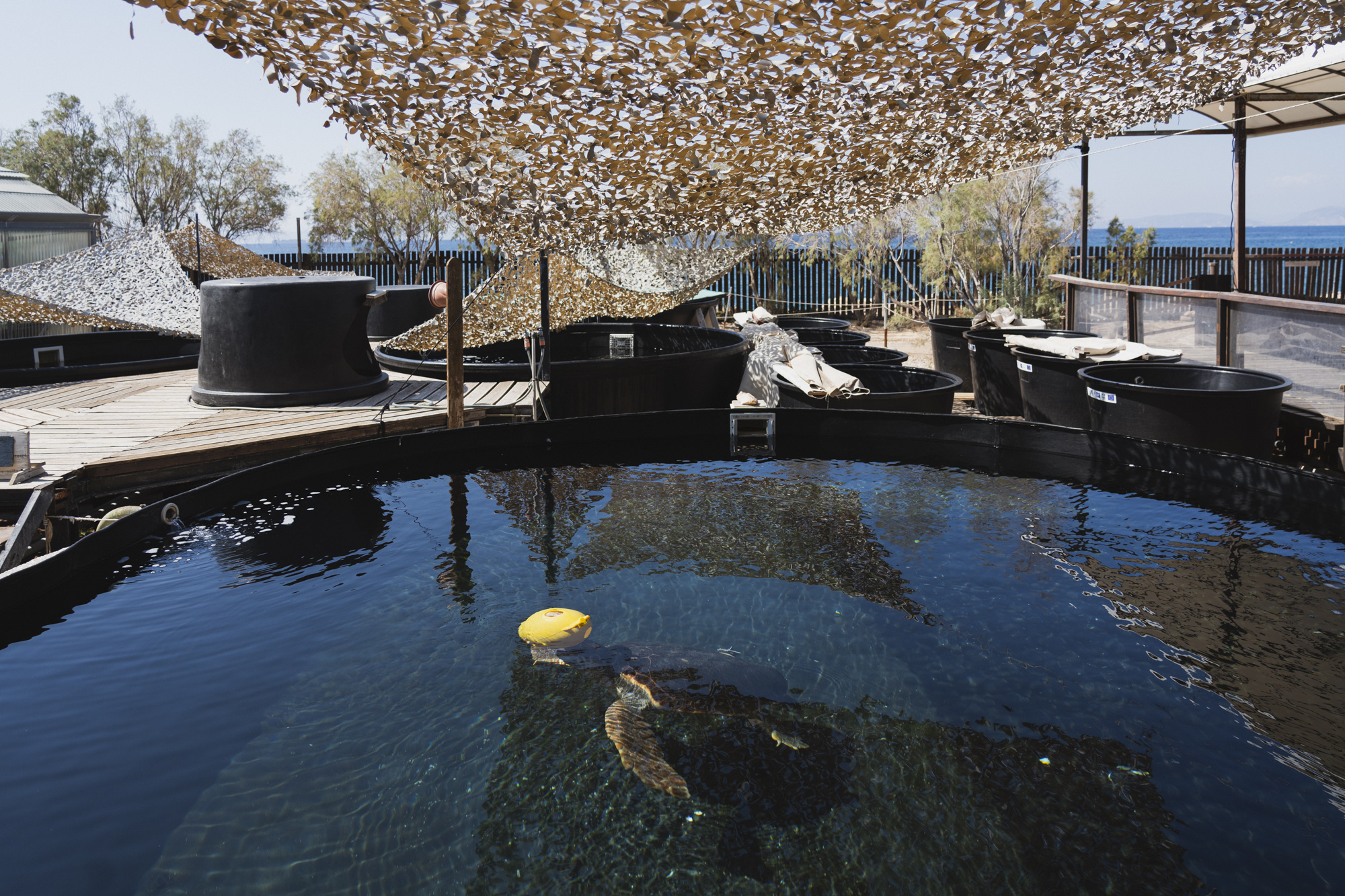
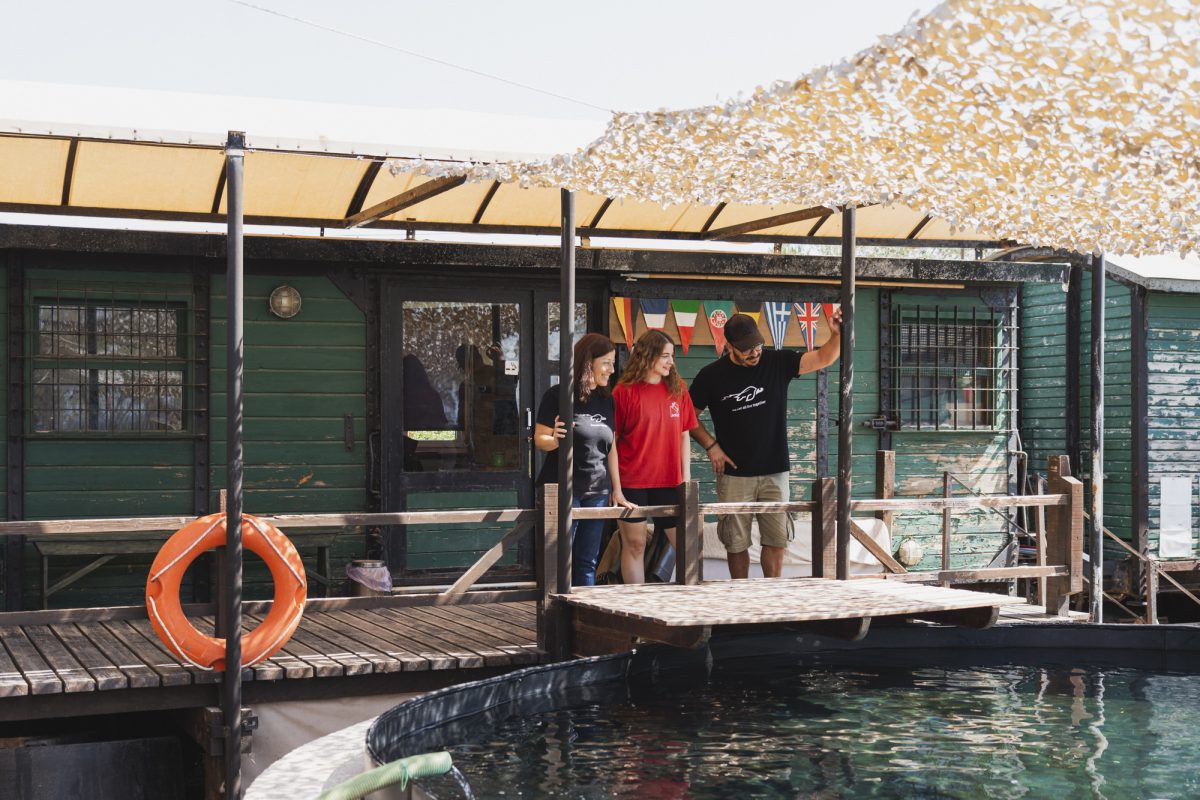
The Archelon Centre is a Sea Turtle Rescue Centre located at the 3rd Marina of Glyfada. It operates thanks to volunteers from all over the world, along with specialized permanent staff who care for around 70 injured or sick sea turtles each year. Once rehabilitated, the turtles are released back into the sea. The centre is open to the public, with free admission and no need for booking (except for organized school visits).
There, a volunteer will give you a 15-minute guided tour. You’ll see the turtles, learn a lot about these fascinating marine creatures, and if you wish, you can make a donation -or even “adopt” a turtle (adult or baby) or cover the medical care and stay of an injured turtle for a month. Every adoption comes with a printable certificate. Even if you simply visit Archelon for an introductory experience, you’ll leave enriched -and both you and your child will learn so much.
Our family cleans a beach
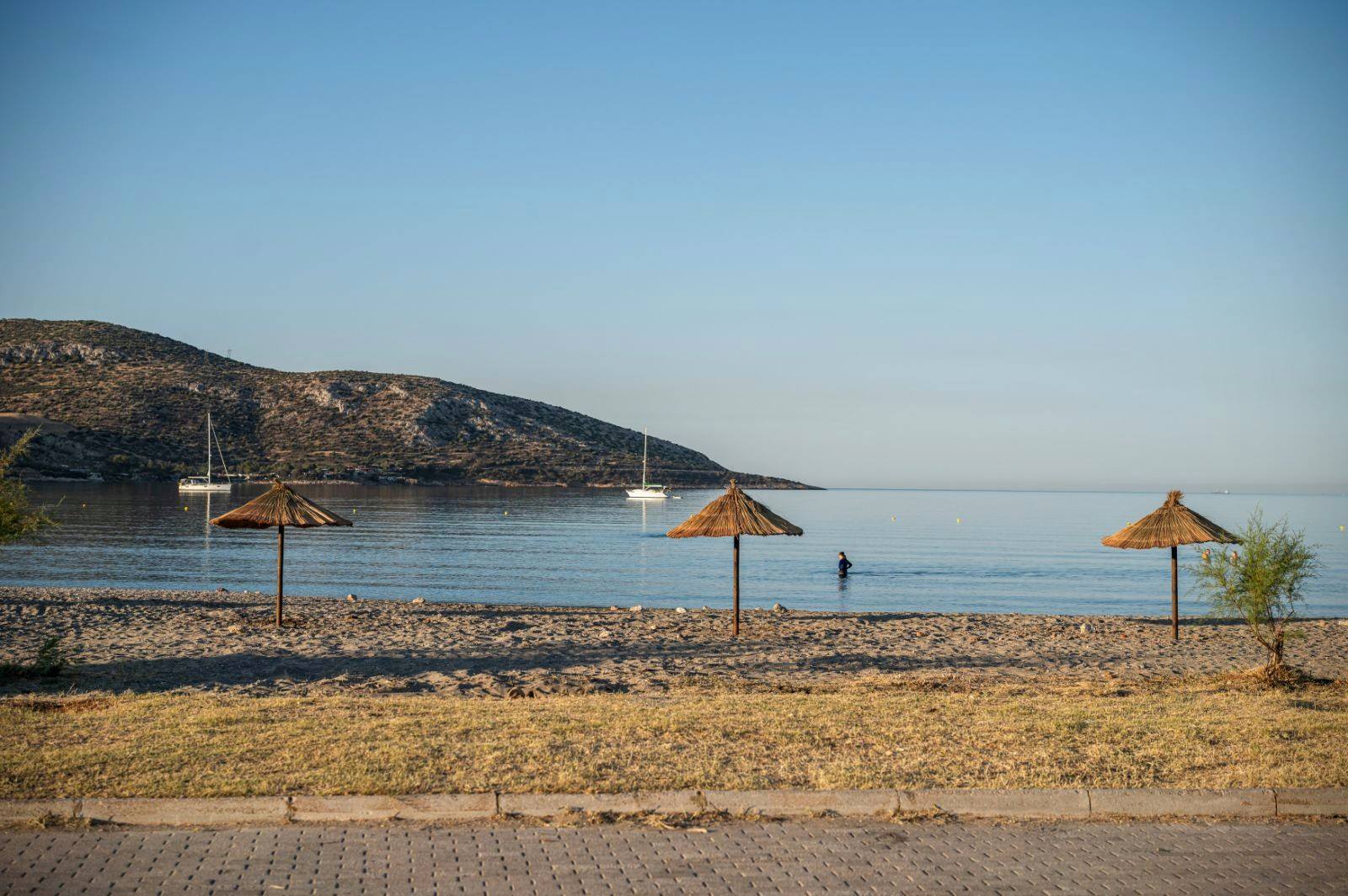
The beaches of the Southern Suburbs of Athens are many and beautiful, and despite the municipalities’ efforts to keep them clean, hidden “trash treasures” often make their presence known in the sand. This makes for a unique kind of treasure hunt you can play as a family -while teaching your kids valuable lessons. First, that even if a piece of trash isn’t ours, that doesn’t mean we can’t pick it up. Second, that even small actions like ours can make a big difference, setting an example and inspiring friends to do the same. It’s also an opportunity to explain how waste ends up on the beach -and from there, into the see- and what consequences this has for marine life and for us humans.
Depending on your child’s age, you can tailor the message with words and ideas they’ll understand. For you, the adult, I’d like to recommend three documentaries on Netflix where you can gain more knowledge and then pass it on to your child in your own way: Seaspiracy, My Octopus Teacher, and Chasing Coral.
You’ll need a few garbage bags, a small bucket for the child, gloves, and optionally a grabber and a sieve (hands work just fine, but tools make it even more engaging for kids). Of course, you don’t have to clean the entire beach from end to end -though in your child’s eyes, by the end of the day, it might look like you did. Let them fill their bucket with the “trash treasures” they find, and empty it together into the big bags, which you’ll then throw away in the large bins.
If you have the energy and motivation, you can also sort out recyclable items and put them in the blue recycling bins. But even if you don’t -congratulations for your effort. You’re doing great either way. One step at a time.
When your child gets tired or loses interest, don’t push them further. Even if they want to stop after a few minutes, that’s perfectly normal -our little volunteer will probably prefer to play. And the beach is always a great place for play, all year round.