
George Tasoulas: The sourdough maker behind Bobota teaching Athens how to bake bread
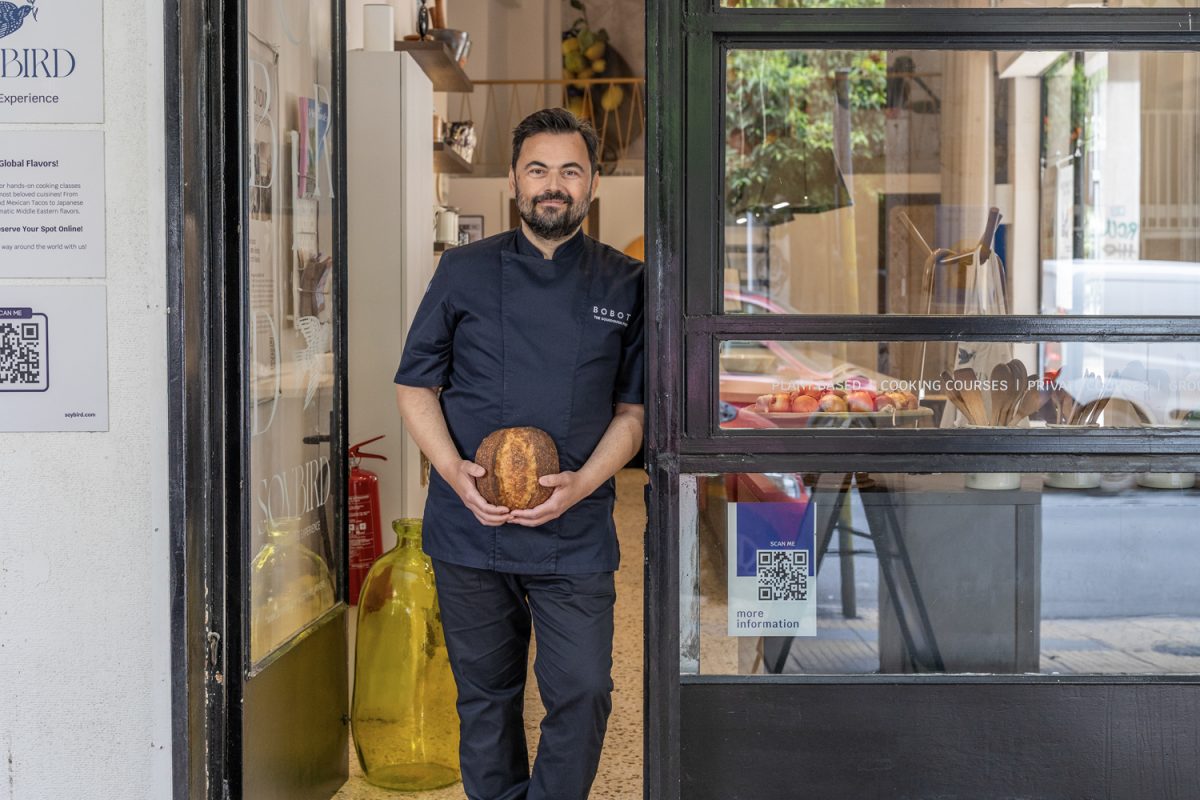
He started by kneading dough during the lockdown and delivering his loaves door-to-door in Nea Smyrni. Today, George Tasoulas introduces curious Athenians to the secrets of natural sourdough through “Bobota the Sourdough Project.” We attended his workshop in Koukaki and made our own sourdough bread.

Sunday morning, the clock has just changed from winter to summer time and I’m anxious my alarm won’t go off and I’ll be late. I have an appointment in Koukaki, at Soybird, a space that hosts various cooking workshops. My interest is firmly “locked” on sourdough, an art that seems to be making a comeback after the lockdown—a skill we didn’t know we had and that turns out to be less complicated than we thought.
George Tasoulas is there to make our lives easier, introducing us to the secrets of sourdough, but above all to reconnect us with something we can create with our own hands, leaving our phones aside for 3–4 hours. That Sunday, we were 13 people with different backgrounds but the same shared curiosity: to learn “how to feed a sourdough starter” or what the ideal flour is.
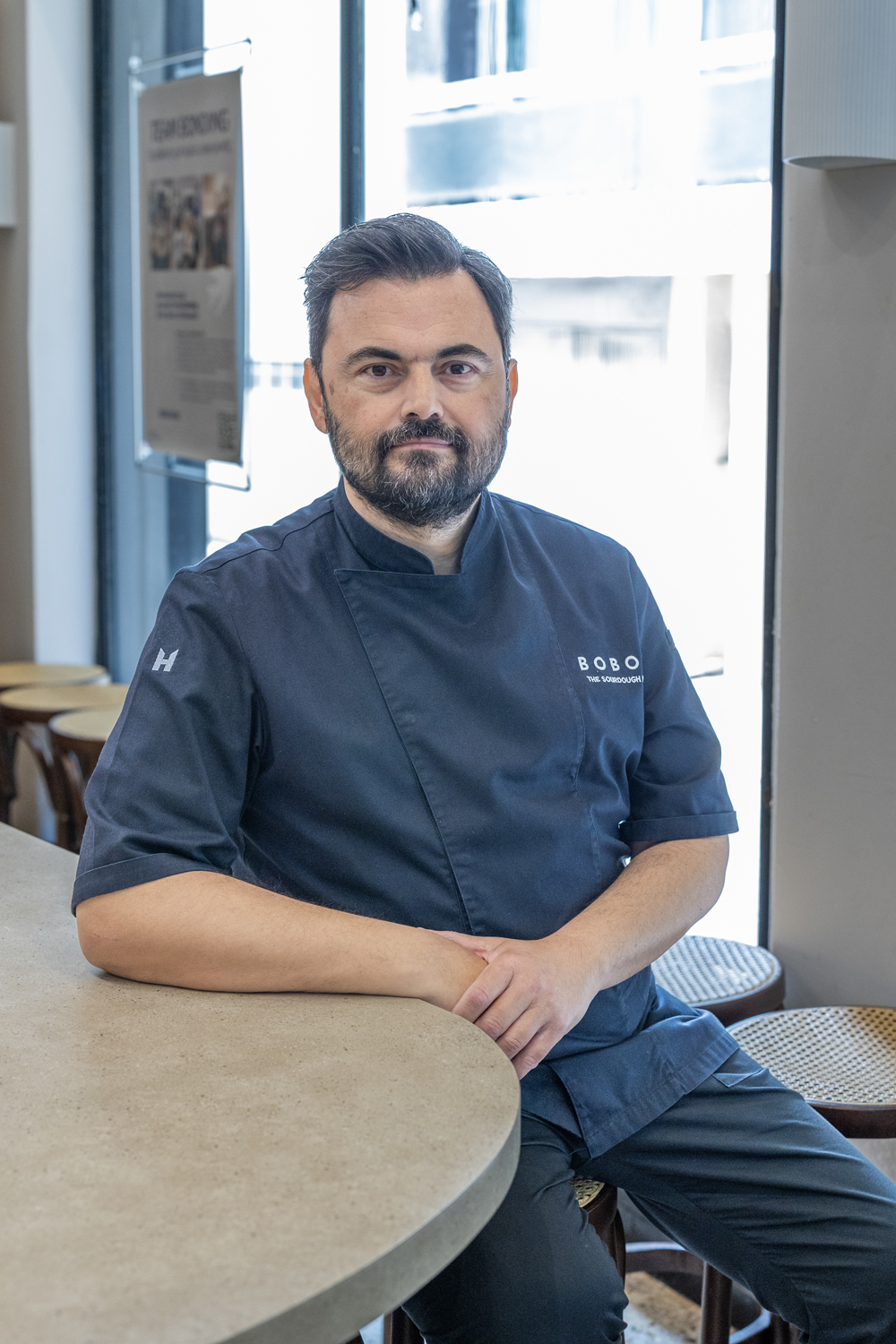
“When something starts from passion, at first it moves you almost instinctively,” he says. “You do it because it fulfills you, because it expresses you, because you feel there is something real there for you.” That initial spark didn’t fade along the way. On the contrary, it matured and took shape through Bobota, a project that today combines knowledge, experience and a clear identity. Because, as he explains, when passion becomes a profession, “it’s not enough to love what you do. You also have to be able to serve it every day.”
From memory to sourdough
His relationship with bread has deep roots, almost experiential. “For me, bread was never just food. It was always something connected to home, care, memory.” His Epirus heritage is not simply a reference to origin, but a way of seeing the world: through the value of simple ingredients, time and process.
Sourdough came later, adding a new dimension to this relationship. “I realized that bread is not only emotion and memory, but also knowledge, observation, patience and transformation.” And somehow, bread became a “language of expression.”
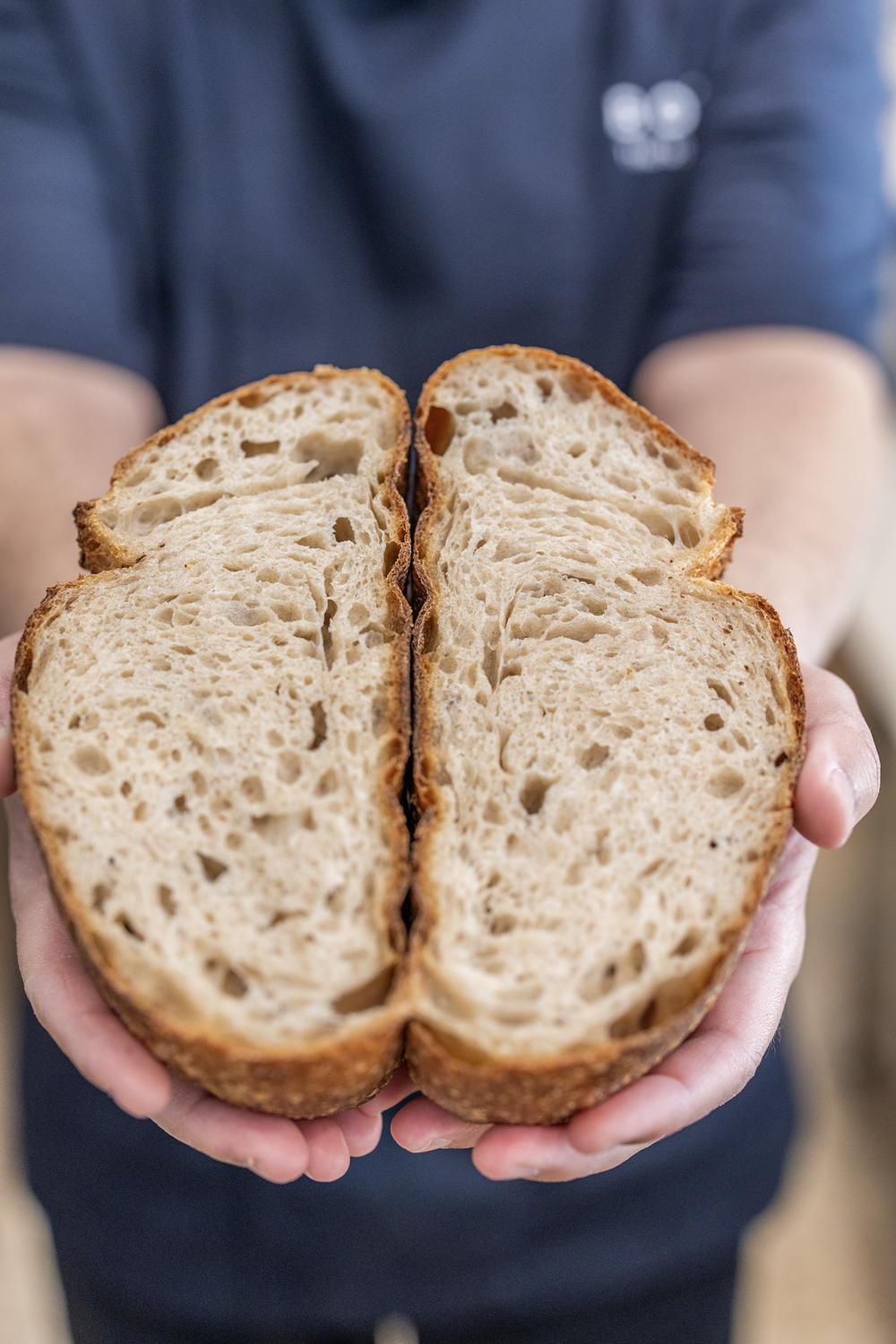
The lockdown in Nea Smyrni and a new beginning
Although his personal journey had started earlier, the pandemic period proved catalytic. From being a teacher and magazine contributor, he found himself sharing his knowledge of sourdough through something very simple: gatherings with friends, bread at his home in Nea Smyrni, conversations around the table. “I remember we would arrange to meet and eat the bread each of us had made at home.”
“Bread became, for many people, a way to create something with their hands during a period of uncertainty,” he says. And although for some this engagement remained a passing trend, for others (including himself) it opened a door that never closed. He managed to turn his passion into a profession (“I am a sourdough maker, not a baker”) and to pass this love on to others. His years in education, after all, did not go to waste.
In the world of natural sourdough, he does not believe in “magic formulas.” Instead, he emphasizes understanding. “Sourdough doesn’t need panic. It needs rhythm, care and a bit of trust,” he notes, dismantling the idea that it is something difficult or inaccessible. For him, the biggest mistake beginners make is rushing toward the “perfect” result. “They first need to learn to observe. To understand the rhythm, the temperature, the behavior of the dough. To build a relationship.” The key reminder, however, is that our bread doesn’t need to be Instagram-worthy to be worth eating. It just needs to taste good.
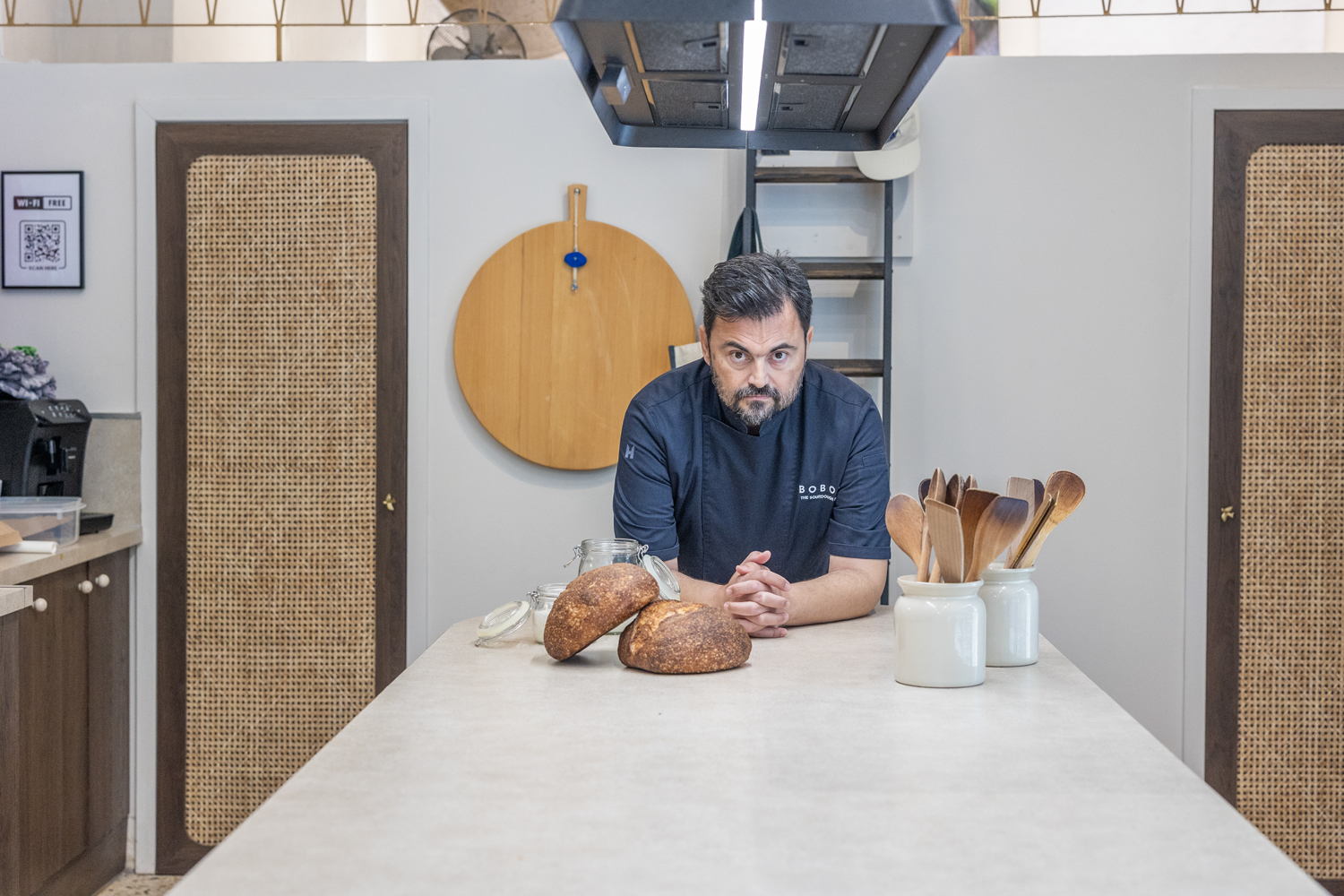
In a daily life that constantly moves at speed, the process of making bread acts almost like an antidote. “It forces you to slow down, to observe, to touch, to wait,” he says. And within this simplicity, something essential is hidden. “Not everything happens instantly. Some things need time to mature.” This reminder, simple as it may sound, is perhaps why many experience kneading as a deeply, almost therapeutic process.
In recent years, micro bakeries have been popping up everywhere. But is it just a trend or something more substantial? “Maybe at some point the hype will fade, but people’s need for bread with identity, quality and a face behind the product has depth.” When the conversation turns to where to find good bread in Athens, he deliberately avoids naming places. “The best bread is the one that satisfies each person’s taste,” he says. Because, ultimately, bread does not need validation. “Its truth is its most valuable ingredient.”
The workshops at Soybird
Through his workshops, he seeks to transfer this knowledge in an experiential way. Not as a simple recipe, but as a framework of understanding. The workshops last about four hours and combine theory and practice, with the main workshop “Bread from Scratch” and the more advanced “The Next Loaf.”
“People come because they are looking for guidance, demystification and confidence,” he explains. And that is exactly what he aims to offer: not just information, but a meaningful relationship with bread. Bobota is not just a brand. It is an entire philosophy. “It’s not only about production. It’s about education, knowledge, sustainability and our relationship with raw materials.” It started organically and evolved into a project that brings together community, education and creation.
Finally, the shift toward “cleaner” eating is not, in his view, a superficial trend. “People are tired of anonymity and excessive processing,” he notes. And within that fatigue, a need emerges: to reconnect with our food. Because, ultimately, food is not just fuel. “It is part of our everyday quality of life.” And perhaps, through something as simple as a loaf of bread, that connection can find its meaning again.
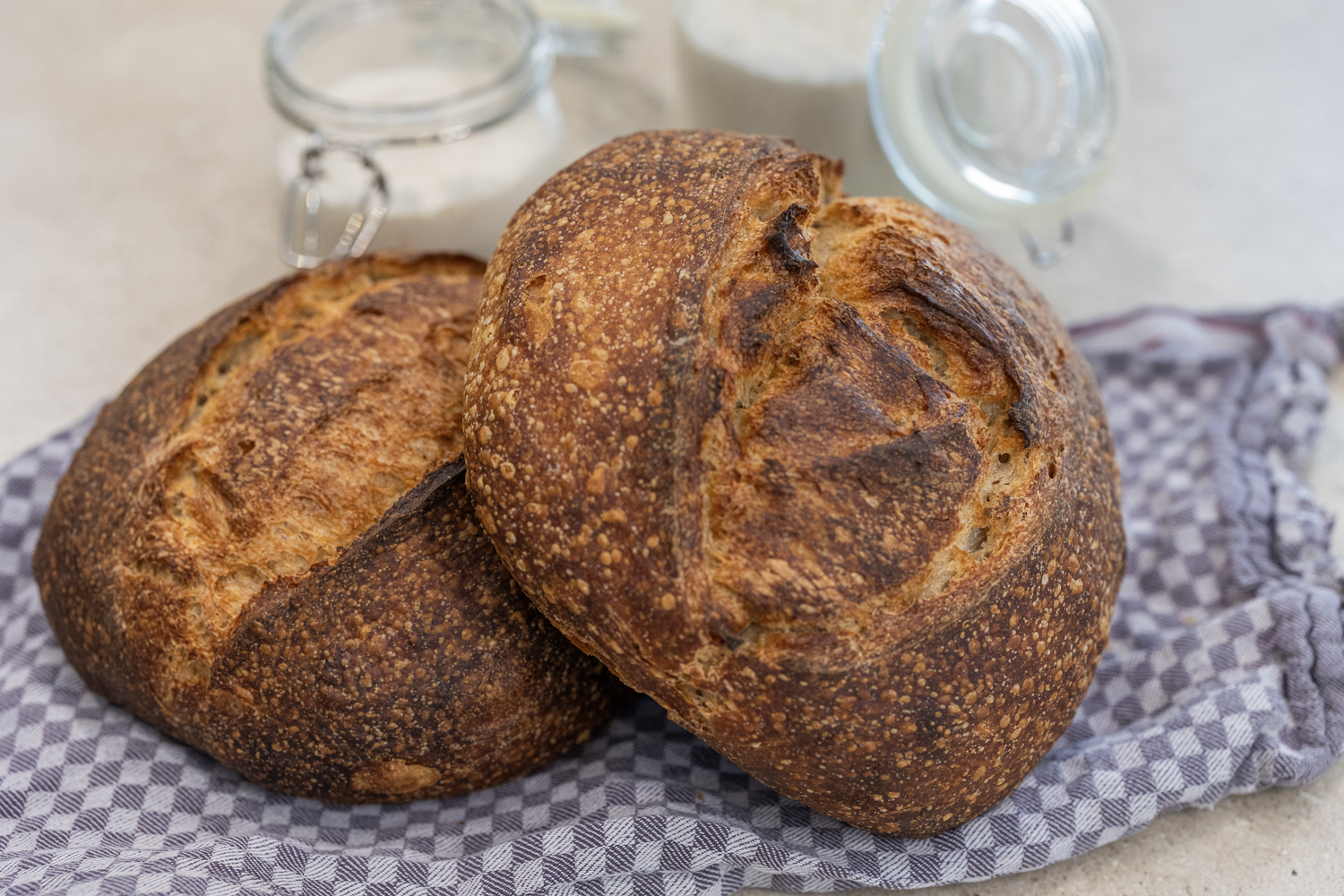
What I learned at the sourdough and bread workshop
My only previous contact with kneading was the classic pizza dough and a simple version of bread you make quickly, without going through the stages of patience that can last up to six hours. At “Bobota the Sourdough Project,” however, I discovered that nothing is done properly without patience, always following the right steps.
Even though today you can find almost anything on the Internet, there is a big difference in sitting across from someone who wants to show you, through all the senses, what it means to make bread and to have your own sourdough starter. In my case, experiential learning gave me the boost to continue afterward. Let’s start with the basics. Sourdough, for example, never dies, unless you completely forget about it and treat it like a stranger. “It takes real talent to kill a sourdough starter,” George Tasoulas told us when we first introduced ourselves.
The most convenient way to store it is in the fridge, because you can feed it about once a week, rather than every 12 hours, as is the case when you keep it on the kitchen counter. If a dark liquid forms on the surface, it means it’s starving—you remove it and then feed it again, while bubbles indicate that it is at its peak or on a very good path.
But what does “feeding” your sourdough mean? It means taking one part starter, three parts flour and three parts water (if you are a beginner, although you can also use a 1:1:1 ratio), and discarding the remaining starter (or using it to make pancakes so as to avoid food waste). You mix well until it becomes uniform, like a thick batter. It’s better to work with small quantities so you don’t end up with too many jars in your fridge that you don’t know what to do with. Ideally, you choose semi-wholegrain or wholegrain flour.
After feeding the starter, you leave it outside the fridge until it activates. In a few hours, you’ll see that it has risen and filled with bubbles. The sourdough is ready. If you don’t want to use it immediately, you can then place it in the fridge for storage.
When it’s time to make bread, you take the starter out of the fridge, feed it and let it activate. Then you use it in the dough: you dissolve it in water along with the flour and, once the dough forms, you let it rest for an hour, covered with a cloth.
In the next stage, you add a teaspoon of salt and knead again. Two to four hours later, the dough has expanded, sticks less, and that’s when you shape it by hand (with a little flour on top). Half an hour later, you fold the dough from both sides, like the pages of a book.
Before baking, you score it with a special razor so it looks nice (in addition to tasting great). Bake for 20 minutes covered at 240°C and another 20 minutes uncovered. All of this varies depending on the oven and room temperature. As for me, I kneaded it, baked it, and ate it with butter, ham and soft cheese—even if it wasn’t Instagram-worthy at all.