In a market where investment decisions are becoming increasingly complex, while demand for real estate remains high, beyond the architectural approach, strategy is a decisive factor for the sustainability and commercial value of a building in the years to come.
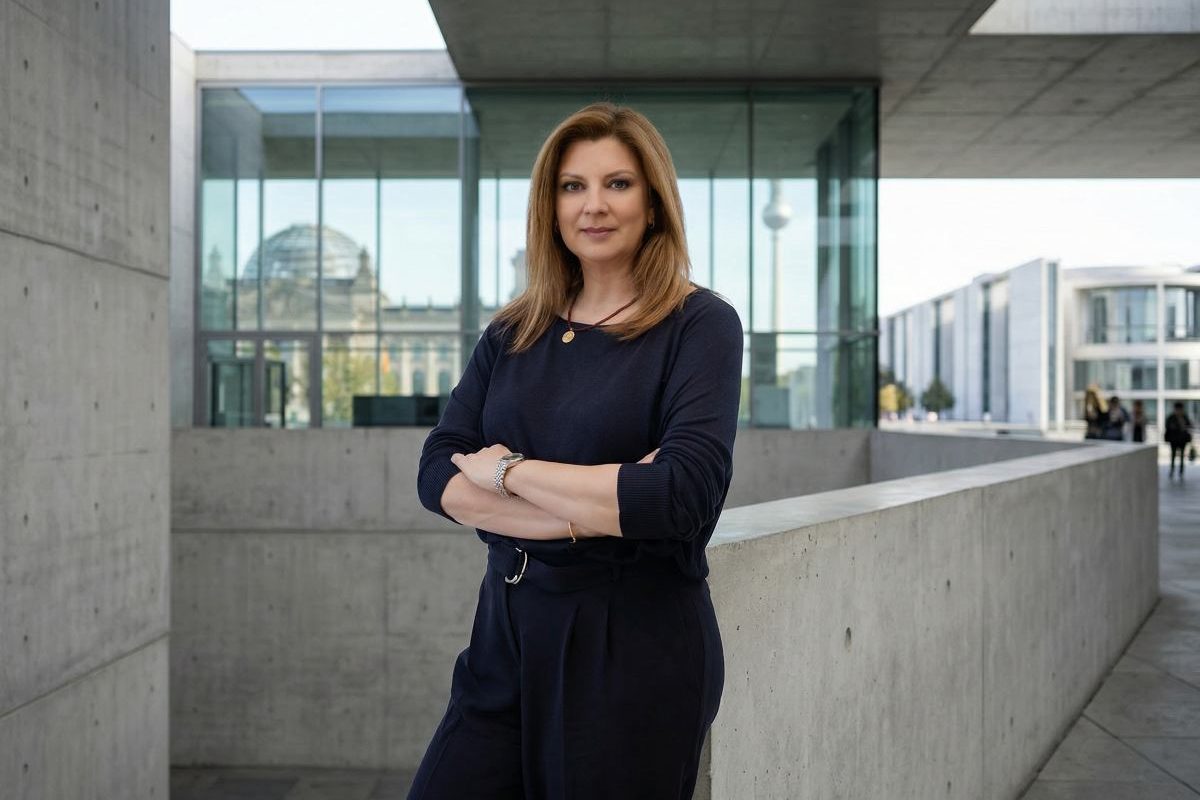
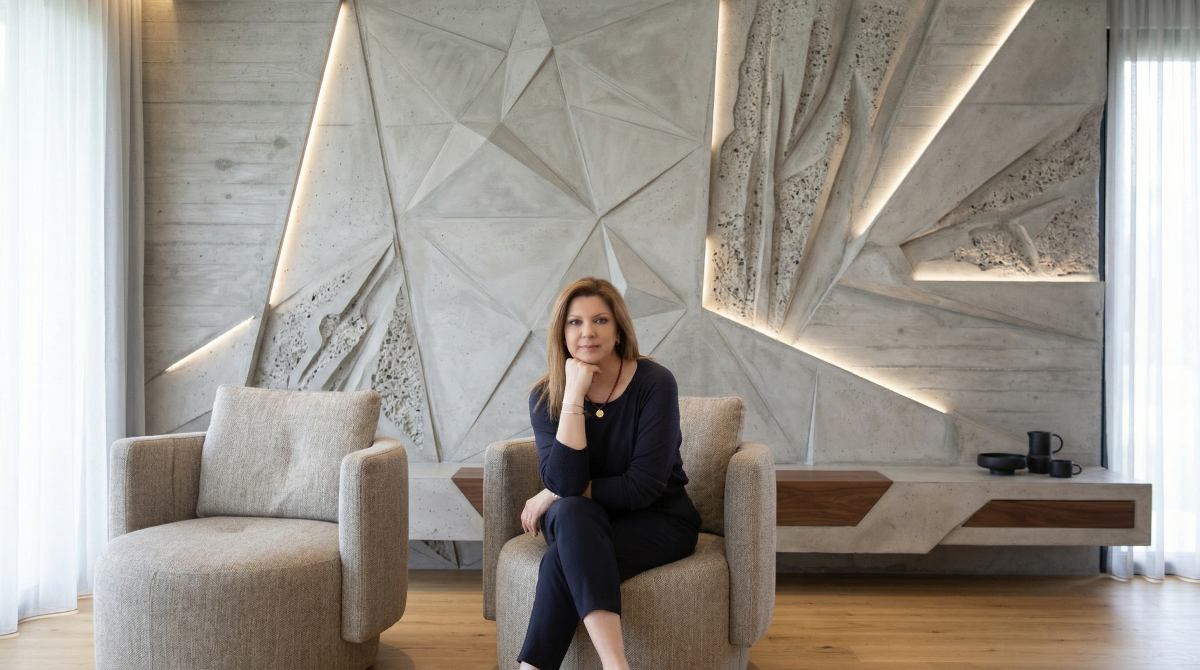
Athina Triantafyllou, head of the architectural firm Epitomēe Design, speaks to NouPou and explains the firm’s transition from boutique architecture and interior design to a more expanded model, positioned at the earliest and most critical stages of a project, shaping a structured strategy for its proper development. Drawing on the team’s international experience and using “Development Potential Studies” as a tool that guides potential investors toward final decisions regarding the property of interest, the firm’s head explains why the key question today is not “what should we design,” but “what property is worth developing.”
Ms. Triantafyllou, how did Epitomēe Design begin and what led to your strategic shift?
Epitomēe started as a boutique architecture and interior design studio, with high-spec projects mainly in the residential and hospitality sectors. Although our base is in Greece, a significant part of our activity has come through collaborations with international clients and projects. This experience brought us closer to the way investors outside Greece perceive real estate—not simply as a design object, but as an investment product.
Over time, we realized that design is very often introduced late in the process, when key decisions have already been made. This is what prompted us to reposition ourselves strategically.
![]()
What does this mean in practice for a project?
In practice, most people start with the question, “what should we design?” However, this is not always the right starting point. The more essential question is, “what should we develop in order to maximize the value of this property?”
When design begins without a strategic foundation, many critical decisions have already been made without a clear understanding of a property’s potential. As a result, design is called upon to serve a framework that may not have been properly defined from the outset.
Is this what you describe as the “development-driven” approach?
Exactly. We chose to position ourselves before the design stage, at the level of strategic development. For us, “development-driven” means thinking first as developers. We assess the use, performance, sustainability of a project and its position in the market before moving forward with design.
Architecture and interior design remain at the core of our identity, but they now operate within a broader strategic framework. This allows a project to gain clearer direction and a stronger development foundation.
You recently introduced the Development Potential Studies. What gap do they address?
They address a very significant gap in the market. Today, many owners and investors are required to make important decisions without fully understanding the true potential of their property.
Development Potential Studies provide a structured evaluation process before any capital is committed by the investor. Essentially, they help clarify whether a property has potential, which direction its development should take, and which development model can generate greater value.
What is your role when working with international investors?
We act as a strategic partner at every step of their investment. On one side lies the complexity of the local market—regulations, particularities, the dynamics of each location. On the other is the investors’ need for clear, structured and investment-ready decisions.
Our role is to translate local knowledge into a development strategy and provide solutions where needed. This is particularly critical for investors who lack experience in the Greek market but wish to move forward with confidence and clarity.
![]()
What differentiates Epitomēe from a traditional architecture firm?
The main difference is that we do not start from a design brief—that is, the description of the core design parameters—but from a development brief, meaning the planning of the key steps for a property’s development and its positioning in the market. Most architectural firms focus on the solution.
This approach places us in an intermediate field, between architecture and real estate consultancy. It is a more comprehensive approach, as it views a project not only as a space, but also as a product, an investment and a strategic decision.
How does your boutique background influence this new model?
Our boutique background is precisely what ensures that strategy does not come at the expense of quality. Our experience in boutique architecture and interior design allows us to translate strategy into spaces with identity, differentiation and real commercial value.
We are not only interested in having a solid business model. We care that the final proposal also has a strong design imprint, stands out and creates an experience.
What is Epitomēe’s core philosophy today?
Our core philosophy is that the value of a project is determined even before design begins. If the strategy is right from the start, then all subsequent stages function multiplicatively. In essence, design can deliver to its fullest potential only when it is based on a correct initial decision about what exactly should be developed.
What is your message to the market?
That the order of thinking must change. Not “what should we design,” but “what is worth developing.” This is where the success of a project is determined. If this question is answered correctly from the beginning, then design gains substance, the investment acquires a clearer perspective, and the final outcome gains greater value.
What are the next steps for Epitomēe Design?
We are investing in further strengthening our development-driven model and expanding our collaborations with international players in the real estate development sector. Our goal is to establish ourselves as a strategic partner in the early stages of a project, where the most critical decisions are made and, in essence, its course is shaped.