
Tsipouro and grape distillates: 10 labels for Lent
-

- 05/03/2026
Simos Georgopoulos selects ten labels of tsipouro and grape distillates and signs a premium tasting guide that combines purity, intensity and character-ideal for the Lent table and beyond.
Yes, theoretically they take center stage throughout Lent, but in practice they are loved all 365 days of the year! That’s because distillates sourced from grapes and not aged in barrels possess a strength and purity that will never let you down, no matter how intense or diverse the flavors on the table may be. Obviously, their love affair with all kinds of seafood is incurable, yet their variety is so great that someone can find the right label even for a game dish!
Many factors shape their personality, with the first and most important being the raw material of the distillation. Tsipouro and Tsikoudia come from the distillation of pomace produced after winemaking, while in grape distillates the whole grape berry goes into the still. The former are more aromatic and powerful, the latter more delicate but also more expensive-since wine production is “sacrificed” on the altar of refinement!-and they reflect the characteristics of the grapes from which they originate. The expression of each variety of course differs depending on whether distillation takes place in a copper pot still or in a column still. The first option produces richer products with fuller character, while the second results in cleaner and more refined spirits.
No one will say no to a small tumbler with 2–3 ice cubes, but if you want to better understand all of the above, choose a small glass with lips that open outward, allowing the alcohol to dissipate and the aromas to emerge. At the same time, low temperatures help distillates shed their aggressiveness on the palate as well, so serve them chilled from the refrigerator and keep them in an ice bucket throughout the meal or dinner.
Tsipouro and grape distillates offer an inexhaustible wealth of aromas and flavors, something that is also proven by the 10 labels that follow, since beyond excellent quality they also display distinctly different personalities.
35N Cretan Distillery, Muscat of Spina Fine Artisanal Tsikoudia
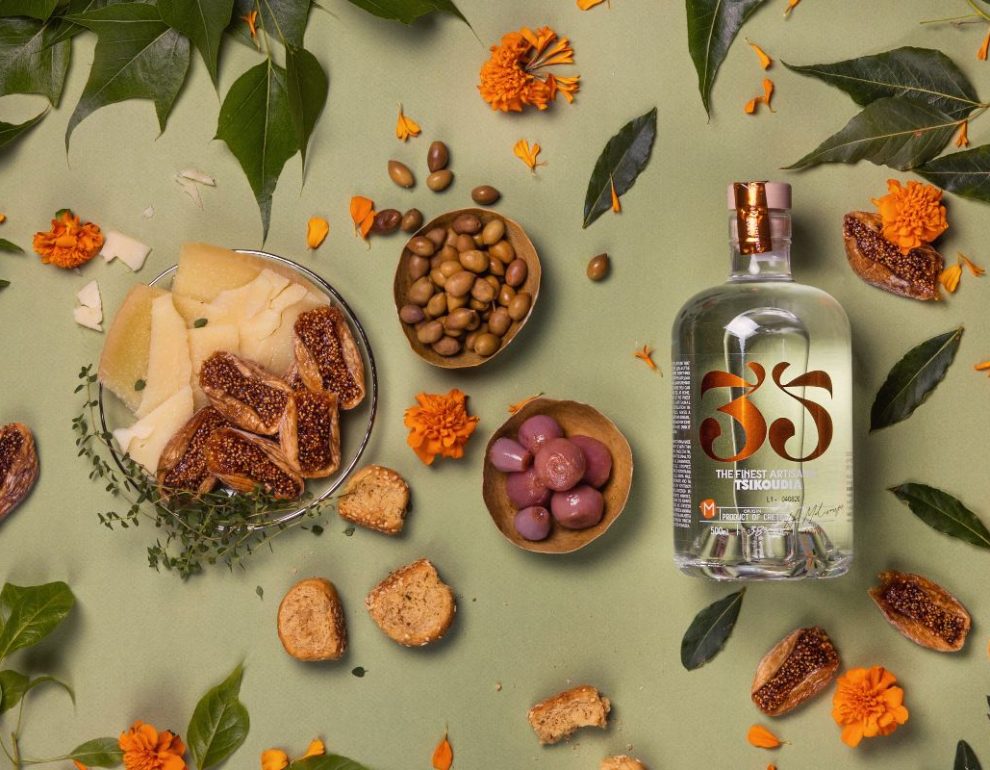
Crete has a long history in distillation, yet the tradition of “bulk” production has long been an obstacle to the creation of top bottled products. The distillery of Rethymno came to shake things up, borrowing its name from the 35th parallel on which it lies.
Taking advantage of the island’s unique varietal wealth, 35N offers a wonderful collection of tsipouro, from which a pure Muscat of Spina could not be missing. The use of a copper pot still allows the rare, fragrant grape to reveal all the aromatic magic of loukoumi, while the 38% alcohol contributes to its soft yet full-bodied taste.
Dimitriadis Distillery, Zopyro
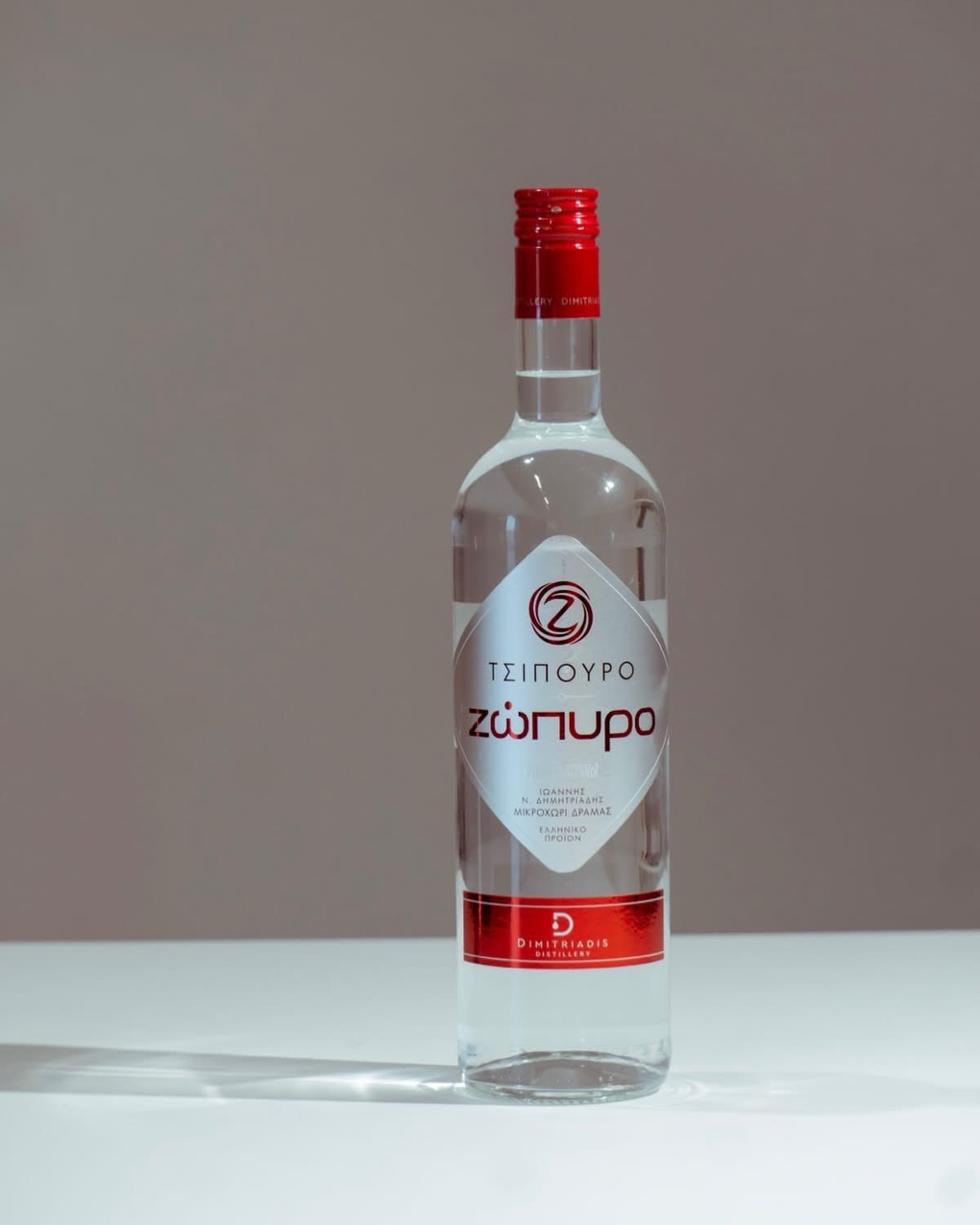
Surveyor-engineer Giannis Dimitriadis produced wine and tsipouro for personal use in Mikrochorio, Drama, with the latter taking a professional direction in 2015. Today his four children run the modern and multi-awarded family distillery, whose Zopyro is its flagship product.
It comes exclusively from all the well-known Greek and international grapes that have established Drama as a winemaking region, though Sauvignon Blanc dominates the blend both aromatically and on the palate. As a result, Zopyro is characterized by aromas of citrus, lemony acidity and a light body-elements that make it one of the most delicate tsipouros in the country.
GWC, Allotino Tsipouro
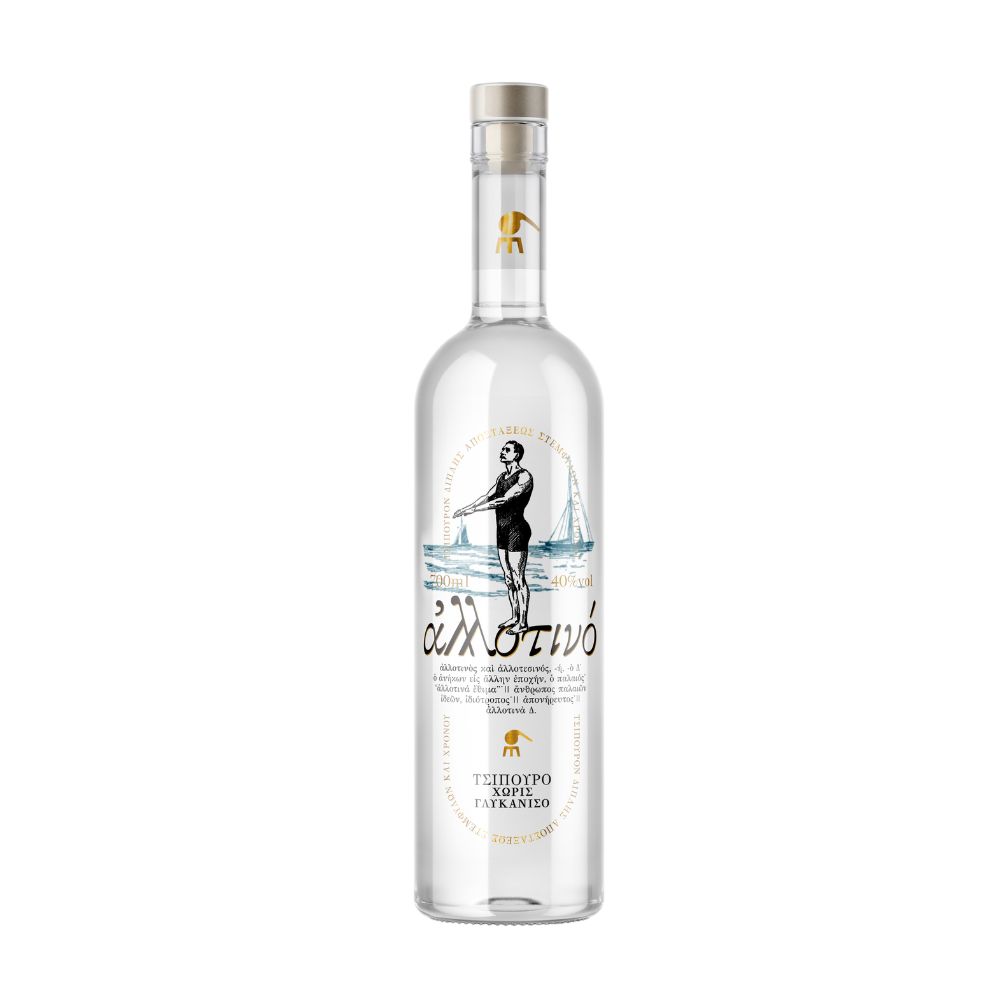
Greek Wine Cellars is one of the country’s largest wine producers and exporters, so its entry into the world of distillates could only lead to excellent results, given the wealth of available pomace.
Proof is the pot-distilled Allotino, an intoxicating tsipouro made from Muscat of Hamburg and Cinsault grapes from vineyards in Thrace. The blend may be unexpected, yet the result is impressive, as the aroma of Allotino recalls nettle and matcha tea! The palate also rises to the occasion, with a powerful yet delicate flavor that leaves a beautiful spicy finish.
Kardasis Distillates, Golden Harvest
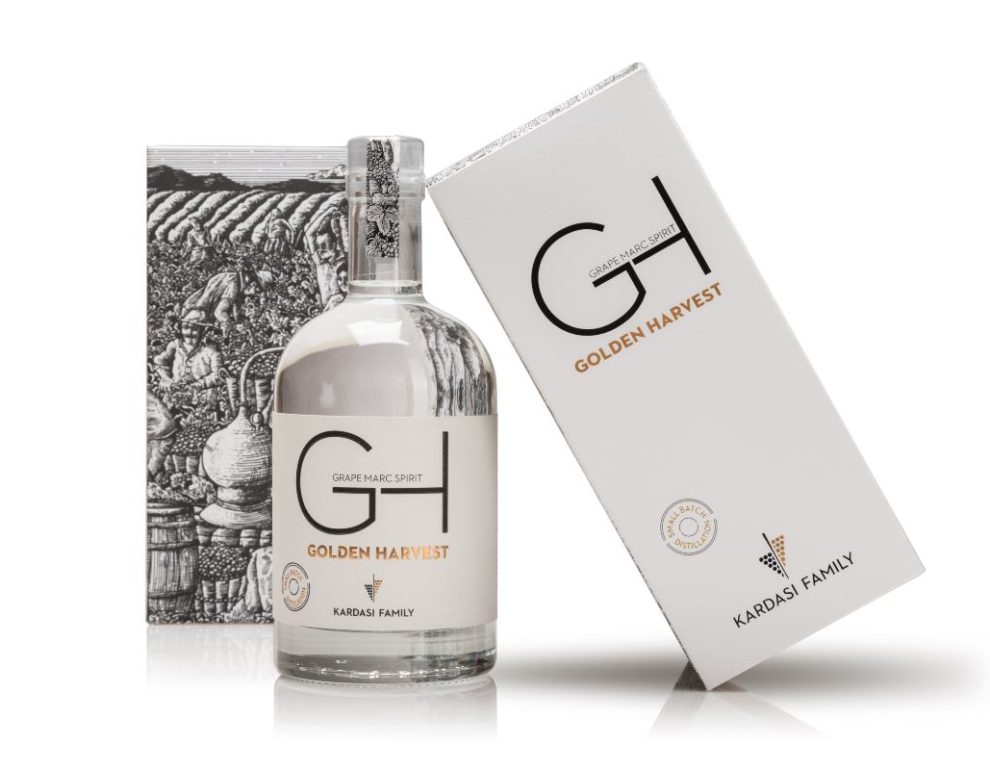
The Kardasis family has been active in Tyrnavos since the late 19th century, so Muscat of Tyrnavos could only be the heart of its excellent range. At the top of that range stands a distillate as precious as gold: Golden Harvest.
Coming from a vineyard of 8.5 stremmas planted by Konstantinos Kardasis in 1958, it has a unique personality that moves beyond the rose-scented standards of the variety and follows distinct, explosive directions of thyme and tricolor pepper! A truly super premium tsipouro bottled at 43.5% alcohol, a choice that further highlights its acidic strength and long finish.
Domaine Costas Lazaridis, Methexis Assyrtiko
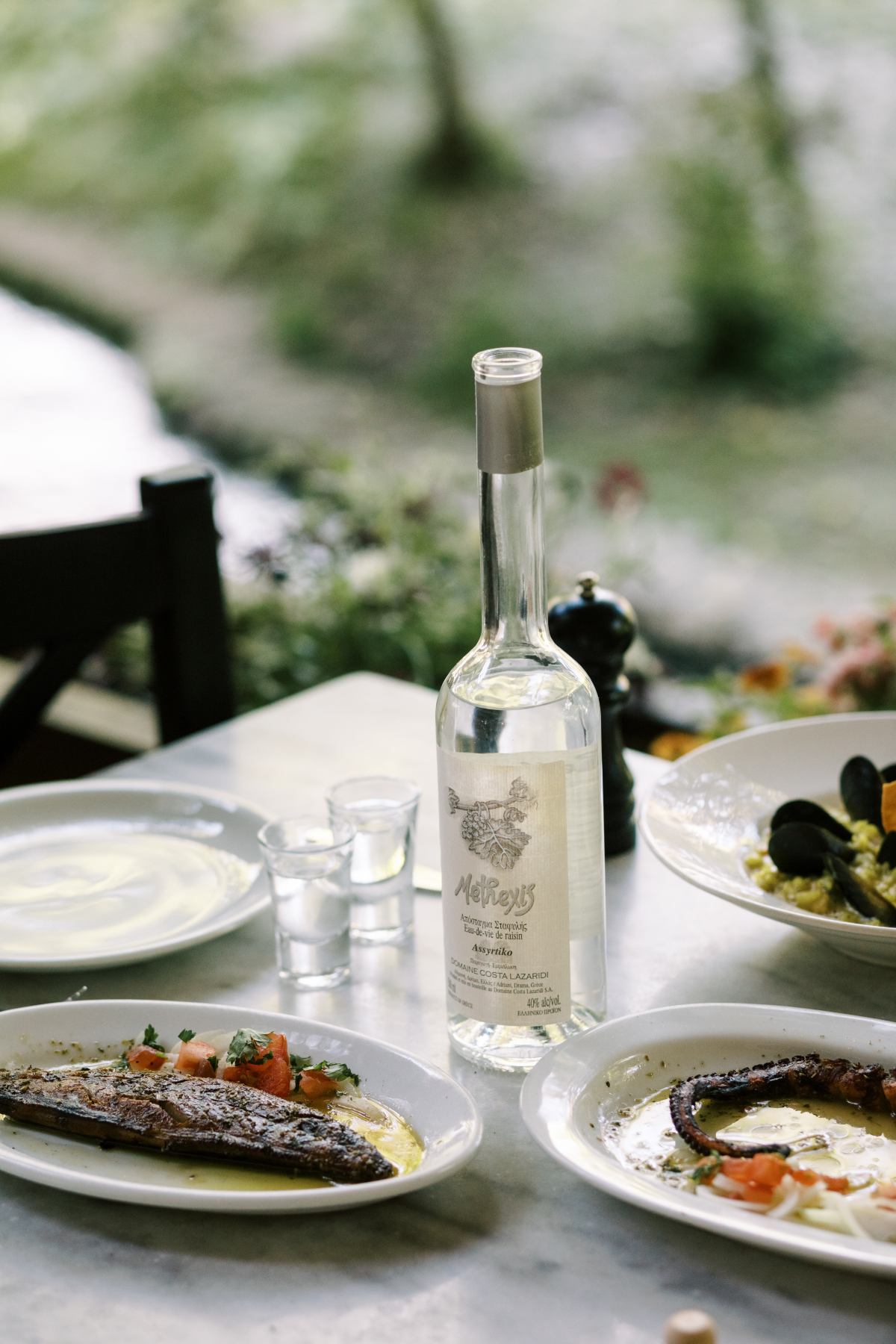
The iconic producer from Drama handles his distillates with the same perfectionist approach we have come to expect from his remarkable wines. The result is that products like Tsipouro Idoniko have become leaders in their category.
In the case of the Methexis series, however, the entire grape berry is distilled, with copper pot stills chosen to capture in the bottle the full single-varietal character of the grapes. Costa Lazaridi was the first to plant Assyrtiko in Drama in 1979, and Methexis Assyrtiko distills all the lemony minerality and vibrant acidity of the famous grape.
Lost Lake, Small Batch Collection Mouchtaro
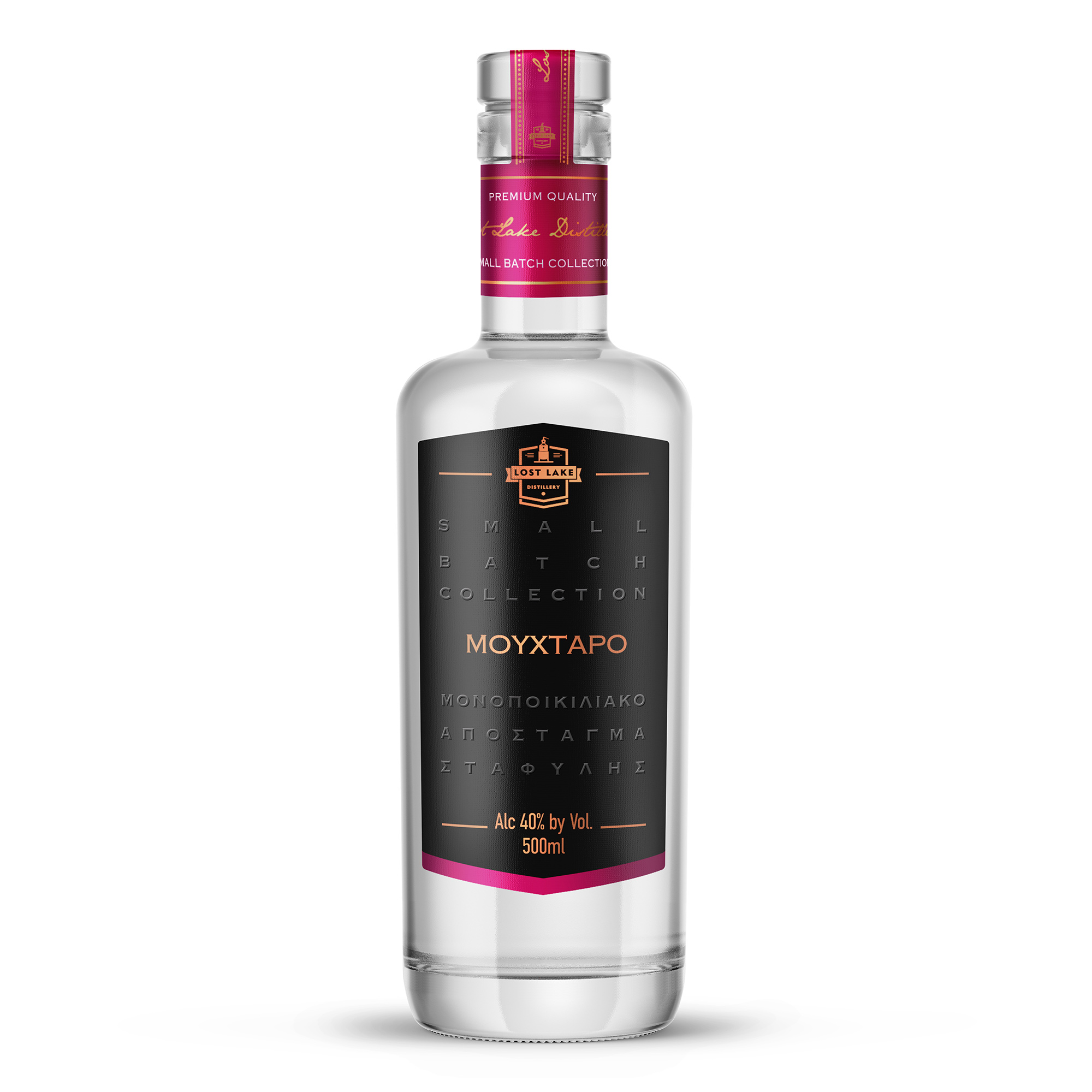
The Zacharias family was the one that brought the red Mouchtaro variety into the spotlight, introducing its noble, velvety character through the wines of the Muses Estate. When in 2017 it created the Lost Lake distillery in the village of Petra in Boeotia, it brought this distinctive grape into the copper stills as well, in a small batch production.
In fact, the producer sacrificed some of the quantity that could have become wine, choosing to distill whole berries instead of pomace! Here, however, the variety sets refinement aside, as the result is rich and wild, with impressive aromas of black fruit and an almost tannic finish. A distillate… for the gym!
Babatzim, Tsipouro
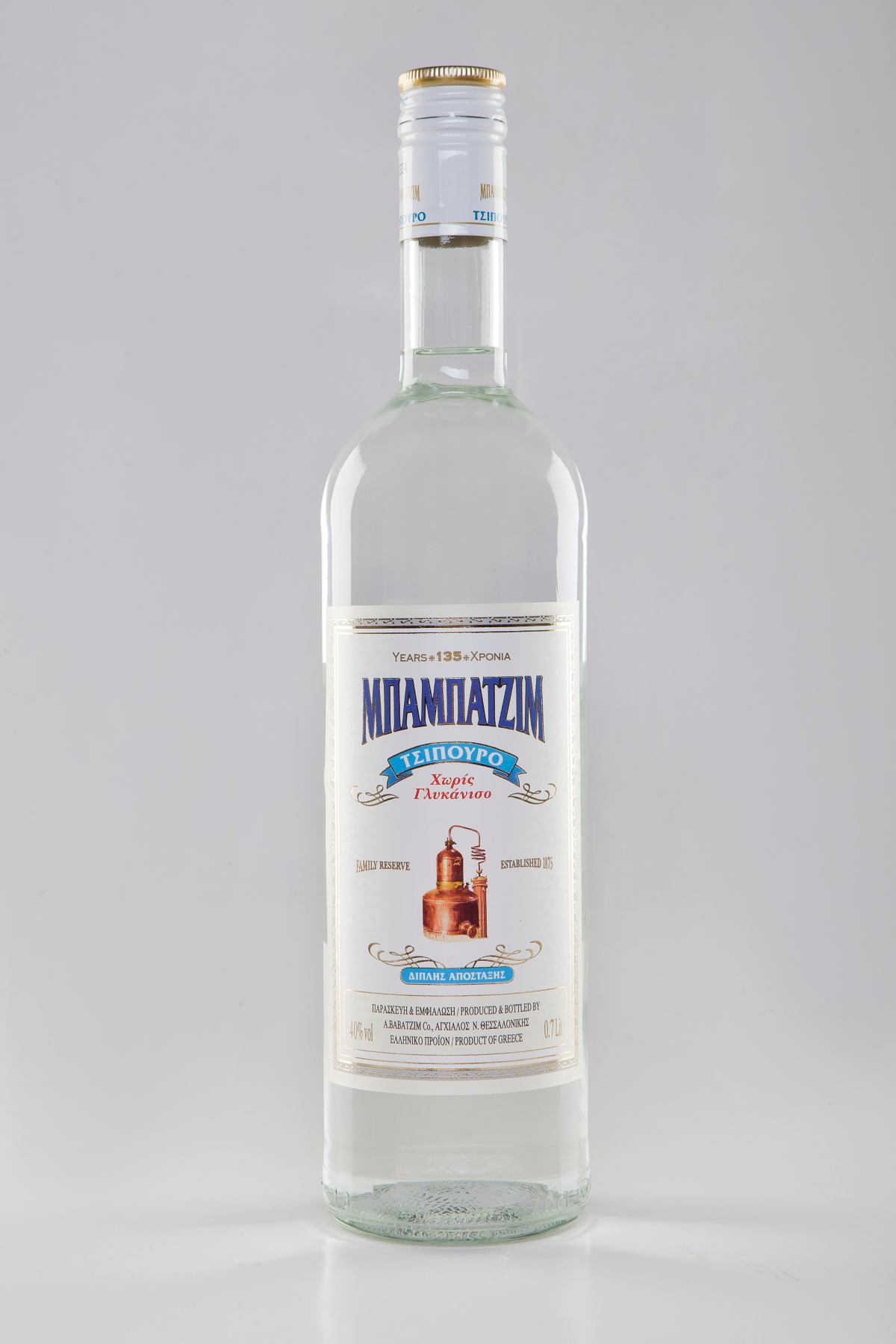
Anestis Babatzimopoulos is undoubtedly the most renowned personality in the field of Greek distillates. And not by chance, since the refugee from Constantinople was the first to believe in bottling, to offer single-varietal grape distillates, to fight for their legislative recognition and, in general, to change the course of quality distillation in the country.
His unique legacy lives and breathes through Babatzim Tsipouro. Its varietal composition is a closely guarded secret, as are the herbs and fruits added during the second distillation, but it is no secret that this medium-bodied distillate is one of the most balanced on the market!
Panagiotopoulos Wines & Spirits, Ennea Ogdoa Tsipouro
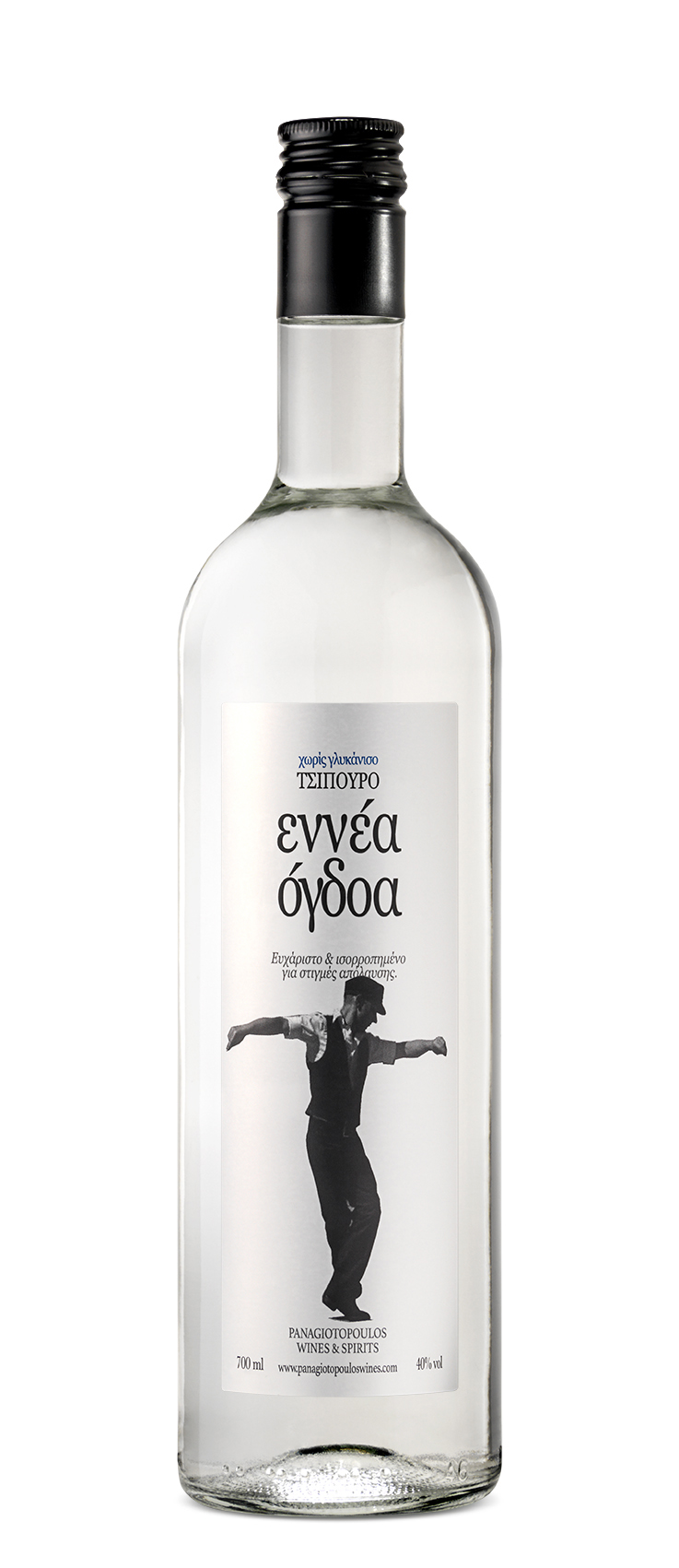
Dimitris Panagiotopoulos has changed the winemaking face of Messinia through his excellent red wines, mainly produced from international varieties. One might therefore expect his tsipouro to be infused with all the strength and body that red grapes provide.
However, for Ennea Ogdoa he chose Chardonnay and Malagousia-the finest varieties cultivated in his vineyard-and the result fully justifies the decision. A good zeibekiko requires a whole square meter, but Ennea Ogdoa can charm within a small glass, offering aromas of yellow fruits and a powerful, persistent flavor!
Tsilili Distillery, Muscat of Hamburg grape distillate
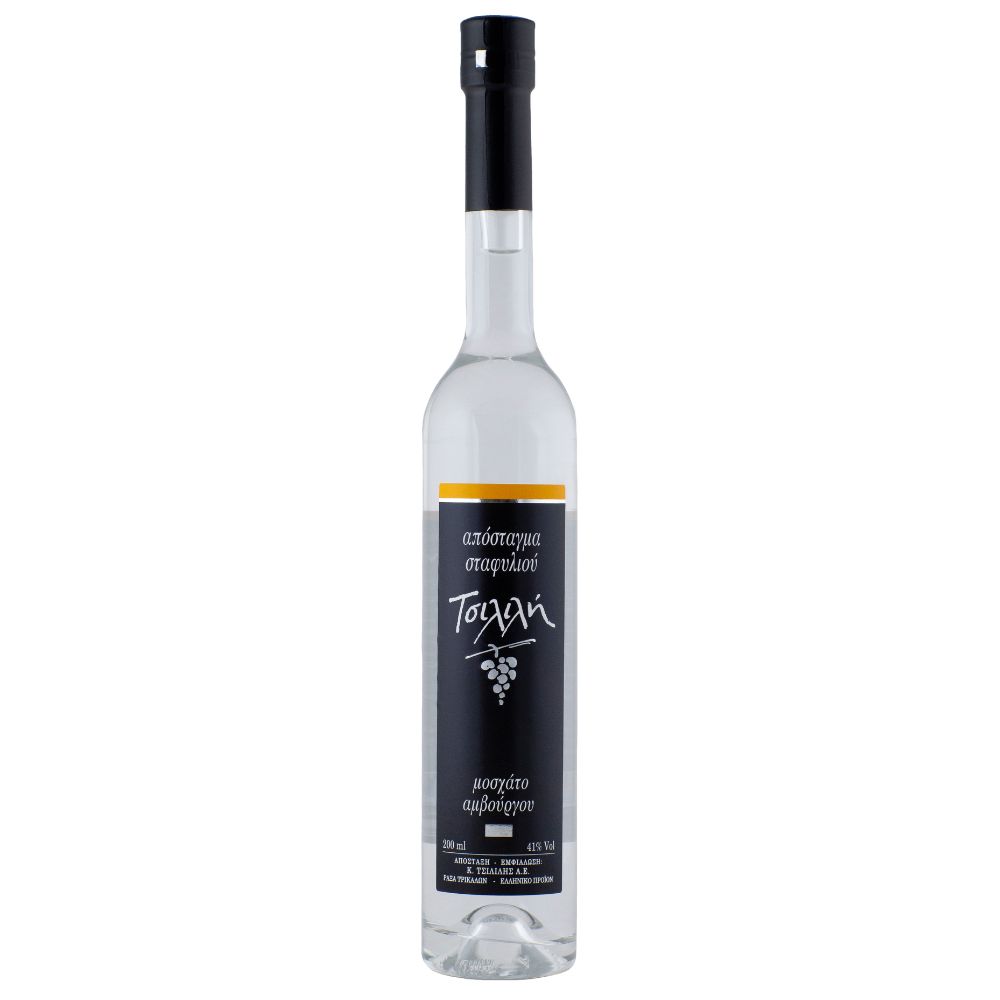
The distillery of Kostas Tsililis counts more than 35 years of history and has contributed greatly to the recognition of quality Greek distillates. Being the first to bottle tsipouro in Thessaly, it offers a collection of exemplary consistency that includes both fresh and aged labels.
His tsipouro is among the most popular, yet the single-varietal grape distillates elevate finesse and elegance, since in their case the whole berry is distilled. Based in Raxa of Trikala, Muscat of Hamburg could not but take the leading role in the series, with its rose-like presence and lemony lightness elevating its aristocratic character.
Tyrnavos Agricultural Winemaking Cooperative, Tyrnavos Tsipouro
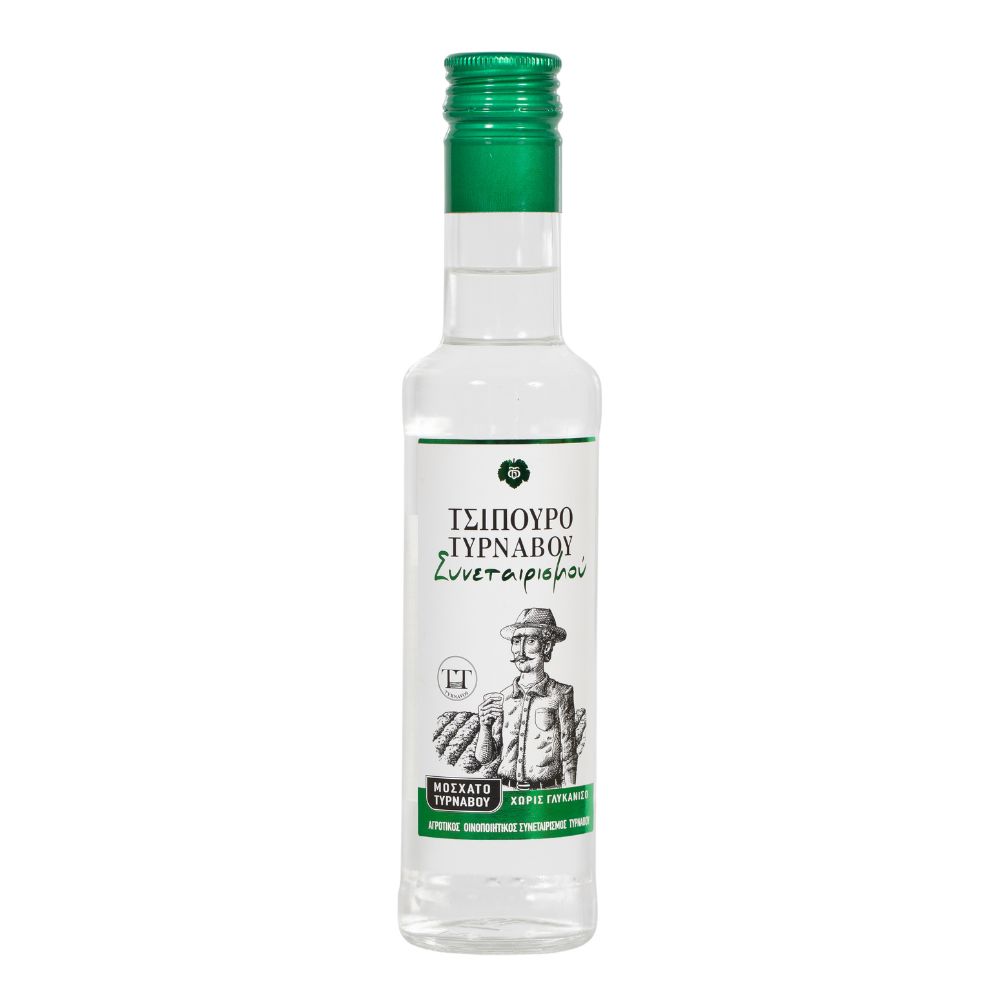
The agricultural winemaking cooperative of Tyrnavos counts six and a half decades of history, operating in the most famous tsipouro-producing region of Greece. It is no coincidence that only this area has the right to mention the city itself rather than the broader geographical region!
Tyrnavos Tsipouro is naturally produced from Muscat of Tyrnavos, the dark-colored grape that forms the ultimate raw material for the creation of aromatic tsipouro. Fractional distillation results in an exceptionally clean spirit that is fragrant with lemon and rose. Yet if on the nose Tyrnavos Tsipouro is aromatic, on the palate it is explosive, leaving the incomparable muscat notes lingering in the mind for a long time.