
Panagiotis Tompras: The architect who built the “museum of the future” returns to the Riviera awards jury
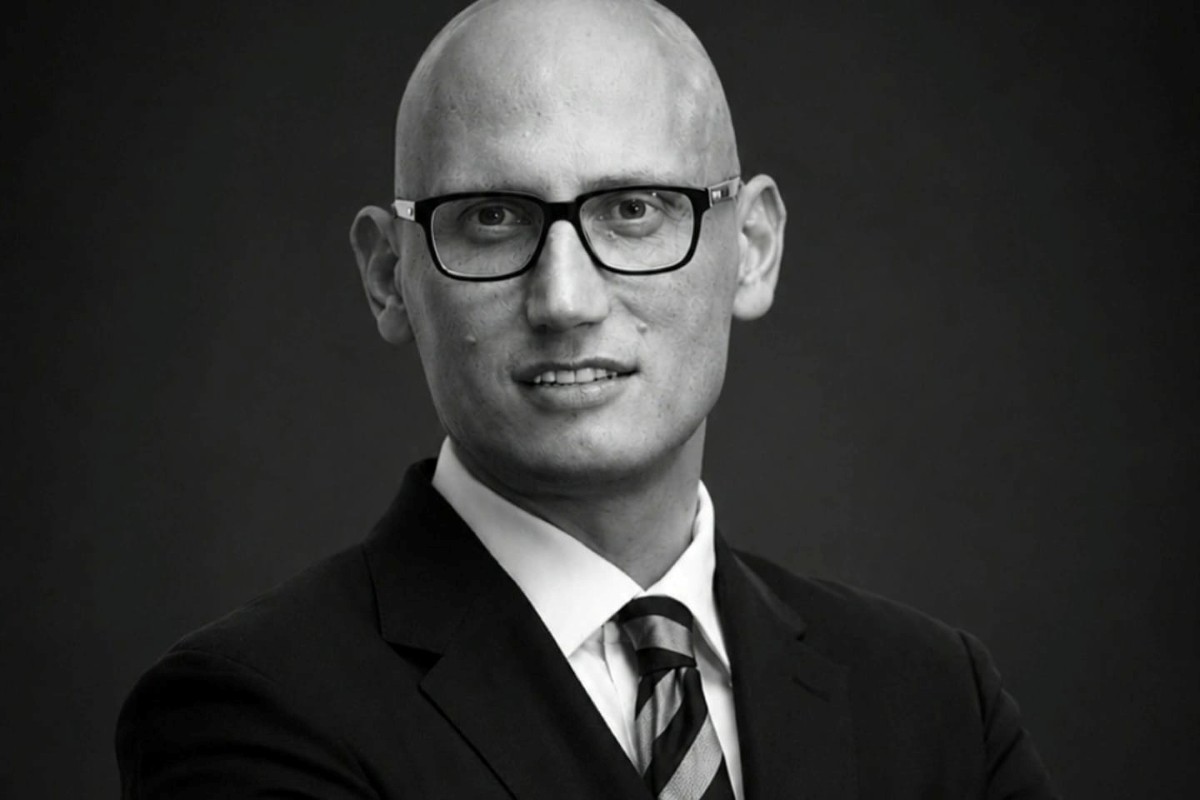
From Sparta to Dubai, Doha and Cairo, and from there back to the Athens Riviera. Panagiotis Tompras, Director of ION Group in Greece and CEO of Top Mentor Consultants, speaks to NouPou about his journey, the challenges facing the Riviera and his participation in the jury of the first Athens Riviera Luxury Awards.
- 14/09/2026 10:57
Somewhere between Dubai, Doha and Cairo, Panagiotis Tompras was designing buildings that would change the way the world sees their cities. The Museum of the Future. EXPO 2020. The Grand Egyptian Museum. Names that sound like a dream list for an architect, and yet the man behind them chose, at the most dynamic moment of his career, to leave them behind and return home. Today, he sits on the jury of the first Athens Riviera Luxury Awards (September 17, One&Only Aesthesis, Glyfada) and has plenty to say about where the coastline he chose to call home again is heading.
From Sparta to the desert, and back
Born in Sparta, with roots in Nafplio, he studied architecture in Venice and left for Australia in 2012, when the crisis was leaving few opportunities for young engineers in Greece. In Melbourne, he worked as a fit-out manager at the fifty-million-euro Pegasus hotel. Then came Doha, where he was project manager for the 530-million-euro Sheraton, and Dubai, where, as Project Director, he signed off on the expansion of Wafi Mall (400 million) and worked as Senior Executive Manager at the iconic Museum of the Future. In between, he served as Project Director overseeing the 96 pavilions of EXPO 2020, a 2.6-billion-euro project, and completed his time in the region as Project Close-out Manager at the Grand Egyptian Museum. He has been described as a symbol of the “brain gain” of the post-memorandum era, the engineer who was forced to close his office in Sparta to emigrate and returned years later as a name that opens doors. When you ask him to talk about this journey, however, he does not dwell on titles:
“My professional journey began with architecture, which I still consider the core of my identity. Along the way, however, my involvement with complex projects and major investments led me to a more comprehensive understanding of real estate development and utilization. I gained experience not only in architectural design, but also in project management, construction, technical assessment, development strategy and investment consulting, having worked on all five continents. Top Mentor Consultants was created precisely around this philosophy: to enable a team to take on a project as a whole, from the initial concept and investment assessment through to permitting, construction and final delivery.”
Δεν είναι λίγο πράγμα να αφήνεις πίσω σου τη Μέση Ανατολή για να χτίσεις ξενοδοχεία στον Πειραιά, αλλά ο Τόμπρας το λέει σαν να ήταν η πιο λογική απόφαση του κόσμου. Το πρώτο του έργο μετά την επιστροφή, μια μετατροπή κτιρίου γραφείων σε ξενοδοχείο πέντε αστέρων στην καρδιά του Πειραιά, ήταν κι αυτό μια δήλωση: πως το ίδιο βλέμμα που σχεδίασε μουσεία στην έρημο μπορεί να ξαναδιαβάσει κι ένα ξεχασμένο κτίριο γραφείων στη γειτονιά του. Ακολούθησε το Merkaba Institute, ένα φουτουριστικό κτίριο-υπογραφή του δικού του γραφείου, που έδειξε πως η επιστροφή δεν ήταν συμβιβασμός καριέρας αλλά συνέχεια της ίδιας φιλοδοξίας, μόνο πια σε ελληνικό έδαφος.
A Riviera whose meaning has changed
Today, Tompras is Director of ION Group in Greece and CEO of his own Top Mentor Consultants, giving him a view of the Athens Riviera from two different positions at once. Asked about its evolution over the past few years, he answers without hesitation:
“The Athenian Riviera is going through a period of impressive transformation. Within just a few years, it has evolved into one of the most important investment and architectural destinations in the Mediterranean, attracting international brands, institutional investors and highly demanding buyers. Architecturally, we are seeing a clear shift toward higher-quality projects, with an emphasis on views, natural light, energy efficiency, landscaping and the connection between buildings and the sea and the Mediterranean environment. The concept of luxury has now changed. It is no longer expressed only through expensive materials or size, but through the quality of the space, privacy, technology, wellness, sustainability and the overall living experience. The Riviera has the potential to acquire a contemporary architectural identity that will be international while at the same time deeply connected to the Greek way of life.”
Alongside his role at Top Mentor, Tompras is involved in the design and coordination of major development and investment projects through ION Group. “These two roles allow me to combine the creativity of the architect with the strategic thinking, financial understanding and managerial responsibility that a modern investment requires,” he says. It sounds like something from a marketing brochure until you remember that the man saying it has built on five continents and knows the difference between luxury that looks good and luxury that works.
Balance as the greatest challenge
Asked about the biggest challenge facing construction and development in the area today, Tompras does not talk about cost or bureaucracy first. He talks about balance:
“The most important challenge is to ensure a balance between intense investment activity and preserving the identity and quality of the area. The Riviera should not simply become a zone of expensive construction, but should evolve into a comprehensive, functional and sustainable urban environment. At the same time, there are complex issues involving urban planning, permitting, infrastructure, traffic and rising construction costs. What is needed is long-term planning, a stable institutional framework and meaningful coordination between the State, local government, investors, architects and technical consultants. Speed of implementation is important, but it should not come at the expense of architectural quality, the environment and the public interest. The real challenge is for today’s projects to continue to serve as landmarks several decades from now.”
And as for what sets a project or a business apart as a model of excellence, his answer is equally specific: “Excellence begins with clarity of vision and is demonstrated at every stage: in the quality of the study, functionality, construction detail, consistency, cost management and adherence to timelines. A successful project must respond to people’s real needs, respect the environment and the character of the place, and retain its aesthetic, functional and commercial value over time. The goal should not simply be to create impressive images, but to deliver projects with substance, identity, innovation and longevity.”
The Ellinikon as a catalyst, the awards as a responsibility
Asked about the Riviera’s biggest opportunities in the years ahead, Tompras goes straight to the project that, more or less, everyone has in mind:
“The Ellinikon is acting as a catalyst for the entire Athens Riviera. It is not simply a major real estate development, but a project that can change Athens’ international image and strengthen its position as a destination for living, tourism, entrepreneurship and investment. The opportunities are not limited to luxury residences. They extend to hospitality, marinas, retail, modern offices, wellness and leisure infrastructure, as well as new forms of mixed-use developments. The great opportunity is for Athens to acquire a world-class waterfront, with a strong architectural identity, modern infrastructure and more high-quality and accessible public spaces.”
That is why, he says, he agreed to participate in the jury of the first Athens Riviera Luxury Awards: “It is a particular honor for me to participate in the jury of the inaugural Athens Riviera Luxury Awards. For me, the evaluation is not only about aesthetics or commercial success. It concerns the overall value of each nomination: the vision, architectural quality, the experience it offers, sustainability, innovation and its positive contribution to the area and society. I hope the Athens Riviera Luxury Awards will develop into a strong and internationally recognized institution, worthy of the dynamism and prospects of the Athens Riviera.”
The man who built museums in the desert now wants to help build something in his homeland that will stand the test of time. And if anyone knows what a project that people will remember decades from now looks like, it is probably the man who built the Museum of the Future and now judges who is building properly in his own neighborhood.