

ICAP CRIF: Beyond Development
The new economic geography of the Greater Riviera and the role of sustainable business intelligence.
- 05/10/2026 17:55
There are moments when a region stops evolving in pieces and begins to acquire a new, unified economic identity.
This is exactly what is happening today in the Greater Attica Riviera.
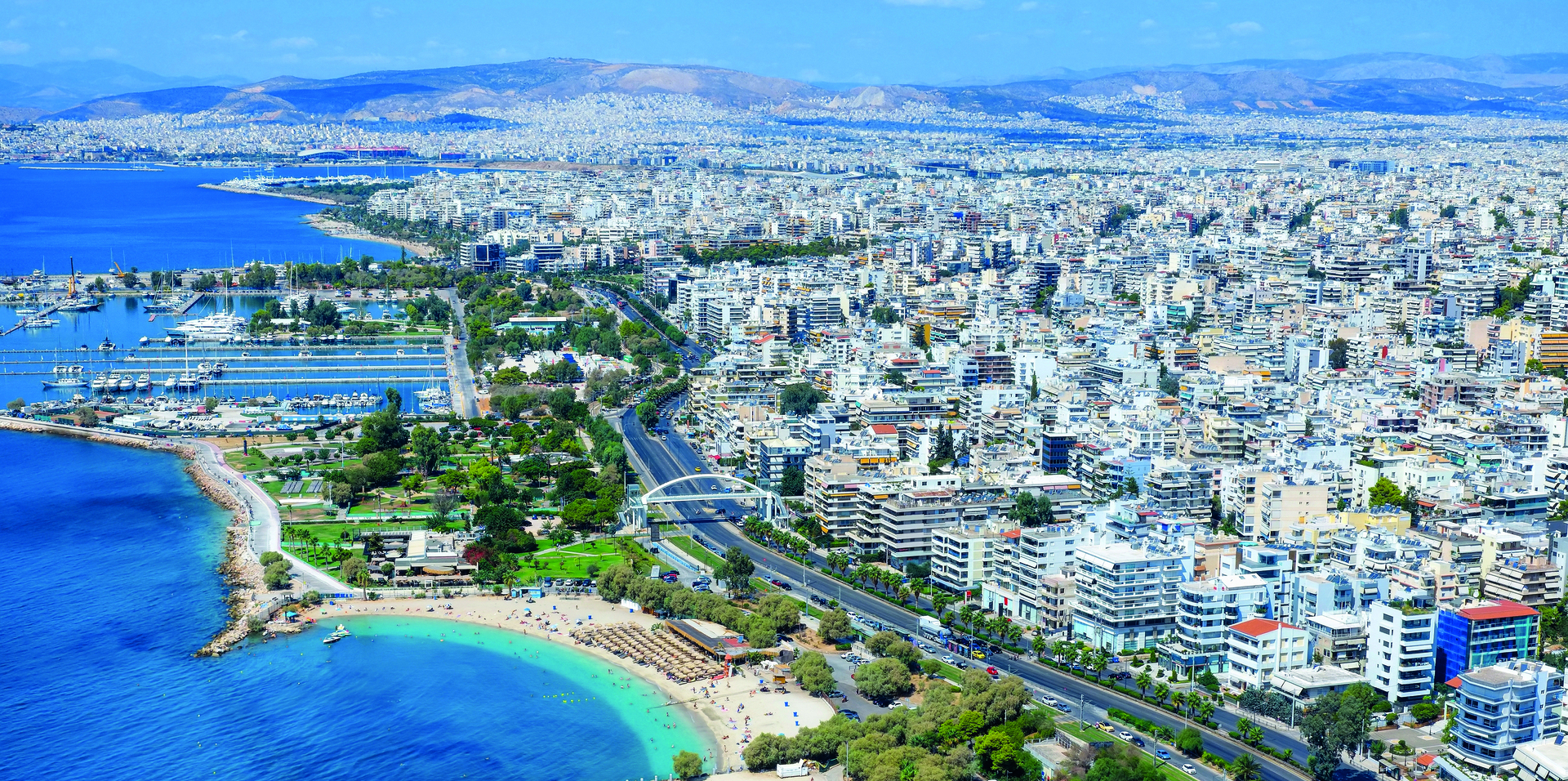
From Eleusis and Aspropyrgos to Piraeus, leading towards the southern suburbs, Hellinikon and Lavrio, coastal Attica is gradually being transformed into a new business and investment ecosystem for the Mediterranean. An ecosystem that is linked not only to real estate and tourism, but also to a much deeper change in the way businesses develop, collaborate and operate.
For years, the public debate around the region has focused mainly on the large, high-profile projects: The Ellinikon, Lemos, the new hotel units, the upgraded marinas, the mixed-use developments, the new retail and leisure destinations.
And indeed, these investments are already changing the image of the Athens Riviera.
But the real transformation is much greater than what we see on the surface.
Because, at the same time, an equally important wave of change is unfolding further west: in Eleusis, Aspropyrgos, the port zones of Piraeus and the areas linked to industry, logistics, shipping, energy and freight flows.
The new economic geography of the Attica Riviera is not only a coastal lifestyle transformation.
It is the gradual creation of a unified business ecosystem that starts from:
- infrastructure,
- industrial activity,
- transportation,
- logistics,
- shipping,
- energy,
and reaches:
- tourism,
- hospitality,
- premium real estate,
- urban regeneration,
- international investments,
- and new experiences of modern urban life.
This is what makes the current situation so special.
For the first time in decades, Attica is not developing in isolation. It is gradually creating a new, interconnected economic ecosystem with international ambitions.
And that is precisely where a much more substantial discussion about sustainability begins.
Because today, large investments are no longer evaluated exclusively on the basis of their size, architecture or location. International investors, financial institutions, hospitality operators, developers and multinational partners are increasingly examining how resilient, transparent and sustainable the business ecosystem behind an investment is.
And this is where the role of ESG is changing.
For years, sustainability was treated by many companies as just another compliance obligation. A reporting exercise that was mainly related to regulations and mandatory disclosures.
But the reality has changed.
Markets have evolved faster than legislation.
Even in today’s European environment of simplified actions and the redefinition of specific regulatory requirements, investment capital continues to seek:
- transparency,
- accountability,
- resilience,
- responsible value chains, and
- mature business ecosystems.
Because sustainability is no longer just about environmental footprint.
It is directly linked to:
- financing,
- access to international partnerships,
- risk management,
- the reputation of an organization,
- operational continuity,
- but also the overall competitiveness of a business.
A luxury hotel today is not only evaluated by its aesthetics or the hospitality experience that it offers. Investors and operators now examine the sustainability profile of partners and suppliers, energy efficiency, labor practices, transparency in procurement and resilience to operational and climate risks.
The same applies to:
- large construction ecosystems,
- logistics hubs,
- port activities,
- energy infrastructures,
- retail destinations,
- tourism ecosystems, but also
- complex networks of suppliers and partners.
Because ultimately, sustainable development cannot exist without sustainable business ecosystems behind it.
And this is precisely where ESG intelligence plays a crucial role.
In this environment, organizations like ICAP CRIF are called upon to function not simply as data providers, but as partners of transparency, trust and sustainable business interconnection.
As business relationships become increasingly complex and interconnected, businesses need greater visibility within their ecosystem. They need to know:
- who they are working with,
- how sustainably their networks operate,
- where ESG and operational risks lie, and
- how ESG maturity can impact their funding, partnerships and long-term growth.
ICAP CRIF, through its broader ESG framework and platforms such as Synesgy, supports businesses seeking to create this new level of visibility and accountability. The approach is not limited to compliance. It extends to:
- sustainable assessment of partners and suppliers,
- sustainable procurement,
- ESG risk mapping,
- creating more resilient supply chains, and
- strengthening trust between businesses, investors and financial institutions.
And this is particularly important in areas such as the Attica Riviera, where different business worlds are now beginning to connect with each other.
From the transformation of Barcelona’s waterfront to the Côte d’Azur, Lisbon’s urban regeneration areas and the new mixed-use destinations developing in the Gulf, international investment ecosystems are now shaping themselves around a common denominator: sustainable credibility.
Attica Riviera enters this discussion at exactly the right time.
Because in today’s international investment environment, sustainability is no longer a branding exercise.
It is the language through which investment capital evaluates:
- resilience,
- operational maturity,
- quality of partnerships,
- risk management capability, and
- long-term value creation.
And this may ultimately be the region’s greatest opportunity.
Not just to attract more investment.
But to create a new development model for the Mediterranean — one that combines:
- economic growth,
- international competitiveness,
- operational resilience, and
- sustainable business development.
Because in the end, the success of the new coastal economy will not be judged only by the buildings that will be erected or the capital that will be invested.
It will be judged by how responsibly, transparently and sustainably the entire ecosystem created around them operates.
And this is perhaps the most important investment of all.
Published in “White Paper: The Greater Riviera”, NouPou Media’s special edition spotlighting the future of coastal Attica.