
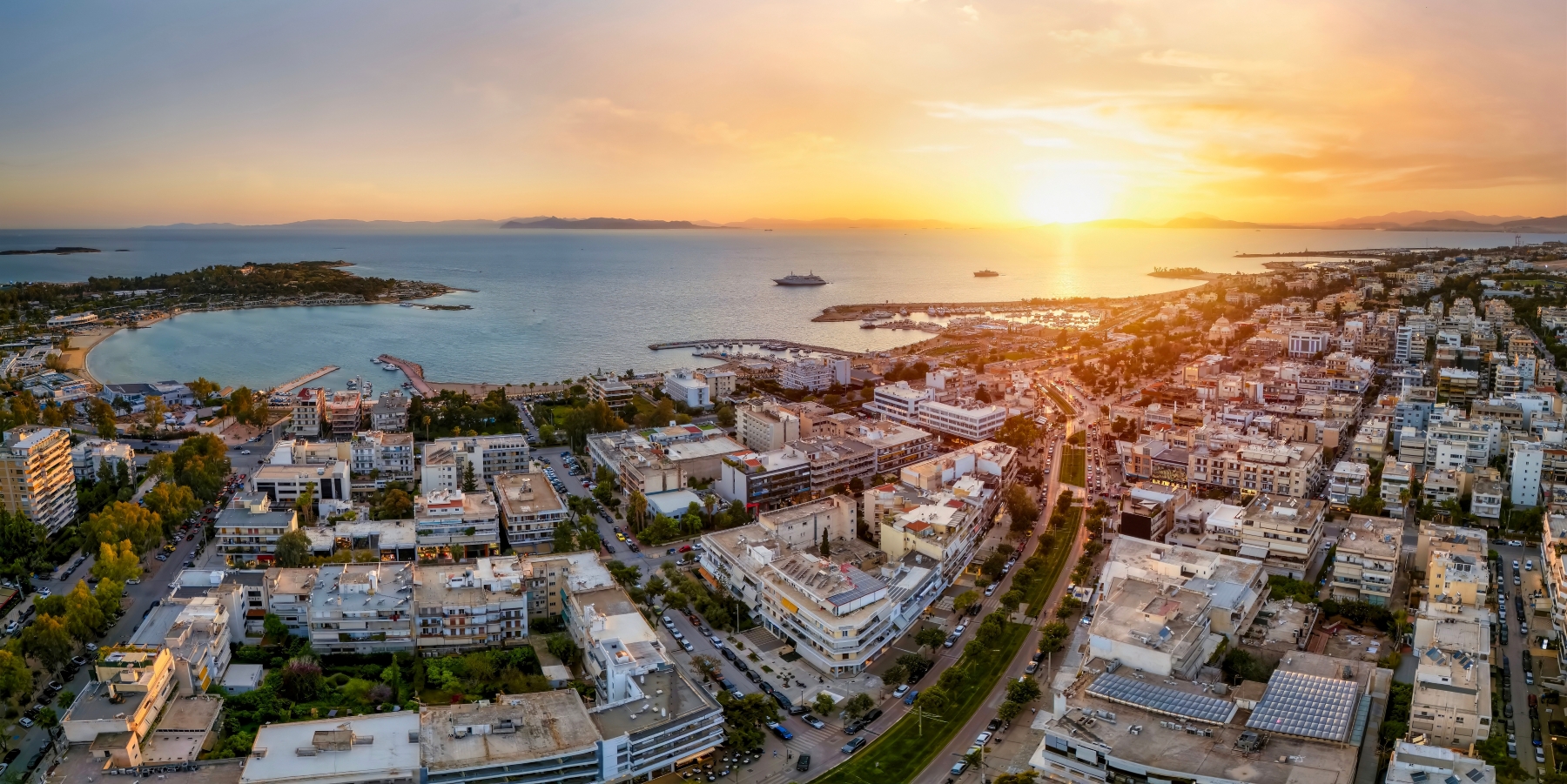
Rents on the Athens Riviera: The struggle to find an affordable home
Rents have reached record prices, and those looking for a home are living with the constant anxiety of yet another increase. What tenants and real estate agents told us about the situation taking shape in the property market along the coast.
- 05/10/2026 16:42
One month before she was due to walk down the aisle, S.M.’s phone rang for quite some time. It was her landlady. “We need to do something about your rent,” she told her pointedly, after the stereotypical wishes for “a long and happy marriage.” “Without beating around the bush, she raised it from €400 to €750,” the 35-year-old woman, who lives in Palaio Faliro, recalls today, a year later. “I had rented the apartment in 2021 on a three-year contract and, when it expired in 2024, the owner, who was a family friend, had suggested that we have a ‘silent extension’ under the same terms.” The amount is astronomical for the newlywed couple, and covering it means making many sacrifices. “I check listings every day and talk to owners,” she explains. She is looking for something more affordable for them, as well as a studio apartment so that her mother can move closer to them.
“We have seen some unbelievable things,” she admits. “We saw a 28-square-meter ground-floor apartment, extremely neglected, with an internal courtyard, for which they were asking €400, non-negotiable; we went to a seventh-floor rooftop apartment in a building with an elevator that only went up to the sixth floor, which even had the toilet outside the home, and yet it was being rented for €450.” Her mother has still not managed to find a “decent and functional” small apartment in the Athens Riviera that is suitable for her at 75.
Faced with all of the above and with limited financial resources, S.M. is resorting to a solution that is deeply unappealing to her by nature. “I, too, am forced in turn to increase the rent I receive from a property in my name, in order to cover our own expenses,” she explains. “I have already informed my tenant that in our new contract the rent will be €100 higher.”
Digging deep into their pockets
S.M.’s story vividly reflects the ongoing “war” in the property market in the Athens Riviera: tenants at an impasse and owners trying to cover all their financial needs from their real estate assets. Indicatively, according to ReDataset of the Resolute group, from the first quarter of 2023 through the first quarter of 2026, rental costs increased by between 9.6% in Palaio Faliro and 22.2% in Glyfada. Based, therefore, on ReDataset’s analysis, the average rent starts at €820 in Kallithea and reaches as much as €1,340 in the Vari–Voula–Vouliagmeni area. “Rents have now reached historically high levels,” comments Vasiliki Zarkatzia, managing director at Paragon Real Estate, based in Glyfada.
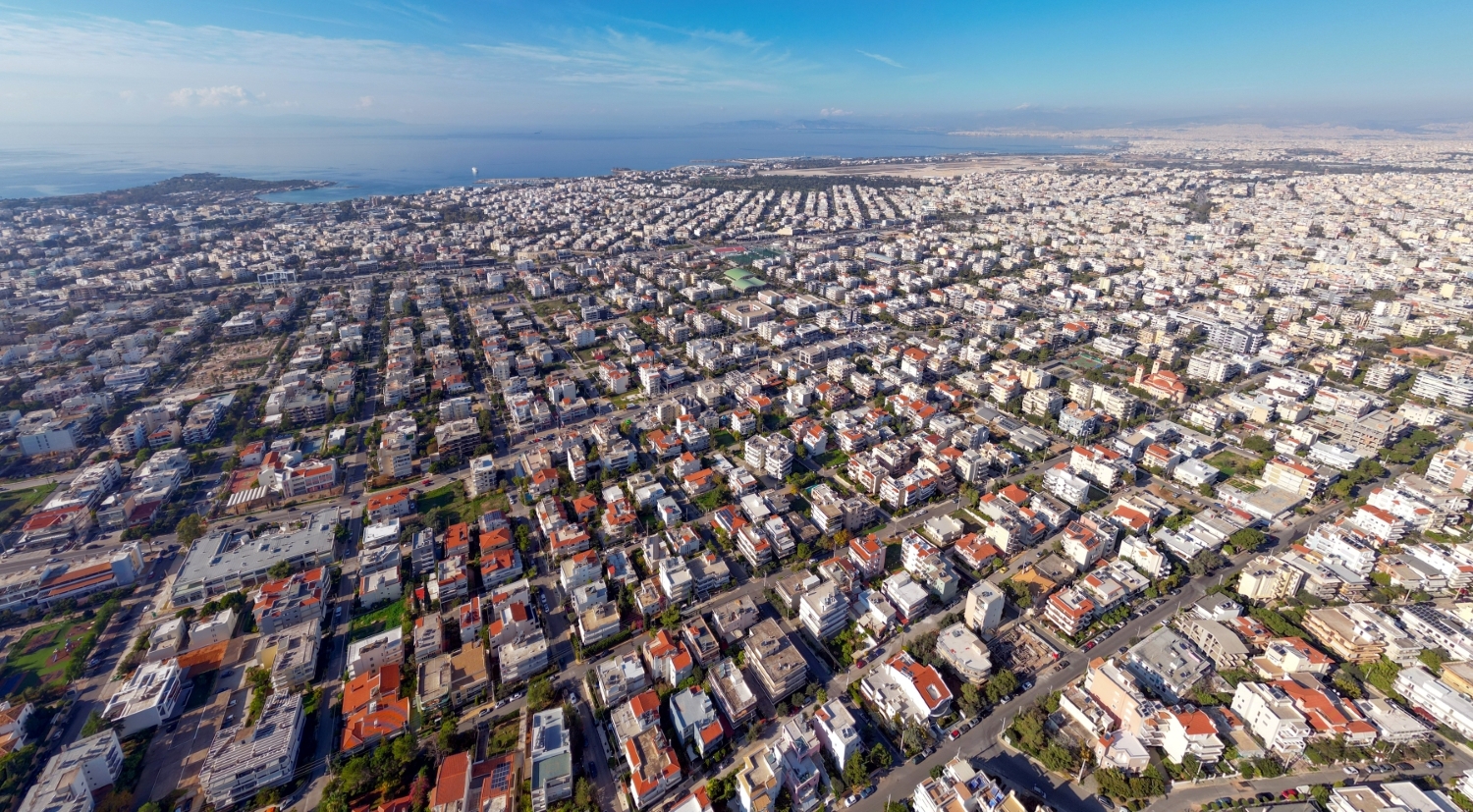
“Essentially, very few people working in Greece can afford to spend that much on housing; they are mainly senior business executives, athletes, VIPs or foreigners who have chosen to work out of Athens.” Indicatively, rental prices in Vouliagmeni range from €20 to €50 per square meter, depending on the location, while in Kato Glyfada they start at €20 and reach €40–45 per square meter, again depending on the location. “I am seeing small-scale moves by tenants from Voula, Vouliagmeni and Kato Glyfada to Ano Glyfada, Argyroupoli, Varkiza or Ano Voula,” she replies to the reasonable question. “However, I have not come across a lifelong Glyfada resident who decided to move far from the Athens Riviera; I know of cases of people who chose to leave Athens or even Greece altogether in order to secure a better quality of life.”

“Moving costs you financially and emotionally”
“We found our home in Voula through a real estate agent, after six months of continuous and unsuccessful searching,” recalls L.P., a mother of two who has lived in the area for ten years. “From the moment I crossed the threshold, I felt that this was the home I had been looking for.” Very quickly, the two sides “shook hands” and a two-year contract was signed for €600. “I felt very lucky at the time, because rents like that were not available in the area,” admits the 42-year-old woman. Naturally, successive increases followed. “I expected something like this to happen, but after being given prior notice. In our case, however, every time, while we are holding our pens in our hands, our landlady asks us, ‘Shall we add another €150?’ and that is how she catches us off guard.” Thus, the rent has now reached €900, and covering it has forced the father of the family to find a second job.
For the past three months, L.P. has been watching work being carried out in the once-neglected garden of the apartment building, where a swimming pool is now being built. “I am aware that this is an investment the owner is making in order to cash in on it.” The 42-year-old is registered on all the platforms and receives listings every day for rental properties in the neighborhood—a highly stressful process. “Unfortunately, everything around here is above €1,000, so I cannot find anything more advantageous than this home, while the move itself is also costly, both financially and emotionally,” she explains, feeling that she has no options. “I will try to negotiate, but I feel backed into a corner,” she stresses. “I do not want to change neighborhoods; I grew up here and my closest friends live here, while my children attend the public school in Voula—which, incidentally, provides a very high level of education.”
A demanding negotiation
As soon as a lease approaches two and a half years, Zarkatzia receives many phone calls. “Vasiliki, find out!” her tenant clients ask her, wanting to sound out the other side’s intentions. Real estate agents, as intermediaries, take on the often thankless role of negotiator. “Negotiation, let’s face it, runs in our blood, perhaps as a remnant of Ottoman rule,” she says jokingly, feeling that she often manages to bring the two sides to an honest compromise.
“Often, we refuse to work with owners who have unrealistic demands,” points out Lefteris Fragkioudakis of the real estate agency “Ktimatagora Fragkioudakis,” based in Agios Dimitrios, which operates across the entire coastal front. “Recently, I refused to offer my services to the owner of an old detached house in Agios Dimitrios, who insisted that we ask for the same rent as that charged for newly built apartment buildings; he had carried out a partial renovation, but the house itself was built with concrete blocks.”
The financial burden of maintenance
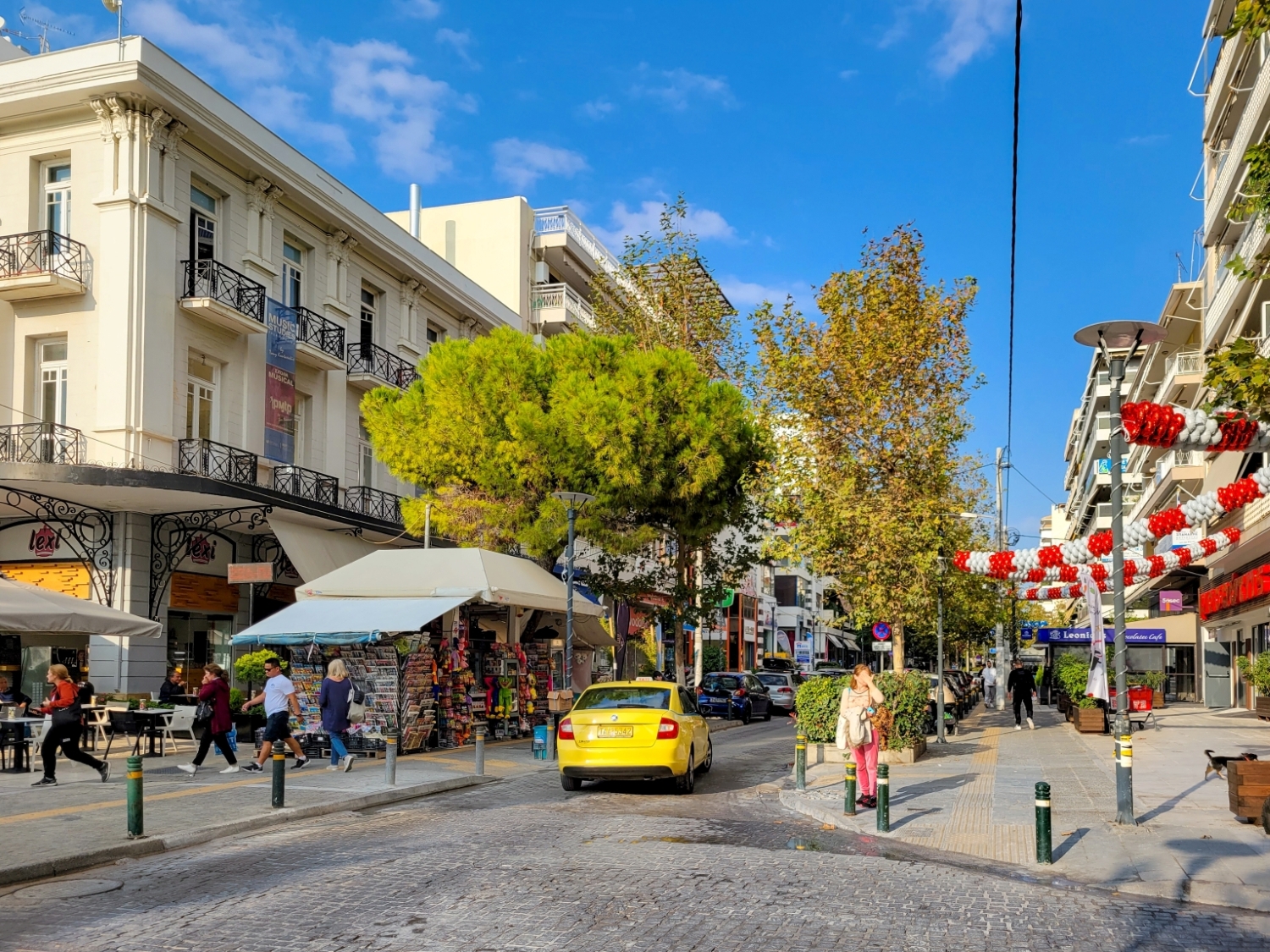
Every case is, of course, different—not all owners are privileged. “Maintaining a home in the Athens Riviera, especially in areas considered ‘prime,’ is not an easy undertaking,” observes Zarkatzia, who specializes in real estate finance and investment. “Taxation is extremely high and repair needs are often greater because of the age of the properties; despite the numerous EU-subsidized renovation programs, owners in the Athens Riviera cannot benefit from them, as they are excluded based on the financial criteria linked to the objective values of their properties.”
There are many cases in which young heirs, who have only just entered the job market and have very low incomes, are unable to cover the cost of maintaining such homes and may even be forced to sell them prematurely. The latest Eurostat figures, moreover, show that the rate of home ownership in Greece is beginning to decline: in 2025 it stood at 69.4%, compared with 75.1% a decade earlier. “Let us not forget that rental prices are rising alongside property sale prices, which are affected not only by high demand and buyers from abroad, but also by the increase in construction costs and the cost of the building permit itself,” Fragkioudakis reminds us.

Housing needs are changing
According to him, families with two children are among the tenants in the most difficult position, as they consequently need three bedrooms and apartments of more than 100 square meters. “Compromises are difficult there; children each need their own space,” comments Fragkioudakis, who is also observing his clients moving to neighboring, more affordable areas. “They mainly move to Agios Dimitrios or Ilioupoli; some may choose an affordable neighborhood to live in while continuing to work or send their children to school farther away, in their ‘old’ neighborhood, covering many kilometers every day,” he adds.
“Changes in the structure of society itself and in demographics are altering housing needs,” Zarkatzia points out. “There is very high demand for small apartments, where unfortunately the supply is very limited; thus, we are seeing rents rise for smaller homes, which will house couples without children or single-parent families, given that we have far more divorces than in the past.”
When buying made more sense…
Looking at the property market over the course of decades, however, one realizes that… “times change.” “Rental prices rose significantly in the aftermath of the Athens Olympic Games, namely during the 2003–2006 period,” Fragkioudakis recalls. “At the time, however, the cost of living was much lower and those looking for a home were more easily able to pay the rent.”
During the years of prosperity, buying a home perhaps made more sense. “Mortgage loans were approved easily and, for example, a €200,000 loan was enough to purchase a property,” he explains. “The installment did not differ from the cost of rent; in some cases, it was even lower.”
Today’s reality is diametrically opposed. “Loans are still being approved, but an amount such as €200,000 is generally not enough to buy a home; rents, meanwhile, seem even higher amid widespread price increases,” Fragkioudakis concludes.