
George Amerikanos: From sports content to the Southern Suburbs of Athens, always without a filter
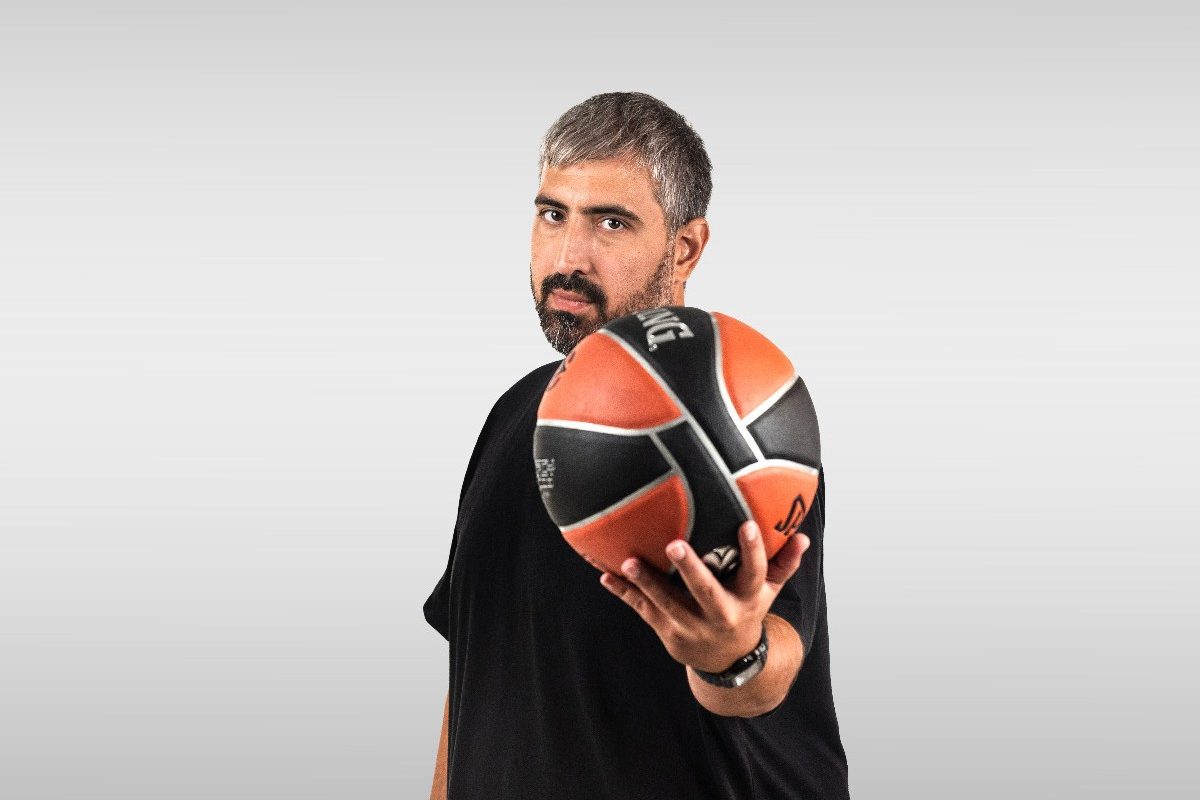
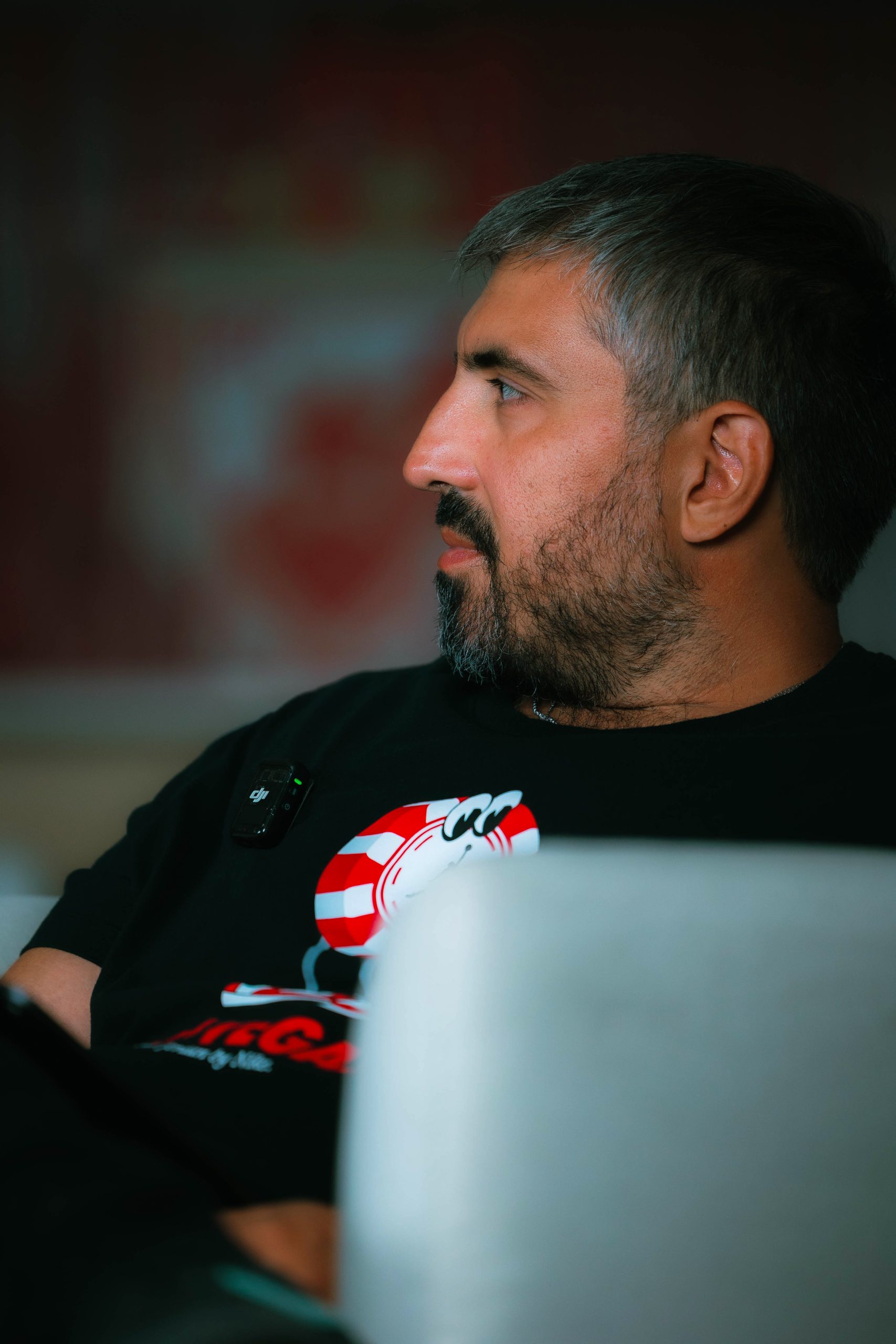
George Amerikanos, founder of Amerikanos24, talks to NouPou about how he wanted to do sports content differently in Greece, explains why, having lived and traveled abroad, he considers the Southern Suburbs of Athens “the most beautiful place in the world,” and talks about authenticity, work ethic and the “extra juice” he still gets even from those who question him.
- 07/10/2026 16:22
George Amerikanos can move within the same conversation from James Harden and podcasts with EuroLeague players to the sea in Vouliagmeni, from the way he approaches a player for an interview to how nightlife in the Southern Suburbs of Athens changed after the financial crisis, and from there to a strange comment he once heard about his content and, instead of forgetting it, kept it as fuel.
That is more or less how he operates too. Fast-paced, outgoing and without much of a filter, with clear American influences in the way he approaches sports content, but also with a relationship with Greece—and especially the Southern Suburbs—that seems to have grown stronger the more time he spent away from them.
Today, he is in front of the camera, openly expresses his views and has connected his name with a particular way of discussing sports. For years, however, the person behind all this was not the face of the brand at all.
From an anonymous brand to American sports
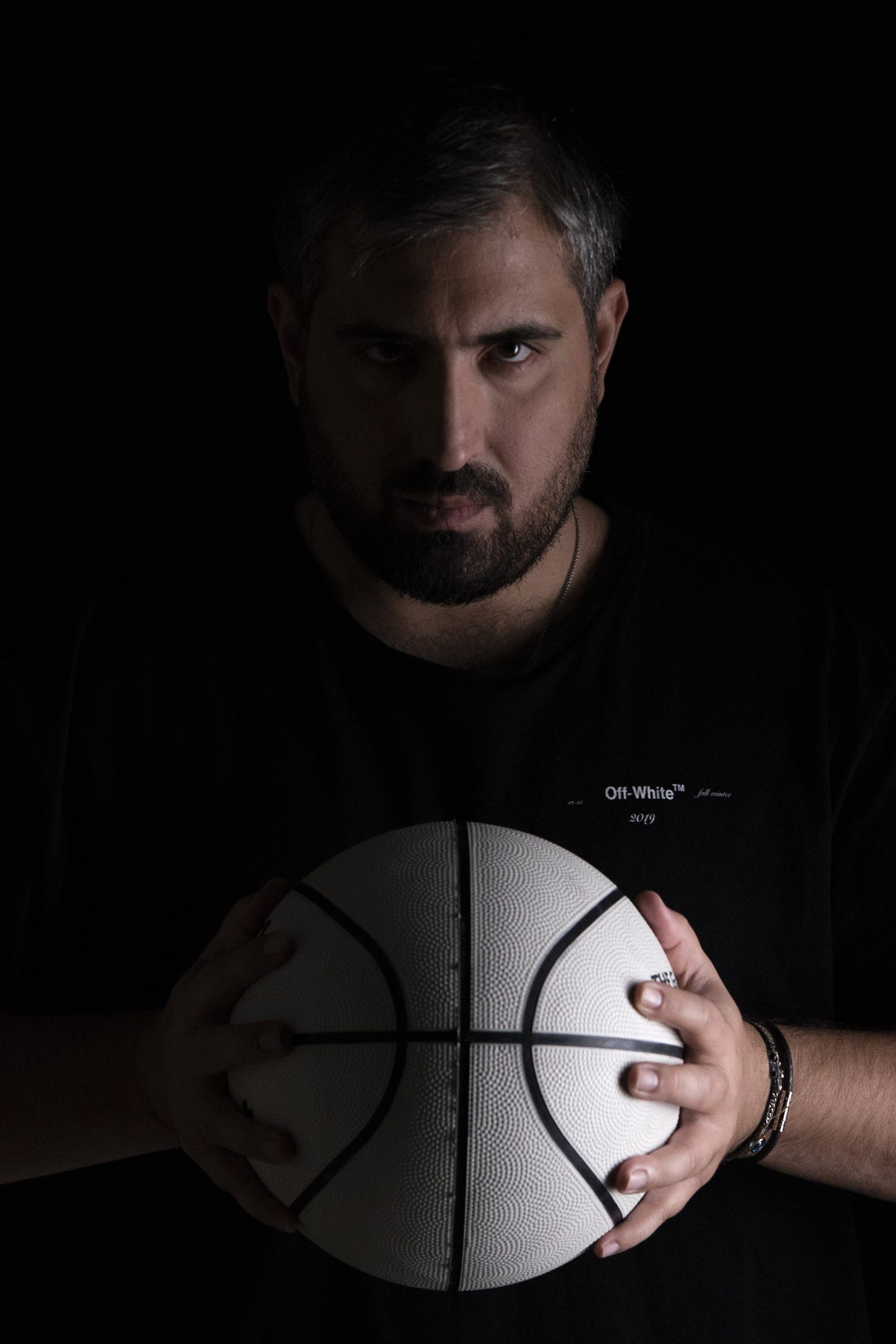
The story began in 2015, when he created the Amerikanos24 website with a very specific identity: specializing in American sports, at a time when this type of content had a much smaller presence in Greek sports media. “That was our competitive advantage compared with all the other media outlets,” he recalls.
And for quite a few years, he essentially remained behind it. The brand had developed its own presence without him needing to be its public face.
The specialization, however, gradually began to build an audience. People realized that they could find information there that was not available elsewhere, and along with the audience, the original idea also began to evolve.
The next step was video. Amerikanos did not simply want to bring to camera what was already being done in traditional sports media. He wanted to create a debate show around which the identity of the channel could be built. Then came the podcasts. The first season of the “Over play show” was produced via Zoom, at a time when the format had not yet taken over Greek YouTube. “We showed the market how easy it is to make a podcast,” he says.
In the years that followed, the shows multiplied. For him, this is not a problem. The fact that someone can now create their own content with a webcam and a microphone is part of the evolution of the medium. Easy access to technology, however, does not automatically mean interesting content. And that is where, for him, the real differentiation begins.
From the debate show to NBAers and the players behind the microphone
One of the most important parts of his work is his direct interaction with the athletes themselves. His comfort with the English language and American culture could easily be considered the “secret” behind this relationship. He believes it is only one part of it. “I think people believe that English is what makes the difference. It certainly makes Americans feel more comfortable. But understanding the sport plays a huge role. If we simply spoke good English without understanding basketball, we still wouldn’t have good conversations.”
There is, however, something that comes even before knowledge. “It all starts with recognizing that we are all human beings. Whether someone is Greek or American, the other person may be tired one day, may not want to talk. You start with respect for the person and then you approach them.”
Amerikanos covered the NBA before becoming more deeply involved in the day-to-day world of the EuroLeague. That background also gave him a different approach to interviews. He is not interested only in the superstar or the obvious question of the day. He vividly remembers an interview with James Harden. At one point, he asked him about a player much lower down the rotation. The Americans around them started reacting to one another, wondering how he knew that particular detail. For him, that is where much of the difference lies. Knowledge makes the athlete understand that sitting across from them is not simply someone who speaks good English, but someone who knows the world in which they operate.
This American influence becomes even more apparent in the podcasts. In the US, athletes themselves have for years moved from being people who simply answer questions to becoming creators. NBAers have their own shows, talk to one another and comment on their own sport without the traditional separation between journalist and guest. In Europe, this model remains less common.
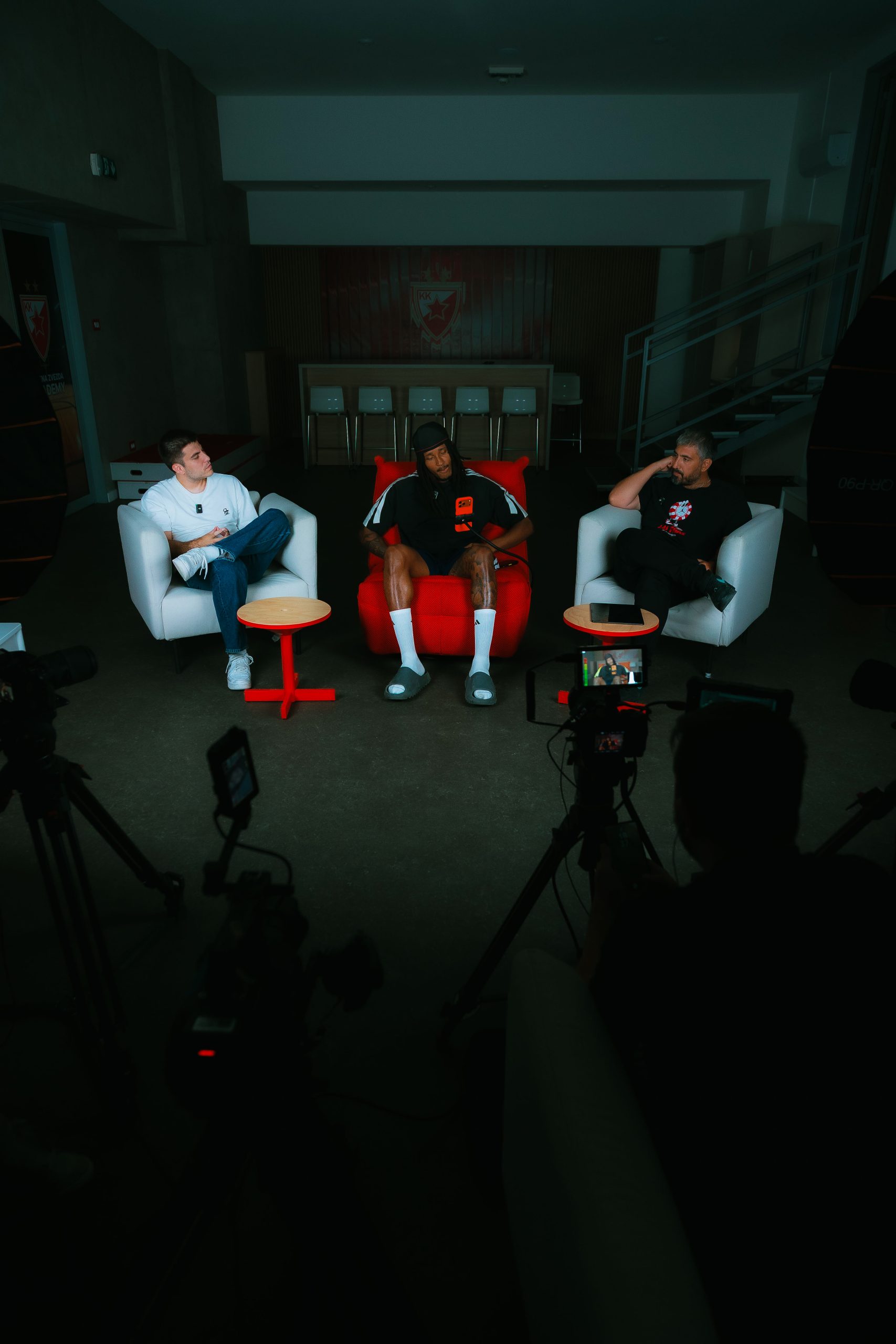
Together with his close collaborator and friend Dionysis Aravantinos, they created the English-language podcast Triple Threat Show, bringing active professional players into the conversation itself. Chima Moneke of Crvena zvezda is already part of the project, while the next step is ready. “Since last Monday, we also have Jarron Blossomgame of Dubai BC with us every week. So we will have two active players on a podcast commenting every week. What could be better than that?”
For him, the goal is not simply to transfer an American format wholesale to Greece. It is to create space for more spontaneous conversation and for people who genuinely have something to say. As he explains, he tries to apply the same criterion when choosing the people he works with. Not necessarily the biggest names or the most recognizable faces, but people in whom he sees the right talent.
And as his professional life opened up to the outside world, he increasingly realized where he ultimately wanted to be.
“For me, there is no more beautiful place in the world than the Southern Suburbs of Athens”
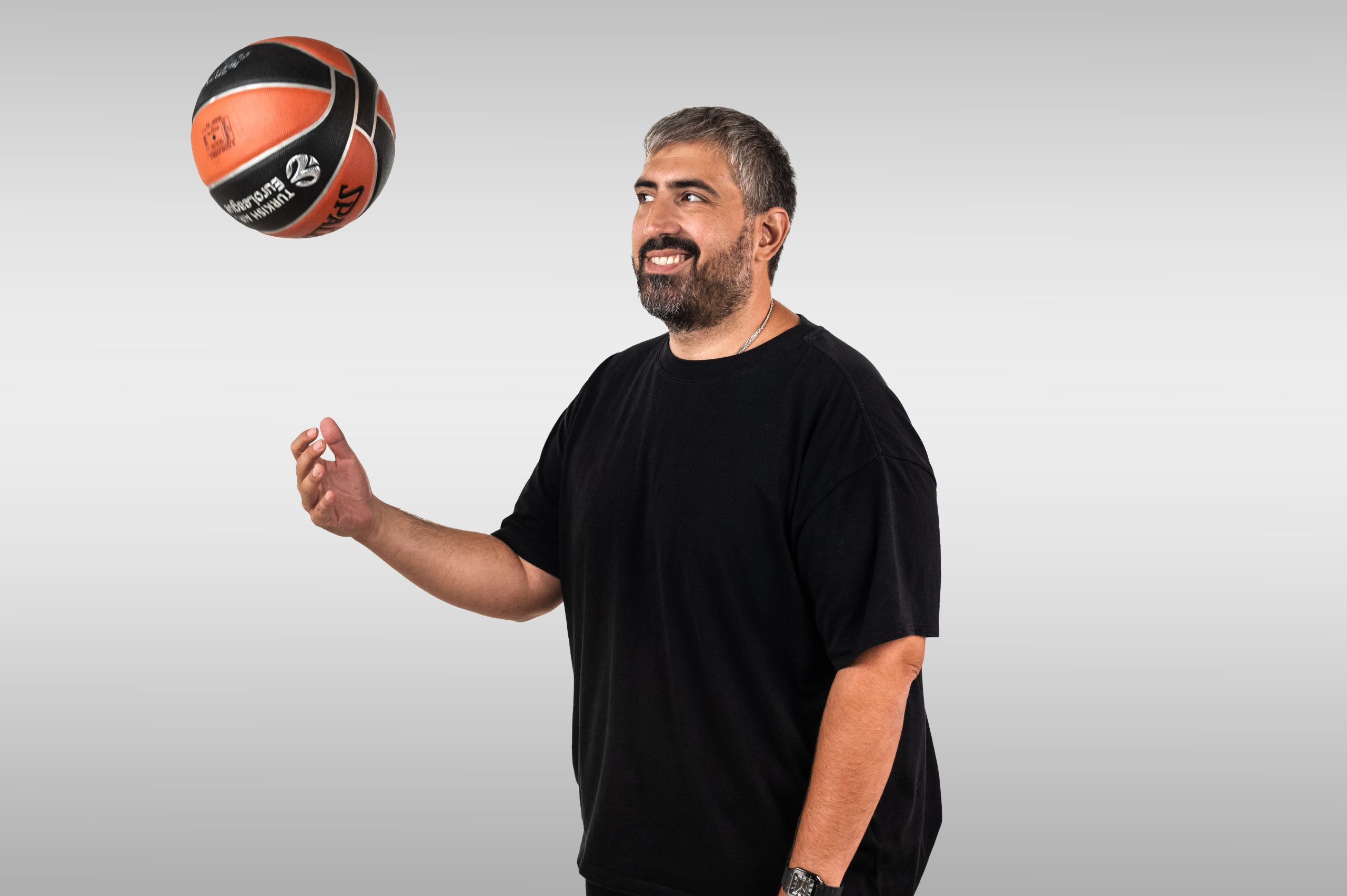
He has been to Los Angeles and New York. He has experienced major European cities, from London and Madrid to Berlin and Barcelona. And yet, when the conversation turns to the place he would choose to live, he needs very little time to answer. “For me, there is no more beautiful place in the world than the Southern Suburbs of Athens.”
Amerikanos belongs to the generation of Greeks who left the country during the years of the financial crisis. Living abroad seems to have made it clearer what exactly he was missing. “I was one of the kids who left because of the crisis, and I always dreamed of returning to my homeland and being able to live here.” What he himself identifies as the most important factor in this choice is everyday life itself. Not necessarily anything spectacular. The ability to finish a demanding day and, within a few minutes, be near the sea. To go for a walk, meet friends, sit down for a coffee or simply change your surroundings. “When you have the sea next to you, the truth is that you don’t appreciate it. I think 95% of us who live in the Southern Suburbs don’t really appreciate that we can go for a walk by the sea, in Vouliagmeni or anywhere else. If you can also have some financial comfort, because I understand that it’s not the same for everyone, the quality of life here cannot be compared with anywhere else in the world. For me, this is paradise.”
His relationship with the Southern Suburbs is, of course, not limited to the landscape. He has also witnessed the change in the way the area lives and enjoys itself. For him, the 2008 crisis represents a clear dividing line. The nightlife of the Southern Suburbs in previous decades was different: big clubs such as Privillege, Mercedes and venues that made the coastal road one of the main destinations for nightlife in Athens. Listening to him talk about that era, the conclusion comes almost with a sense of regret—but mostly with humor. “People older than me had an incredible life that we simply can’t compete with.” His own version of the Southern Suburbs is considerably simpler. “We bring our little something. Like right now, next to the sea, we’re having our freddo espresso for four euros and everything is fine.”
“I’m 100% authentic” – and the “sexy for last year” comment he never forgot
On screen, his presence is strong. He is outgoing, opinionated, often absolute in his views and does not seem particularly afraid of the possibility that something he says may provoke a reaction. The obvious question is whether all of this is, to some extent, a role. A stronger version of the real person, made for the camera and social media.
The answer comes without hesitation. “No. I’ve managed to have only one way of expressing myself, living and behaving.”
For him, there is no meaningful separation between George, as someone sees him on Instagram or YouTube, and the person known by the people in his everyday life. “Everyone knows that I’m 100% authentic. I won’t say something I don’t mean and I won’t keep something inside that I feel. Just as I freely express my opinion in front of the camera, I’ll express it behind the camera too.”
He does not claim that this approach always proves him right. Quite the opposite. He can be wrong. He can exaggerate. Someone may misunderstand the way he expresses himself. But the alternative, as he sees it, would be to construct a persona that sooner or later would betray itself. “I couldn’t be someone else in front of the camera, because it would show.”
Truth, authenticity and honesty are the words he uses to describe this attitude. Even when honesty is not particularly diplomatic. “If the coffee is terrible, I’ll say it’s terrible. And I may not say it in the nicest way.”
Behind all this there is also a strongly competitive side. His professional career has been on an upward trajectory in recent years, but he does not want to present his story as a journey in which every rejection automatically became motivation for the next success. The motivation, he says, was already there. “It’s been inside me since I was a little kid. That light is still inside me. There is always a thirst for something new.” And that is what can make him wake up in the morning and devote countless hours to a new project. Not someone who told him “no.”
The people around him, however, can add something. Sometimes positively. He remembers his first assignment with a Greek team, during Olympiacos’ series against Fenerbahçe in Istanbul. Three or four days, two games, nonstop running around and a return to Athens at around five in the morning. He had not yet become accustomed to the pace of the trips. “I was destroyed. I woke up feeling awful.” Then he saw that Dora Panteli had already gone to the gym. “I said, ‘Come on, this can’t be.’ We were all a mess, completely exhausted. And she got up and went to the gym.” She did not need to tell him anything. The image was enough. “The work ethic of my colleagues definitely helps me.”
And at other times, the same fuel can come from the exact opposite direction. From a comment. A put-down. A little minor disrespect, as he calls it. At one point, people who had tried to buy Amerikanos24 threw out a phrase that, for someone else, might not have meant much. For George, however, it meant a great deal. They told him that the content he produces is “sexy for last year.”
He did not forget it. “Got it. Thank you very much.” And he laughs. Not because that phrase created his need to succeed. He insists that this is something much deeper and much older. But he keeps such moments. “They don’t motivate me. The motivation is there on its own. But they give me a little extra juice. I puff myself up a little more to prove things.”
A little disrespect here, an image of work ethic there, a new idea that is worth getting up in the morning to chase. And, as he puts it, a little more “extra edge to shut some mouths!”