
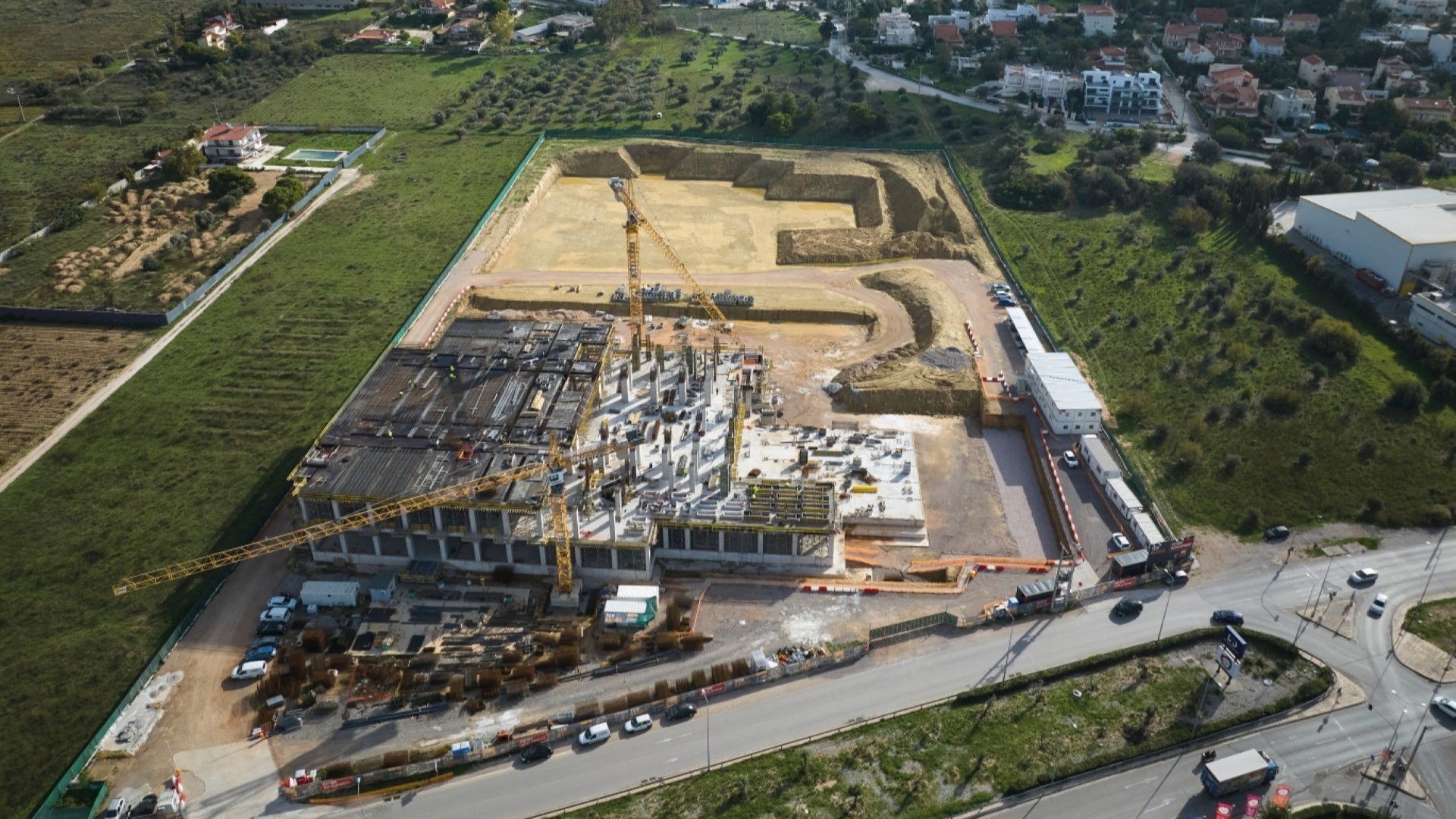

East Attica: The rise of a new digital landscape
East Attica is emerging as a technological hub with investments in data centers, biotech and innovation.
- 12/08/2026 16:23
From hyperscale data centers and cloud infrastructures to biotechnology, space-tech and the creator economy, East Attica is gradually being transformed into a new growth pole of the Greek economy. The wider area of Spata, Paiania, Koropi and Pallini has been attracting investments that connect energy with data, innovation with infrastructure, and technology with the new productive identity of the country. International technology giants, hyperscalers and Greek companies are co-shaping a new ecosystem of digital infrastructure and technological innovation of high added value.
Digital portal
Microsoft’s presence in Eastern Attica is one of the strongest signals of the region’s transition to a new digital infrastructure map for Southeastern Europe. The approximately 1-billion-euro investment concerns the creation of three data centers that will form the Greek “Azure Cloud Region Greece”, the company’s first integrated cloud region in the country.
The project is unfolding on schedule, with work in the Spata area progressing and the full activation of the infrastructure scheduled for early 2028. The first data center is already being built by Microsoft itself, while the second is being developed in Paiania by the French Data4 and will be leased by Microsoft. Final announcements are expected for the third facility.
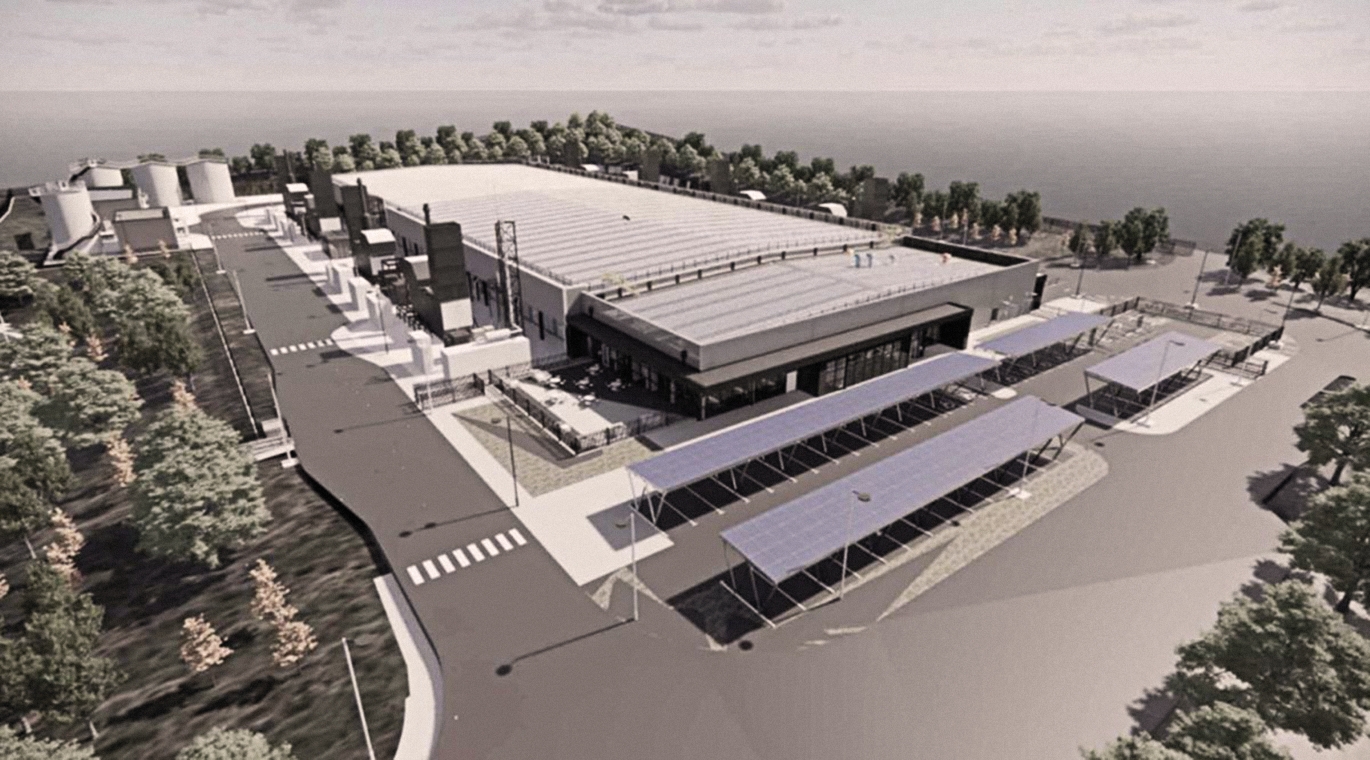
The importance of the project is not limited to the size of the investment. Greece is now part of the core of Microsoft’s strategic digital infrastructures, with Eastern Attica becoming a critical data processing, storage and movement hub for SE Europe. The geographical location of the region, the proximity to the airport, the energy infrastructure and access to international telecommunications networks create the conditions for the formation of a new digital corridor between Spata, Paiania and Koropi.
At the same time, Microsoft has committed that all its facilities will be powered by zero-carbon foot print energy. The investment is part of the company’s international strategy for the development of cloud infrastructures, as the explosive growth of artificial intelligence increases the demand for high-process ing power infrastructures.
The project also acquires a strong social dimension. In Spata, actions are being undertaken that connect technology with education and local identity. Students participate in programs through Minecraft Education, redesigning their city and familiarizing themselves with the concepts of sustainability and innovation. In total, 17 schools and approximately 1,500 students have already been involved.
In collaboration with the Municipality of Spata, basic and advanced digital training programs are also being implemented for residents of the region, while through the “Cloud Stories” initiative, with Istorima, oral testimonies and cultural traditions of the region are being recorded.
“The momentum that is currently building in Greece in the field of digital infrastructure is not temporary. The development of infrastructure, such as data centers, is a crucial step for the country’s transition to a high-demand digital economy, but for us the investment is not limited to technology. It concerns the entire ecosystem – from innovation in businesses and the public sector to the creation of new employment opportunities and the strengthening of digital skills,” says Yanna Andronopoulou, CEO of Microsoft Greece, Cyprus and Malta, to the White Paper.

Energy and data
The data center in Spata of EDGNEX Data Centers, a joint venture between PPC and the DAMAC group from the United Arab Emirates, is also on track for implementation. Through the Data In Scale joint venture – in which PPC participates with a 45% stake – the goal is to create state-of the-art digital infrastructure for cloud services and artificial intelligence.
The investment, which in its first phase reaches 150 million euros, concerns the creation of a 12.5 MW data center, with a strategic plan to double the capacity to 25 MW in the coming years. The project is in full construction progress by TenBrinke through its subsidiary TenTec, with a completion horizon of 2027.
The project serves as a typical example of PPC Group’s transition from a traditional electricity provider to an integrated digital infrastructure player. The company’s strategy is based on the convergence of energy, telecommunications and data infrastructure, leveraging both the Renewable Energy Portfolio and the fiber optic networks that it is developing across the country. Of particular interest is the sus tainability dimension of the investment. With state of-the-art cooling systems and clean energy supply, the Spata data center aspires to be a model of “green” digital infrastructure.
Digital transition
Behind the new generation of data centers being developed in Eastern Attica, a new construction pillar is gradually emerging that specializes in highly complex digital infrastructures. Large construction groups are redefining their strategy towards projects of high technological specialization and increased energy requirements.
Among them is Ten Brinke, which, through its subsidiary TenTec, is building a strong footprint in the rapidly growing data center sector in Greece. The DAMAC-PPC project in Spata is the starting point of the company’s strategy, while the development of new data centers in the country is already being planned.
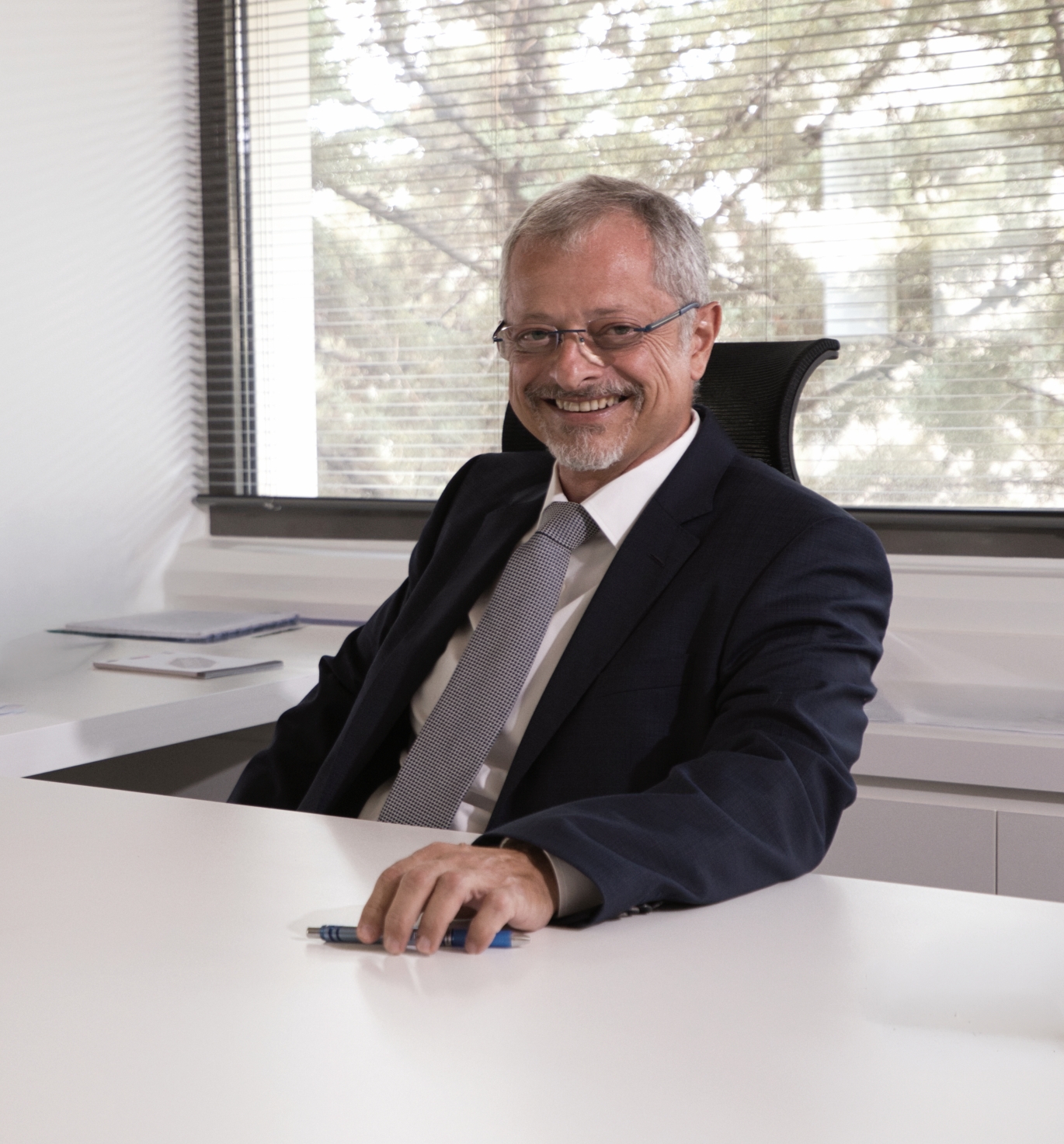
Through the White Paper, TenTec CEO Nikos Nikolopoulos emphasizes the importance of social acceptance and the environmental dimension of new digital infrastructures. “TenTec applies international quality standards, collaborates with public authorities and European partners and develops infrastructures that meet the high demands of hyperscalers, while reducing the environmental footprint,” he points out. According to the company, the noise levels at the Spata project are significantly below the permitted limits.
Strong footprint
Long before Eastern Attica found itself at the heart of new investments in data centers, US company Digital Realty — through Lamda Hellix — had already created one of the country’s first organized data interconnection hubs in Koropi.
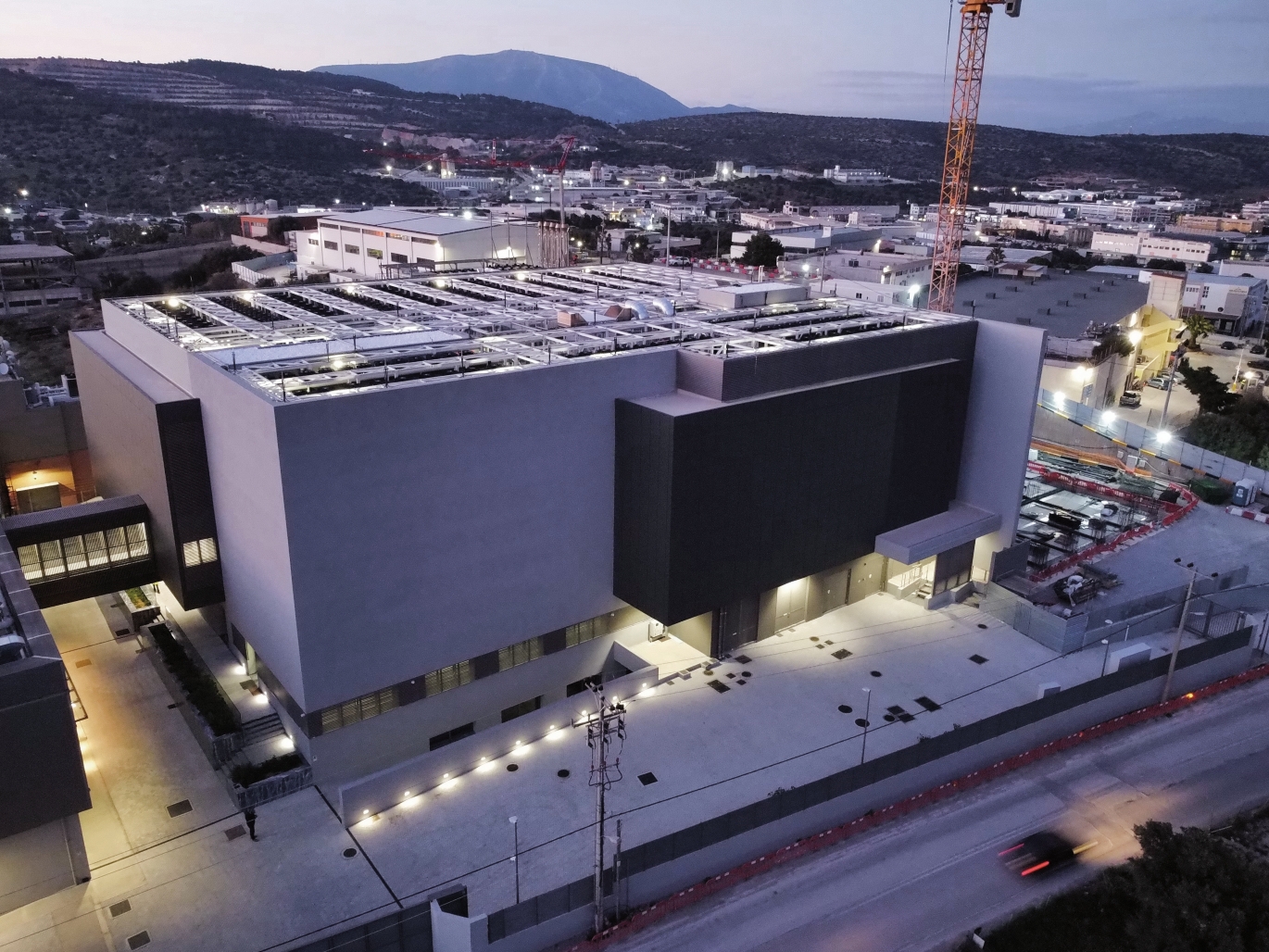
Today, the company operates a cluster of three large data centers in Eastern Attica and one in Heraklion, Crete, bringing together the highest density of hyper scale infrastructure in the Greek market, with a total investment of over 400 million euros. From Athens 1 and Athens 2 to the flagship Athens 3, the Koropi campus has evolved from a local telecommunications facility into a critical digital infrastructure with a regional footprint.
An important milestone is also Athens 4, the company’s new investment in Koropi, of over 100 million euros. This fourth building is in the final stages of completion, adding an additional 6.8 MW of capacity to the campus.
Digital Realty’s advantage is not limited to its infrastructure, but also to the ecosystem of customers and telecommunications providers that it hosts. With more than 70 connectivity providers and over 135 customers, the campus functions as a critical hub for the development of the country and the wider region.
“Greece is emerging as a digital hub of the Eastern Mediterranean, connecting Asia and Southeast Africa with Europe through Crete and Athens. The country’s strategic geographical location, combined with its constantly strengthened infrastructure, creates an increasingly dynamic ecosystem of digital services,” states Alexandros Bechrakis, President and CEO of Digital Realty in Greece, to the White Paper.

Mega Project
In the wider area of Spata, Apto, a subsidiary of Pimco, in collaboration with Dromeus Capital, is planning one of the largest data center investments announced to date in the Greek market. The project, called “Data Center Olive”, concerns the development of a hyperscale complex that, when fully developed, is estimated to reach 770 million euros.
The project includes two large data center buildings with a total computing load of 46 MW and a total power requirement from the electrical grid that can reach 80 MW. During the construc tion period, it is estimated that approximately 400 500 jobs will be created. The first phase of the investment, amounting to approximately 300 million euros, aims to develop the first 18 MW by 2028, while the second phase concerns the development of the second plot with a completion time horizon after 2030.
Apto is Pimco’s investment vehicle in the field of hyperscale data centers, developing corresponding projects in strategic markets in Europe, such as Spain and Italy. For its part, Dromeus Capital has developed a significant presence in the Greek real estate and infrastructure market.
New innovation ecosystem
Beyond investments in data centers and digital infrastructure, East Attica is gradually evolving into a broader ecosystem of innovation, content production and technological development.
In Kantza, Dimand is transforming the historic Kampas property into a new mixed-use destination that will combine office space, commercial uses, cultural functions and modern infrastructure to host business activities.
At the same time, Akis Petretzikis is developing a new production hub in Mesogeia that is expected to be completed by the end of 2026, combining television and digital content production studios, event hosting facilities and infrastructure for the creation of new-generation digital content.
At the same time, ELPEN has already developed Athens LifeTech Park, the first biotechnology park in Greece and one of the first life sciences ecosystems in SE Europe, creating a new hub for research and pharmaceutical innovation.
The new technological innovation ecosystem also includes the British-Spanish group Open Cosmos, which is strengthening the footprint of space-tech activity in Greece. In Pallini, Open Cosmos Aegean is building one of the most ambitious microsatellite production bases, with the aim of creating a fully vertically integrated microsatellite production in Greece.
Through this transition, Eastern Attica ceases to function as a simple regional zone around the airport and evolves into a critical hub of the country’s new digital economy, with an increasingly strong role in Southeastern Europe.
Published in “White Paper: The Greater Riviera”, NouPou Media’s special edition spotlighting the future of coastal Attica.